JSTOR Global Plants Home
  • Home
  • Browse
  • About
  • Access
  • Account
    • Saved Items
    • Profile
  • Log in

Global Plants

Skip to Main Content
  • JSTOR Global Plants Home
  • Global Plants

    • Browse
    • About
    • Access
    • Account
      • Saved Items
      • Profile
Log in
  • Browse
  • About
  • Access
  • Account
    • Saved Items
    • Profile
Advanced Search

Compilation
Verbena venosa

10 Images see all

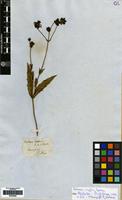
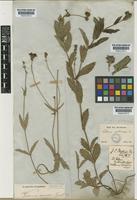
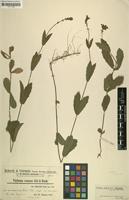
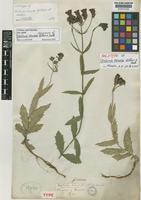
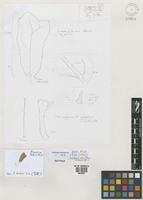
Isotype of Verbena venosa Gill.&Hook. [family VERBENACEAE]
Verbena scaberimma Cham. [family VERBENACEAE]
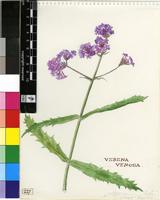
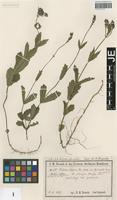
Verbena venosa Gillies & Hook.
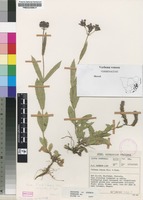
Filed as Verbena venosa Gillies & Hook. [family VERBENACEAE]
Filed as Verbena rigida Spreng. [family VERBENACEAE]
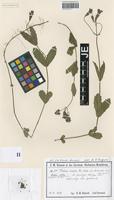
Verbena venosa Gillies&Hook. [family VERBENACEAE]
Isotype of Verbena venosa Gillies & Hook. variety reineckii Briq. [family VERBENACEAE]
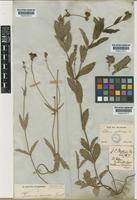
Verbena scaberimma Cham. [family VERBENACEAE]
Isotype of Verbena venosa Gillies & Hook. ex Hook. [family VERBENACEAE]
Isotype of Verbena venosa Gillies & Hook. variety reineckii Briq. [family VERBENACEAE]
Previous
Next

Name

Identification
Verbena venosa Gillies & Hook. [family VERBENACEAE ]
Related name
  • Verbena venosa

Flora

Entry for VERBENA venosa Gill. et Hook. [family VERBENACEAE]
Herbarium
Royal Botanic Gardens, Kew (K)
Collection
Flora Capensis
Resource Type
Reference Sources
Entry From
Flora Capensis, Vol 5, page 180, (1912) Author: By H. H. W. PEARSON.
Names
VERBENA venosa Gill. et Hook. [family VERBENACEAE], in Hook. Bot. Misc. i. 167;—Hook. Bot. Mag. t. 3127; Walp. Rep. iv. 27; Schauer in DC. Prod. xi. 541.
Information
a perennial herb, with a creeping rhizome; stem erect, simple or branched, acutely 4-angled, furrowed, hispid, about 1 ft. high; internodes 1 1/2–2 in. long; leaves opposite, sessile, semi-amplexicaul, oblong or oblong-lanceolate, acute, rounded or subauriculate at the base, stiff, scabrid, hispid on the nerves beneath, with margins entire or coarsely and acutely dentate-serrate, with 4–7 curved ascending primary lateral nerves on each side impressed above, prominent beneath, excurrent in the teeth, 1 1/2–3 1/2 in. long, 1/2– 3/4 in. broad; spike terminal, simple or dichotomously branched, cylindric, dense, bearing many bracteate lilac or blue flowers, 1/2–2 in. long; bracts lanceolate, long-acuminate, with a strongly marked midrib, glabrous above, hirsute beneath and on the margins, 2–5 lin. long, 1/4–1 1/4 lin. broad; calyx of the flower cylindric, dilated below in fruit, coloured, obliquely and acutely toothed, pubescent without, hirsute on the ribs, minutely pubescent within, 2–2 1/2 lin. long; corolla-tube cylindric, pubescent without in the upper part and within, 4 1/2–6 lin. long; stamens inserted below the middle of the corolla-tube; ovary and style about 2 lin. long, glabrous; fruit enclosed in the dilated calyx; coccus shortly oblong, striate, about 1 lin. long. null
Range
A native of the Pampas of Buenos Ayres; introduced also into Texas, Madeira, and St. Helena.
Distribution
KALAHARI REGION Transvaal; near Lydenburg, Wilms, 1176!

Related Materials

  • Terms and Conditions
  • Privacy Policy
  • Cookie Policy
  • Cookie Settings
  • Accessibility
  • Help
  • Contact Us
  • Facebook
  • Twitter
ITHAKA

JSTOR is part of ITHAKA, a not-for-profit organization helping the academic community use digital technologies to preserve the scholarly record and to advance research and teaching in sustainable ways.

©2000-2026 ITHAKA. All Rights Reserved. JSTOR®, the JSTOR logo, JPASS®, Aluka®, and ITHAKA® are registered trademarks of ITHAKA.

╳