JSTOR Global Plants Home
  • Home
  • Browse
  • About
  • Access
  • Account
    • Saved Items
    • Profile
  • Log in

Global Plants

Skip to Main Content
  • JSTOR Global Plants Home
  • Global Plants

    • Browse
    • About
    • Access
    • Account
      • Saved Items
      • Profile
Log in
  • Browse
  • About
  • Access
  • Account
    • Saved Items
    • Profile
Advanced Search

Compilation
Vepris undulata

5 Images see all

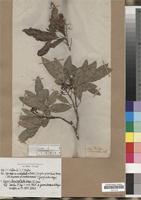
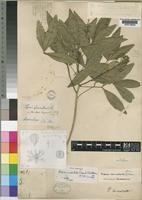
Filed as Vepris lanceolata (Lam.) G. Don [family RUTACEAE]
Vepris undulata (Thunb.) Verdoorn & C.A. Sm. From South Africa
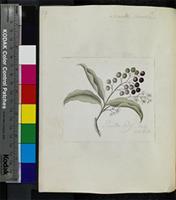
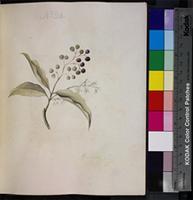
Filed as Vepris lanceolata (Lam.) G. Don [family RUTACEAE]
Vepris undulata (Thunb.) Verdoorn & C.A. Sm. From South Africa
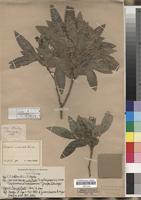
Isotype of Vepris querimbensis Klotzsch [family RUTACEAE]
Previous
Next

Name

Identification
Vepris undulata (Thunb.) Verdoorn & C.A. Sm. [family RUTACEAE ]
Related name
  • Vepris undulata

Flora

Entry for Vepris undulata Thunb. Verdoorn & C.A.Sm. [family RUTACEAE]
Herbarium
Royal Botanic Gardens, Kew (K)
Collection
Flora Zambesiaca
Resource Type
Reference Sources
Entry From
FZ, Vol 2, Part 1, page 180, (1963) Author: F. A. Mendoça
Names
Vepris undulata Thunb. Verdoorn & C.A.Sm. [family RUTACEAE], in Journ. S. Afr. For. Ass. no. 20: 35, 50 (1951) in obs. Type from S. Africa (Cape).
Boscia undulata Thunb. [family RUTACEAE], Prodr. Pl. Cap.: 32 (1794). Type as above.
Toddalia lanceolata Lam. [family RUTACEAE], Tabl. Encycl. Méth. Bot. 2: 117 (1797). — Oliv., F.T.A. 1: 307 (1868). — Engl., Pflanzenw. Ost-Afr. C: 228 (1895). — Sim, For. Fl. Port. E. Afr.: 24, t. 25 (1909). Type from Mauritius.
Vepris lanceolata Lam. G. Don [family RUTACEAE], Gen. Syst. 1: 806 (1831). — Engl., tom. cit.: 433 (1895); in Engl. & Prantl, Nat. Pflanzenfam. 3, 4: 174, fig. 101 L–V (1896); op. cit. ed. 2, 19a: 306, fig. 136 L–V (1931). — Bak. f. in Journ. Linn. Soc., Bot. 40: 35 (1911). — Verdoorn in Kew Bull. 1926: 395 (1926). — Burtt Davy, F.P.F.T. 2: 479 (1932). — Burtt Davy & Hoyle, N.C.L.: 68 (1936). — Brenan, T.T.C.L.: 546 (1949). Type as above.
Vepris querimbensis Klotzsch [family RUTACEAE], in Peters, Reise Mossamb. Bot. 1: 83 (1961). Type: Mozambique, Querimba I., Peters (B, holotype †; K, isotype).
Information
Evergreen shrub or small tree up to 5 m. tall; branches, inflorescences and leaves glabrous. Leaves alternate, 3-foliolate; petiole 1–5 (7) cm. long, rather slender, narrowly grooved above. Leaflets sessile; lamina 5–12 × 1·5–3·2 cm., narrowly elliptic, densely dotted with minute pellucid glands, acute or obtuse or blunt at the apex, margin somewhat undulate, cuneate at the base. Inflorescence of terminal dense much-branched panicles; bracteoles very small, glabrous or slightly puberulous, caducous. Flowers 4-merous, unisexual by abortion; pedicels 1–3 (5) mm. long. Sepals 4, united at the base into a very short 4-lobed calyx 0·5 mm. long, ciliolate on the margin. Petals 4, 2 × 1 mm., slightly imbricate in bud, obovate or elliptic. Male flowers: stamens 8, inserted at the base of a narrow disk, with subulate filaments flattened at the base and shorter than the petals; anthers basifixed, 2-lobed at the base, laterally dehiscent. Female flowers: vestigial staminodes 8; ovary subglobose, 4-locular; stigma subsessile, broadly discoid. Fruit 5 mm. in diam., black when ripe, somewhat depressed, 4-locular, slightly 4-lobed; loculi 1-seeded, 1 or 2 seeds sometimes aborting. Seeds 3 mm. long, black, subtrigonal; testa hard with subapical hilum; endosperm scanty.
Habitat
In littoral evergreen thickets on sandy soils and on dunes.
Distribution
Mozambique M Lourenço Marques, fr. 8.v.1946, Gomes e Sousa 3430 (LISC; K; SRGH).Mozambique GI Zavala, on dunes, fl. 10.xii.1944, Mendonça 3376 (LISC).Mozambique MS Beira, fl. & fr. 25.ii.1912, Rogers 4568 (BM; BOL; K; SRGH).Mozambique Z Chinde, Luabo, 17.v.1858, Kirk (K).
Distribution (external)
S. Africa
Tanganyika
Kenya
Mauritius
Reunion

Related Materials

  • Terms and Conditions
  • Privacy Policy
  • Cookie Policy
  • Cookie Settings
  • Accessibility
  • Help
  • Contact Us
  • Facebook
  • Twitter
ITHAKA

JSTOR is part of ITHAKA, a not-for-profit organization helping the academic community use digital technologies to preserve the scholarly record and to advance research and teaching in sustainable ways.

©2000-2026 ITHAKA. All Rights Reserved. JSTOR®, the JSTOR logo, JPASS®, Aluka®, and ITHAKA® are registered trademarks of ITHAKA.

╳