JSTOR Global Plants Home
  • Home
  • Browse
  • About
  • Access
  • Account
    • Saved Items
    • Profile
  • Log in

Global Plants

Skip to Main Content
  • JSTOR Global Plants Home
  • Global Plants

    • Browse
    • About
    • Access
    • Account
      • Saved Items
      • Profile
Log in
  • Browse
  • About
  • Access
  • Account
    • Saved Items
    • Profile
Advanced Search

Compilation
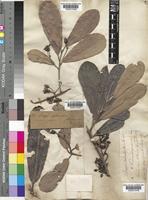
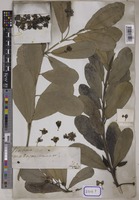
Venana madagascariensis

6 Images see all

Filed as Venana madagascariensis [family ESCALLONIACEAE]
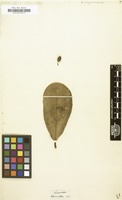
Holotype of Venana madagacariensis Lam. [family SAXIFRAGACEAE]
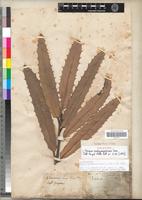
Isotype of Venana madagacariensis Lam. [family SAXIFRAGACEAE]
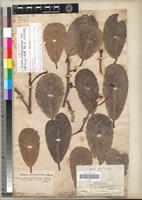
Venana madagascariensis Lam. [family CELASTRACEAE]
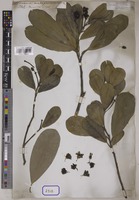
Brexia madagascariensis Thou. ex Ker-Gawl. [family ESCALLONIACEAE]
Venana madagascariensis Lam. [family CELASTRACEAE]
Previous
Next

Name

Identification
Brexia heterophylla unrecorded [family ESCALLONIACEAE ] Brexia madagascariensis Thou. ex Ker-Gawl. [family ESCALLONIACEAE ] (stored under name); Venana madagascariensis Lam. [family SAXIFRAGACEAE ]
Related name
  • Brexia heterophylla
  • Brexia madagascariensis
  • Venana madagascariensis

Flora

Entry for BREXIA Madagascariensis Lindl. [family ESCALLONIACEAE]
Herbarium
Royal Botanic Gardens, Kew (K)
Collection
Flora Capensis
Resource Type
Reference Sources
Entry From
Flora Capensis, Vol 2, page 305, (1894) Author: (By W. H. HARVEY).
Names
BREXIA Madagascariensis Lindl. [family ESCALLONIACEAE], Bot. Reg. t. 730
Venana Madagascariensis Lam. [family ESCALLONIACEAE], Encycl. t. 131.
Information
leaves oblong or obovate, quite entire, with revolute margins, netted-veined beneath. A glabrous and somewhat glaucous shrub. Leaves in our specimens shorter and more obovate than in those from Madagascar, but otherwise similar; 3–4 inches long, 2 1/2–3 inches wide. Ripe fruit 2 1/2 inches long, obscurely 5-angled, tapering to a conical, acute point; the rind thick and woody. Seeds horizontal.
Distribution
SOUTH AFRICA Delagoa Bay, Forbes! (Herb. Hk. D.)

Related Materials

  • Terms and Conditions
  • Privacy Policy
  • Cookie Policy
  • Cookie Settings
  • Accessibility
  • Help
  • Contact Us
  • Facebook
  • Twitter
ITHAKA

JSTOR is part of ITHAKA, a not-for-profit organization helping the academic community use digital technologies to preserve the scholarly record and to advance research and teaching in sustainable ways.

©2000-2026 ITHAKA. All Rights Reserved. JSTOR®, the JSTOR logo, JPASS®, Aluka®, and ITHAKA® are registered trademarks of ITHAKA.

╳