JSTOR Global Plants Home
  • Home
  • Browse
  • About
  • Access
  • Account
    • Saved Items
    • Profile
  • Log in

Global Plants

Skip to Main Content
  • JSTOR Global Plants Home
  • Global Plants

    • Browse
    • About
    • Access
    • Account
      • Saved Items
      • Profile
Log in
  • Browse
  • About
  • Access
  • Account
    • Saved Items
    • Profile
Advanced Search

Compilation
Vellereophyton niveum

3 Images see all

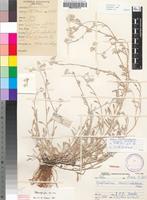
Holotype of Vellereophyton niveum Hilliard [family ASTERACEAE]
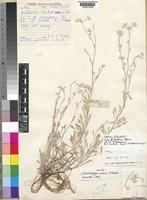
Isotype of Vellereophyton niveum Hilliard [family COMPOSITAE]
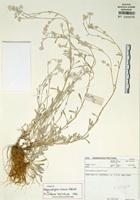
Isotype of Vellereophyton niveum Hilliard [family ASTERACEAE]
Previous
Next

Name

Identification
Isotype of Vellereophyton niveum Hilliard [family COMPOSITAE ] (stored under name); Gnaphalium candidissimum Lam. [family COMPOSITAE ]
Related name
  • Vellereophyton niveum
  • Gnaphalium candidissimum

Flora

Entry for Vellereophyton niveum [family ASTERACEAE]
Herbarium
South African National Biodiversity Institute, Compton Herbarium, Cape Town (SAM)
Collection
Flora of Southern Africa
Resource Type
Reference Sources
Entry From
Flora of South Africa, (2003) Author: Dr J.P. Roux
Names
Vellereophyton niveum [family ASTERACEAE]
Information
White-woolly herb, root possibly per­ennial, stems tufted from the crown, very variable in length, mostly 30-450 mm, prostrate to weakly erect, subsimple to laxly branched, woolly, leafy. Leaves mostly 6-35 (-50) x 2-5 mm, smaller upwards, oblanceolate or narrowly spathulate, apex obtuse to subacute, base much attenuated, petiole-like especially in lower leaves, both surfaces thinly white woolly. Heads hetero­gamous, campanulate, 2,5—3 x 2—2,5 mm, in small glomerules 5 — 10 mm across, subcorymbosely arranged at the branch tips. Involucral bracts in c. 5 series, backs woolly, outer shorter, inner subequal, slightly exceeding flowers, sometimes purplish red above stereome, tips broadly ovate to suborbicular, very obtuse, opaque white, radiating, eventually whole bract rotate. Receptacle nearly smooth. Flowers 20—37, 5-13 ("female"), 15-24 ("bisexual"), yellow, tipped pink. Achenes 0,5 mm long, with duplex hairs. Pappus bristles many, equalling corolla, tips subplumose, bases with patent cilia, scarcely cohering. Herba albo-lanata, radice fortasse per-enni; caules e caudice caespitosi, longitudine variabiles plerumque 30—450 mm, prostrati vel infirme erecti, subsimplices vel laxe ramosi, lanati, foliati. Folia plerumque 6—35 (—50) x 2—5 mm, sur sum decrescentia, oblanceolata vel anguste spatulata, apice obtuso vel subacuto, ad basin multo attenua-ta praecipue in foliis inferioribus petiolaria, utrinque tenuiter albo-lanata. Capitula hete-rogama, campanulata, 2,5—3 x 2—2,5 mm, in glomerulos parvos 5—10 mm diametro ad ramulorum apices subcorymbose disposita. Involucri bracteae c. 5-seriatae, dor so lanatae, exteriores breviores, interiores sub-aequales flores paulo superantes, interdum supra stereomate rubro-purpureae, demum horizontaliter patentia. Receptaculum fere laeve. Flores 20-37, 5-13 feminei, 15-24 hermaphroditi, flavi, roseo-apiculati. Ach-aenia 0,5 mm longa, pilis duplicibus myxogenis. Pappi setae numerosae, corol-lam aequantes, apicibus subplumosis, basi pilis patentibus vix inter se cohaerentes.
Habitat
Can be confused with V. dealbatum (no. 1) and Helichrysum indicum (p. 7, 2: 180); distinguished from V. dealbatum by its broader heads in which ("bisexual") flowers outnumber J» anc* by tne involucral bracts, not or scarcely coloured red about the stereome and with white tips distinctly broader than the shaft; distin­guished from H. indicum by its heterogamous heads (in H. indicum the heads are generally homogamous; only very rarely are 1 or 2 9 flowers present) and smooth, not crisped, involucral bracts.
Use
3. Vellereophyton niveum Hilliard, sp. Nov. a V. dealbato (Thunb.) Hilliard & Burtt capitulis late campanulatis 2,5 mm latis (nee anguste campanulatis 2 mm latis), bracteis involucri apicibus late ovatis vel suborbicularibus (nee oblongis), floribus femineis hermaphroditos multo superantibus (nee vice versa).
Range
Known from the environs of Vergenoegd and Kruidfontein (3221 Merweville), Potteberg near Bre-dasdorp and Albertinia near Riversdale, from near sea level to c. 975 m, growing in damp sand in river beds or around pans. Flowering recorded between September and January. Map 19.

Related Materials

  • Terms and Conditions
  • Privacy Policy
  • Cookie Policy
  • Cookie Settings
  • Accessibility
  • Help
  • Contact Us
  • Facebook
  • Twitter
ITHAKA

JSTOR is part of ITHAKA, a not-for-profit organization helping the academic community use digital technologies to preserve the scholarly record and to advance research and teaching in sustainable ways.

©2000-2026 ITHAKA. All Rights Reserved. JSTOR®, the JSTOR logo, JPASS®, Aluka®, and ITHAKA® are registered trademarks of ITHAKA.

╳