JSTOR Global Plants Home
  • Home
  • Browse
  • About
  • Access
  • Account
    • Saved Items
    • Profile
  • Log in

Global Plants

Skip to Main Content
  • JSTOR Global Plants Home
  • Global Plants

    • Browse
    • About
    • Access
    • Account
      • Saved Items
      • Profile
Log in
  • Browse
  • About
  • Access
  • Account
    • Saved Items
    • Profile
Advanced Search

Compilation
Vangueriopsis lanciflora

10 Images see all

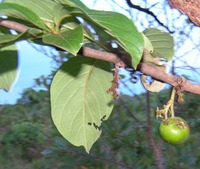
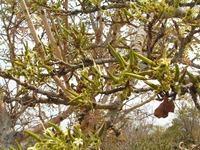
Vangueriopsis lanciflora
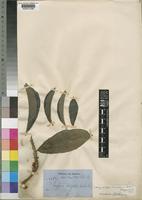
Vangueriopsis lanciflora (Hiern) Robyns [family RUBIACEAE]
Vangueriopsis lanciflora
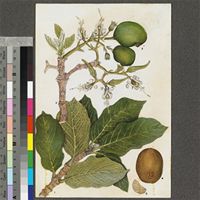
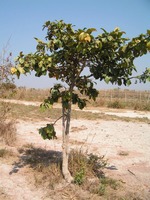
Vangueriopsis lanciflora (Hiern) Robyns original illustration from the 'Trees of Central Africa'
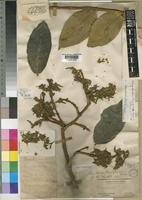
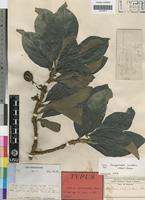
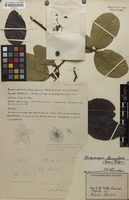
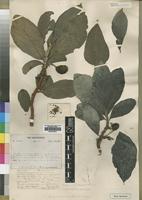
Type of Canthium platyphyllum Hiern [family RUBIACEAE]
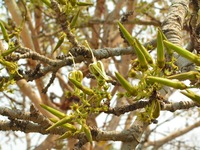
Vangueriopsis lanciflora (Hiern) Robyns [family RUBIACEAE]
Vangueriopsis lanciflora
Filed as Vangueriopsis lanciflora (Hiern) Robyns [family RUBIACEAE]
Vangueriopsis lanciflora
Type of Canthium platyphyllum Hiern [family RUBIACEAE]
Previous
Next

Name

Identification
Vangueriopsis lanciflora (Hiern) Robyns [family RUBIACEAE ]
Related name
  • Vangueriopsis lanciflora

Flora

Entry for Vangueriopsis lanciflora Hiern Robyns [family RUBIACEAE]
Herbarium
Royal Botanic Gardens, Kew (K)
Collection
Flora Zambesiaca
Resource Type
Reference Sources
Entry From
FZ, Vol 5, Part 2, (1998) Author: D. Bridson
Names
Vangueriopsis lanciflora Hiern Robyns [family RUBIACEAE], in Bull. Jard. Bot. État 11: 252 (1928)* . —Brenan, Check-list For. Trees Shrubs Tang. Terr.: 538 (1949). —Pardy in Rhod. Agric. J. 49: 259 (1952). —K. Coates Palgrave, Trees Central Africa: 392, figs. (1957). —F. White, F.F.N.R.: 425, fig. 68, B,C (1962). —Launert in Merxmüller, Prodr. Fl. SW. Africa, fam. 115: 27 (1966). —Palmer & Pitman, Trees Southern Africa 3: 2086 (1973). —Drummond in Kirkia 10: 276 (1975). —Palmer, Field Guide Trees Southern Africa: 44 (1977). —K. Coates Palgrave, Trees Southern Africa, ed. 3, rev.: 876, pl. 302 (1988). —Verdcourt in Kew Bull. 42: 187, fig. 3C (1987); in F.T.E.A., Rubiaceae: 774 (1991). TAB. 59. Type: Zambia, near Victoria Falls, Kirk (K, holotype).
Canthium lanciflorum Hiern [family RUBIACEAE], in F.T.A. 3: 146 (1877). —Oliver in Hooker’s Icon. Pl.: t. 2252 (1893).
Canthium platyphyllum Hiern [family RUBIACEAE], Cat. Afr. Pl. Welw. 1: 479 (1898). Type from Angola.
Vangueria lateritia Dinter [family RUBIACEAE], in Repert. Spec. Nov. Regni Veg. 24: 267 (1928). Type from Namibia.
Information
Deciduous shrub or much branched small tree (0.9)1.5–6(13) m tall; branches thick and stiff; bark grey, flaking off to expose a brownish-pink or rusty-red underbark; young branches densely grey-pubescent.Leaves opposite; blades (1.5)5.3–21.5 × (0.5)1.6–12.5 cm, elliptic or oblong-elliptic, ± rounded or subacute at the apex, rounded to cuneate at the base, markedly discolorous, rather scabrid pubescent above, velvety grey or yellowish tomentose or pubescent beneath, very rarely glabrous; petiole 5–15 mm long; stipules thick, up to 9 mm long, triangular, joined to form a sheath at the base, grey tomentose outside, densely hairy inside, with a thick obtuse subulate apex 8–12 mm long, eventually deciduous.Inflorescences densely yellowish velvety pubescent, simply cymose or branched, axillary on the leafless nodes of older branches; cymes several-flowered; bracts 4–6 mm long, lanceolate or subulate; peduncles and secondary branches 10–20 mm long; pedicels very short, or up to 8 mm long.Calyx tube 4 × 4 mm, subcampanulate, densely tomentose; lobes erect, 1.5–5.5 mm long, narrowly lanceolate to triangular to oblong-lanceolate, densely tomentose.Corolla beaked, elongate, with divaricate tails at apex in bud; whitish or yellow-green, grey tomentose; tube 5 mm long, cylindric, with a ring of deflexed hairs inside; lobes reflexed, 20–25 mm long, linear-lanceolate, glabrous inside, tomentose outside, apiculate at the apex.Anthers 2.5–3 mm long, exserted for 5 mm.Style green, rather stout, exserted for up to 15 mm, constricted near the apex; pollen presenter 2–2.5 mm long, cylindric, smooth, 2-lobed at the apex.Fruit rather like a “medlar”, 2–4 × 1.7–2 cm, or the size of a peach (ex Zimbabwe label), rounded, compressed, didymous or oblique, crowned by the calyx limb, sparsely pubescent, with 1–2 pyrenes; pyrenes up to 21 × 9 mm, narrowly ellipsoid, with a woody wall 1.7 mm thick.
Habitat
Common at medium to higher altitudes, in deciduous woodlands and open grassland with scattered trees, often on Kalahari Sand, sometimes on rocky ground, associated with Albizia–Combretum, Brachystegia–Julbernardia, Parinari, Monotes, Burkea–Pterocarpus–Copaifera, also retained in old cultivations and fields for its edible fruit
Altitude range
900–1740 m.
1740
900
Distribution
Malawi S Shire Highlands, fl. Buchanan 475 (E; K).Zimbabwe C Marondera Distr., Lendy, fl. 30.ix.1949, Corby 493 (K; SRGH).Zimbabwe W Shangani Distr., Gwampa Forest Reserve, fl. i.1958, Goldsmith 37/58 (K; SRGH).Zambia S Mapanza, fl. 5.viii.1954, E.A. Robinson 864 (EA; K).Zambia E Chipata (Fort Jameson), young fr. 13.x.1967, Mutimushi 2302 (K; NDO).Zambia C Chilanga, Quien Sabe, fl. & fr. ix.1929, C. Sandwith 26 (K).Zambia W between Mwinilunga and Matonchi Farm, fl. 6.ix.1930, Milne-Redhead 1060 (K).Zambia N Mbala Distr., Kawimbe, fl. 12.vii.1960, Richards 12870 (K).Mozambique N Mandimba, sterile 14.v.1948, Pedro & Pedrogão 3398 (EA; LMA).Malawi C Lilongwe, Nature Sanctuary Zone B, Northern Trail, fr. 13.xi.1984, Patel, Salubeni & Banda 1700 (K; MAL).Zimbabwe N Zvimba Distr., about 3 km west of Mutorashanga (Mtoroshanga) Village, fl. 15.ix.1963, Leach & Müller 11719 (K; SRGH).Zambia B near Senanga, fl. & fr. 29.vii.1952, Codd 7222 (BM; COI; K; PRE; SRGH).
Distribution (external)
Tanzania
Angola
Namibia
Notes
One glabrous specimen has been seen [Zambia W: Mwinilunga Distr., c. 3.5 km east of Ikelenge, Karunga Protected Forest Area, adjacent to Hillwood Farm’s Nchila Wildlife Reserve, sterile 28.ii.1995, Luwiika et al. 103 (K; MO)].

Related Materials

  • Terms and Conditions
  • Privacy Policy
  • Cookie Policy
  • Cookie Settings
  • Accessibility
  • Help
  • Contact Us
  • Facebook
  • Twitter
ITHAKA

JSTOR is part of ITHAKA, a not-for-profit organization helping the academic community use digital technologies to preserve the scholarly record and to advance research and teaching in sustainable ways.

©2000-2026 ITHAKA. All Rights Reserved. JSTOR®, the JSTOR logo, JPASS®, Aluka®, and ITHAKA® are registered trademarks of ITHAKA.

╳