JSTOR Global Plants Home
  • Home
  • Browse
  • About
  • Access
  • Account
    • Saved Items
    • Profile
  • Log in

Global Plants

Skip to Main Content
  • JSTOR Global Plants Home
  • Global Plants

    • Browse
    • About
    • Access
    • Account
      • Saved Items
      • Profile
Log in
  • Browse
  • About
  • Access
  • Account
    • Saved Items
    • Profile
Advanced Search

Compilation
Vangueria rotundata

13 Images see all

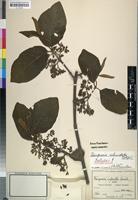
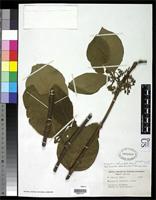
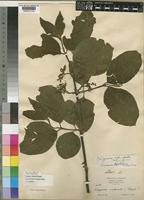
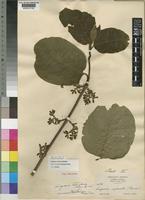
Isotype of Vangueria rotundata Robyns [family RUBIACEAE]
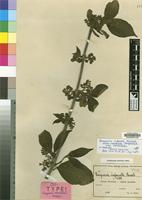
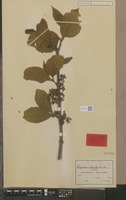
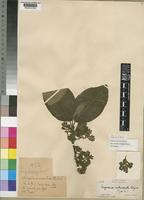
Type of Vangueria rotundata Robyns [family RUBIACEAE]
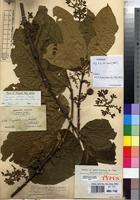
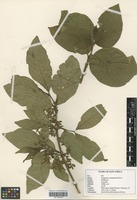
Filed as Vangueria rotundata Robyns, F.H.E.A.W. 1928 [family RUBIACEAE]
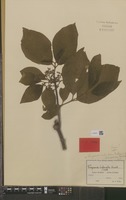
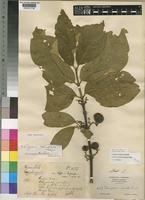
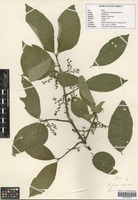
Type of Vangueria rotundata Robyns [family RUBIACEAE]
Vangueria infausta Burch. var. rotundata [family RUBIACEAE]
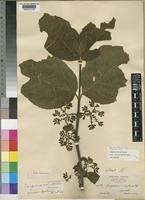
Type of Vangueria rotundata Robyns. [family RUBIACEAE]
Filed as Vangueria rotundata Robyns [family RUBIACEAE]
Vangueria infausta Burch. var. rotundata [family RUBIACEAE]
Previous
Next

Name

Identification
Isotype of Vangueria rotundata Robyns [family RUBIACEAE ] Verified by Not on sheet, Vangueria infausta Burch. [family RUBIACEAE ] (stored under name); Verified by Not on sheet,
Related name
  • Vangueria infausta
  • Vangueria rotundata

Flora

Entry for Vangueria infausta subsp. rotundata Robyns Verdc. [family RUBIACEAE]
Herbarium
Royal Botanic Gardens, Kew (K)
Collection
Flora Zambesiaca
Resource Type
Reference Sources
Entry From
FZ, Vol 5, Part 2, (1998) Author: D. Bridson
Names
Vangueria infausta subsp. rotundata Robyns Verdc. [family RUBIACEAE], in Kew Bull. 36: 549 (1981); in F.T.E.A., Rubiaceae: 852 (1991). —Beentje, Kenya Trees, Shrubs Lianas: 550 (1994). Type from Tanzania.
Vangueria rotundata Robyns [family RUBIACEAE], in Bull. Jard. Bot. État 11: 300, figs. 27 & 28 (1928). —Brenan, Check-list For. Trees Shrubs Tang. Terr.: 538 (1949). —Dale & Greenway, Kenya Trees & Shrubs: 479 (1961).
Vangueria tomentosa [family RUBIACEAE], sensu Dale & Eggeling, Indig. Trees Uganda, ed. 2: 358 (1952), pro parte. —F.W. Andrews, Fl. Pl. Anglo-Egypt. Sudan 2: 466 (1952). —Dale & Greenway, Kenya Trees & Shrubs: 479 (1961) non Hochst.
Vangueria campanulata [family RUBIACEAE], sensu Dale & Greenway, Kenya Trees & Shrubs: 478 (1961), pro parte non Robyns.
Information
Leaves often attaining dimensions towards the upper end of the scale of size given above and often more developed at flowering time, densely pubescent to densely velvety.Inflorescences often extensively branched.Corolla acute to distinctly apiculate at the apex in bud; glabrous to densely spreading hairy outside.Fruit up to 4.7 cm in diameter.
Notes
General Note. The division of V. infausta into subspecies and varieties seems reasonable when comparing South African populations to material in the Flora of Tropical East Africa area but in most parts of the Flora Zambesiaca area it is not worth trying to make a distinction. Determination as V. infausta sensu lato will be enough for most purposes. However, subspecies rotundata with its two varieties is included here as these taxa may have some validity in the northern and eastern parts of the Flora Zambesiaca area. They are difficult to determine in the absence of corollas and there is some overlap in the distribution ranges. E. Phillips 4515 [Malawi: Nyika Plateau, Chintheche] has rather long calyx lobes but seems to be a variety of V. infausta; the lobes are not long enough for V. volkensii var. kyimbilensis, and the stems are rather different. Some Zambian Copperbelt specimens [e.g. Harder et al. 2627 (K; MO) from Mwekera Forest College, fr. 5.ii.1995; and Fanshawe 5976 (K) from Ndola, young fr. 14.xii.1953] also have longer calyx lobes but otherwise resemble V. infausta. V. infausta could be considered a pubescent variety of V. madagascarensis. Indeed some robust specimens from Mozambique are very like V. madagascariensis except for the pubescence. There is also some confusion with V. proschii, see notes after that species.

Related Materials

  • Terms and Conditions
  • Privacy Policy
  • Cookie Policy
  • Cookie Settings
  • Accessibility
  • Help
  • Contact Us
  • Facebook
  • Twitter
ITHAKA

JSTOR is part of ITHAKA, a not-for-profit organization helping the academic community use digital technologies to preserve the scholarly record and to advance research and teaching in sustainable ways.

©2000-2026 ITHAKA. All Rights Reserved. JSTOR®, the JSTOR logo, JPASS®, Aluka®, and ITHAKA® are registered trademarks of ITHAKA.

╳