JSTOR Global Plants Home
  • Home
  • Browse
  • About
  • Access
  • Account
    • Saved Items
    • Profile
  • Log in

Global Plants

Skip to Main Content
  • JSTOR Global Plants Home
  • Global Plants

    • Browse
    • About
    • Access
    • Account
      • Saved Items
      • Profile
Log in
  • Browse
  • About
  • Access
  • Account
    • Saved Items
    • Profile
Advanced Search

Compilation
Vangueria acutiloba

4 Images see all

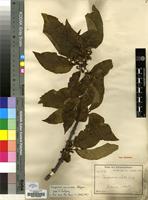
Vangueria madagascariensis J.F.Gmel. [family RUBIACEAE]
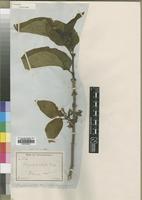
Isotype of Vangueria acutiloba Robyns [family RUBIACEAE]
Type of Vangueria edulis Vahl [family RUBIACEAE]
Type of Vangueria acutiloba Robyns [family RUBIACEAE]
Previous
Next

Name

Identification
Vangueria acutiloba Robyns [family RUBIACEAE ] (stored under name); Vangueria edulis Vahl [family RUBIACEAE ]
Related name
  • Vangueria edulis
  • Vangueria acutiloba
  • Vangueria madagascariensis

Flora

Entry for Vangueria madagascariensis J.F. Gmel. [family RUBIACEAE]
Herbarium
Royal Botanic Gardens, Kew (K)
Collection
Flora Zambesiaca
Resource Type
Reference Sources
Entry From
FZ, Vol 5, Part 2, (1998) Author: D. Bridson
Names
Vangueria madagascariensis J.F. Gmel. [family RUBIACEAE], Syst. Nat., ed. 13, 2: 367 (1791). —Webster, Food Plants of the Philippines: 196, t. 47b (1924). —J.G. Garcia in Mem. Junta Invest. Ultramar 6 (sér. 2): 32 (1959) [Contrib. Conhec. Fl. Moçamb. IV (1959)]. —Verdcourt in Kew Bull. 36: 548 (1981); in Kew Bull. 42: 830, fig. 3A (1987); in Fl. des Mascareignes, fam. 108, Rubiacées: 108, t. 32 (1989); in F.T.E.A., Rubiaceae: 849, figs. 131/22, 132/15 & 150 (1991). —Beentje, Kenya Trees, Shrubs Lianas: 551 (1994). TABS. 47/B6 & 51. Type from Madagascar.
Vavanga chinensis Rohr [family RUBIACEAE], in Skr. Naturhist.-Selsk. 2: 207 (1792). Type from West Indies.
Vavanga edulis Vahl [family RUBIACEAE], in Skr. Naturhist.-Selsk. 2: 208, t. 7 (1792). Type as for V. chinensis, nom. illegit.
Vangueria edulis Vahl Vahl [family RUBIACEAE], in Symb. Bot. 3: 36 (1794).
Vangueria edulis Lam. [family RUBIACEAE], Tabl. Encycl. 5, 2: 235 (1819); 1, 2: t. 159 (1792) without specific epithet. Type from Mauritius.
Vangueria acutiloba Robyns [family RUBIACEAE], in Bull. Jard. Bot. État 11: 286 (1928). —Brenan, Check-list For. Trees Shrubs Tang. Terr.: 537 (1949). —Dale & Greenway, Kenya Trees & Shrubs: 478 (1961). Type from Tanzania.
Vangueria floribunda Robyns [family RUBIACEAE], in Bull. Jard. Bot. État 11: 285 (1928). Type from South Africa (Mpumalanga Prov.).
Vangueria venosa Robyns [family RUBIACEAE], in Bull. Jard. Bot. État 11: 290 (1928). —F.W. Andrews, Fl. Pl. Anglo-Egypt. Sudan 2: 466 (1952) non Sond. Type from Ethiopia.
Vangueria robynsii Tennant [family RUBIACEAE], in Kew Bull. 22: 443 (1968). Type as for V. venosa.
Vangueria cyanescens [family RUBIACEAE], sensu Pooley, Trees of Natal, Zululand & Transkei: 470, fig. (1993), non Robyns.
Information
Shrub or small tree, 1.5–15 m tall, often multi-stemmed and sometimes with a spreading crown; stems mostly robust, glabrous, longitudinally ridged, with pale to mid-brown bark, mostly smooth and unpeeling (but peeling or powdery in one southern Tanzanian variant).Leaf blades 8–28 × 3.2–15 cm, narrowly to broadly elliptic or elliptic-lanceolate, acute to shortly acuminate at the apex, cuneate to rounded or less often ± subcordate at the base, entirely glabrous or sometimes very young leaves pilose beneath and adult ones sparsely pubescent; lateral nerves in (7)8–10 main pairs; tertiary nerves finely reticulate, often drying distinctly dark below and pale above; petiole 0.3–1.8 cm long, often drying cream-coloured; stipules with a broad base 3–5 mm long, and a narrow apex 0.4–1.8 cm long; glabrous or pubescent.Inflorescence c. 30-flowered, pubescent; branches 1–4.5 cm long, 7–10-flowered; main peduncle c. 10 mm long; pedicels about 2 mm long, save those of the central flower of the inflorescence which measures 4 mm long.Calyx tube 1.2–3 mm long; lobes 0.5–1.5 mm long, triangular-oblong to narrowly oblong, ± pubescent.Corolla slightly to usually markedly acuminate in bud, or apiculate due to the corolla lobe appendages; greenish-yellow, yellow or cream, glabrous or rarely with a few hairs; tube 3–4.5 mm long; lobes 3.5–4.5 mm long with appendages up to 0.5 mm long.Style 7–8 mm long; pollen presenter yellow, 1.2–1.5 mm long, cylindrical.Fruits green to brownish, 2.5–5 cm diameter, subglobose; pyrenes 4–5, each c. 20 × 12 × 8 mm with thick woody walls 1–2 mm thick.Seeds c. 16 × 6 × 4.5 mm, narrowed at one end.
Habitat
Also widely cultivated throughout the tropics for its edible fruits. In grassveld on sandy rocky soil, or sand banks at edge of lakes and beaches
Altitude range
90–470 m.
470
90
Distribution
Mozambique M between Goba and Catuane, fl. & fr. 24.x.1940, Torre 1862 (LD; LISC; LMU).Mozambique MS Buzi, Mucheve Forest Reserve, fl. 28.x.1963, Carvalho 698 (LMU; PRE).Mozambique T Cahora Bassa (Cabora Bassa), 2 km from dam, R. Mucangádzi, fr. 8.ii.1973, Torre et al. 19035 (C; COI; LISC; LMA; MO; WAG).Mozambique Z Maganja da Costa, Floresta de Gobene, 45 km from Olinga (Maganja), fr. 14.ii.1966, Torre & Correia 14616 (FHO; LISC; LMU; MO; SRGH).Malawi C Salima, Lake Nyasa Hotel, fr. 15.ii.1959, Robson 1611 (BM; K; SRGH).
Distribution (external)
Nigeria
Cameroon
Zaire (Dem. Rep. Congo)
Central African Republic
Sudan
Ethiopia
Uganda
Kenya
Tanzania
Swaziland
South Africa (North Province, Gauteng, Mpumalanga and KwaZulu-Natal)
Madagascar
Notes
The material cited above is directly comparable with the South African material previously called Vangueria floribunda, which consistently has pale robust stems, short cream-coloured petioles and large stiffly chartaceous leaves. It is close to material from Madagascar, but that mostly has slightly longer petioles. Material from further north in mainland Africa is more variable. In southern Tanzania (Ufipa and Iringa Districts) V. madagascariensis has proved difficult to separate from V. apiculata; see note after that species for further remarks concerning specimens from Zambia N. Specimens of V. madagascariensis with some pubescence on either leaves and/or corolla are not uncommon and V. infausta could well be considered a pubescent form of this species. However, when one compares typical V. infausta with typical V. madagascariensis and considers that all but a very few specimens are easily named and that the rest are abundantly distinct, combining the two would be impractical. In Tanzania hairy and glabrous variants have been found growing together e.g. Brummitt & Polhill 13617 and 13617A in Tanzania, Iringa District. Robyns treats V. venosa as published by Richard but the latter only lists it in synonymy.

Related Materials

  • Terms and Conditions
  • Privacy Policy
  • Cookie Policy
  • Cookie Settings
  • Accessibility
  • Help
  • Contact Us
  • Facebook
  • Twitter
ITHAKA

JSTOR is part of ITHAKA, a not-for-profit organization helping the academic community use digital technologies to preserve the scholarly record and to advance research and teaching in sustainable ways.

©2000-2026 ITHAKA. All Rights Reserved. JSTOR®, the JSTOR logo, JPASS®, Aluka®, and ITHAKA® are registered trademarks of ITHAKA.

╳