JSTOR Global Plants Home
  • Home
  • Browse
  • About
  • Access
  • Account
    • Saved Items
    • Profile
  • Log in

Global Plants

Skip to Main Content
  • JSTOR Global Plants Home
  • Global Plants

    • Browse
    • About
    • Access
    • Account
      • Saved Items
      • Profile
Log in
  • Browse
  • About
  • Access
  • Account
    • Saved Items
    • Profile
Advanced Search

Compilation
Vahlia glandulosa

11 Images see all

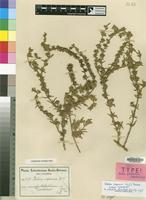
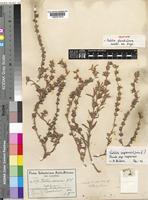
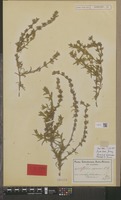
Isotype of Vahlia glandulosa Schltr. ex Engl. [family SAXIFRAGACEAE]
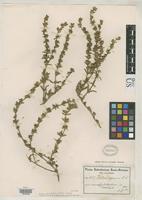
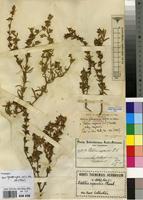
Type of Vahlia glandulosa Schltr. ex Engl. [family VAHLIACEAE]
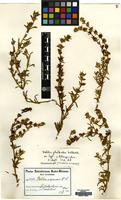
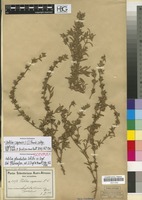
Isotype of Vahlia glandulosa Schltr. [family SAXIFRAGACEAE]
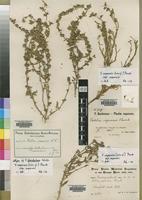
Isotype of Vahlia glandulosa Schltr. ex Engl. [family VAHLIACEAE]
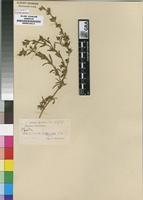
Isotype of Vahlia glandulosa Schltr. ex Engl. [family SAXIFRAGACEAE]
Isotype of Vahlia glandulosa Schltr. ex Engl. [family VAHLIACEAE]
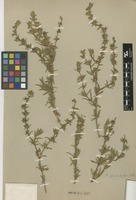
Isotype of Vahlia glandulosa Schltr. ex Engl. [family SAXIFRAGACEAE]
Isotype of Vahlia glandulosa Schltr. ex Engl. [family VAHLIACEAE]
Isotype of Vahlia glandulosa Schlechter, F.R.R. 1930 [family SAXIFRAGACEAE]
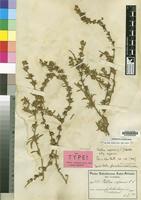
Type? of Vahlia glandulosa Schltr. ex Engl. [family VAHLIACEAE]
Previous
Next

Name

Identification
Isotype of Vahlia glandulosa Schltr. [family SAXIFRAGACEAE ] Verified by Bridson,D., Vahlia capensis (L.f.) Thunb. [family VAHLIACEAE ] (stored under name);
Related name
  • Vahlia glandulosa
  • Vahlia capensis

Flora

Entry for Vahlia capensis L.f. Thunb. [family VAHLIACEAE]
Herbarium
Royal Botanic Gardens, Kew (K)
Collection
Flora Zambesiaca
Resource Type
Reference Sources
Entry From
FZ, Vol 4, Part 0, page 48, (1978) Author: D. M. Bridson
Names
Vahlia capensis L.f. Thunb. [family VAHLIACEAE], Nov. Gen. Pl. 2: 36 (1782)—Lam. Illustr. Gen. 2: 328 (1819) et tab. 183 (1792)—DC., Prodr. 4: 53 (1830).—Harv. in Harv. & Sond., F.C. 2: 306 (1862).—Oliv. in F.T.A. 2: 384 (1871).—Baill, Hist. Pl. 3: 335, fig. 374, 375 (1872).—Hiern, Cat. Afr. Pl. Welw. 1: 324 (1896).—Engl. & Gilg in Warb., Kunene-Samb.-Exped. Baum: 242 (1903).—Schinz in Denkschr. Akad. Wiss. Wien, Math.-Nat. Kl. 78: 415 (1905).—Dinter, Deutsch SW.-Afr. Fl. For. Landt. Frag.: 71 (1909).—Engl., Pflanzenw. Afr. 3, 1: 286 (1915).—Eyles in Trans. Roy. Soc. S. Afr. 5, 4: 358 (1916).—Engl. in Engl. & Pranti, Pflanzenfam. ed. 2, 18a: 166 (1930).—Gomes e Sousa in Bol. Soc. Estud. Col. Mocamb. 32: 304 (1936).—Friedrich-Holzhammer in Prodr. Fl. SW. Afr. 53 (1968).—Mendes in C.F.A. 4: 22 (1970).—Bridson in Kew Bull. 30, 1: 168, fig. 2 A-M, map 2 (1975). TAB. 13 fig. C. Type from S. Africa.
Russelia capensis L. f. [family VAHLIACEAE], Suppl. Pl.: 175 (1781). Type as above.
Vahlia glandulosa Schlechter ex Engl. [family VAHLIACEAE], in Engl. & Pranti, loc. cit. Type from S. Africa.
Bistella capensis L. f. Bullock [family VAHLIACEAE], in Acta Bot. Neerl. 15: 85 (1966); in Meded. Bot. Mus. Herb. Rijksuniv. Utrecht 229: 85 (1966). Type as for V. capensis.
Information
An erect to straggling or diffusely branched, cushion-like herb or suffrutex, annual or biennial or perennial, 3·5–55 cm. tall, often with a woody tap-root or rhizome, entirely glabrous, pubescent or densely glandular-hairy. Leaves linear-lanceolate, 0·7–5·9 x 0·05–0·75 cm., linear or narrowly linear (or elliptic in 1 S. African subsp.), acute at apex, narrowed to base. Peduncles 0·2–1·5 cm. long; pedicels 0·4 mm. long (sessile or subsessile in Angolan and SW. African varieties). Calyx-tube 1·1–2(3) mm. long, glabrous to densely glandular hairy; calyx-lobes lanceolate or linear-lanceolate, (2·2)3–5(5·4) x 0·9–1·7(2) mm., frequently exceeding the tube in length, acute to acuminate at apex, the indumentum various but generally less dense than that of the tube, erect (or reflexing in subsp. capensis which is restricted to SW. Cape Prov.). Petals pale to bright yellow, sometimes drying with a maroon area at base, varying from strap-like to orbicular, 2·3–7 x 0·8–5 mm., rounded, acute or occasionally acuminate at apex; margin ± entire to very irregularly dentate; mid and lateral veins usually apparent, usually hairy at the base inside. Filaments 2–5·4 mm. long, glabrous or sparsely hairy, base with a membranous, hairy scale (variable in shape and size) or only with hairs; anthers 1–2·5 mm. long. Style-bases gradually and not markedly thickened, free to the disk, glabrous or rarely with short patent hairs; styles 4–6·6(8) mm. long, glabrous. Capsule 1·5–2·9 mm. long, glabrous to densely pubescent. Seeds straw-coloured to pale brown, ± ovoid or spindle-shaped, 0·3–0·55 mm. long, with distinct longitudinal ridges.

Related Materials

  • Terms and Conditions
  • Privacy Policy
  • Cookie Policy
  • Cookie Settings
  • Accessibility
  • Help
  • Contact Us
  • Facebook
  • Twitter
ITHAKA

JSTOR is part of ITHAKA, a not-for-profit organization helping the academic community use digital technologies to preserve the scholarly record and to advance research and teaching in sustainable ways.

©2000-2026 ITHAKA. All Rights Reserved. JSTOR®, the JSTOR logo, JPASS®, Aluka®, and ITHAKA® are registered trademarks of ITHAKA.

╳