JSTOR Global Plants Home
  • Home
  • Browse
  • About
  • Access
  • Account
    • Saved Items
    • Profile
  • Log in

Global Plants

Skip to Main Content
  • JSTOR Global Plants Home
  • Global Plants

    • Browse
    • About
    • Access
    • Account
      • Saved Items
      • Profile
Log in
  • Browse
  • About
  • Access
  • Account
    • Saved Items
    • Profile
Advanced Search

Compilation
Vitellariopsis kirkii

5 Images see all

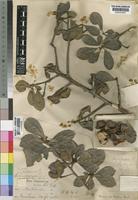
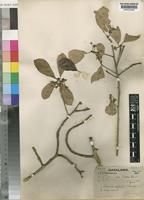
Holotype of Vitellariopsis kirkii (Baker) Dubard [family SAPOTACEAE]
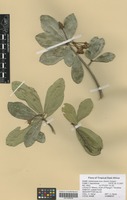
Filed as Vitellariopsis kirkii (Baker) Dubard [family SAPOTACEAE]
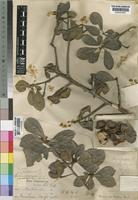
Vitellariopsis kirkii (Baker) Dubard [family SAPOTACEAE]
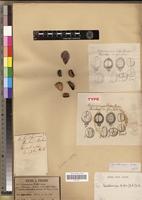
Type of Butyrospermum kirkii Baker [family SAPOTACEAE]
Vitellariopsis kirkii (Baker) Dubard [family SAPOTACEAE]
Previous
Next

Name

Identification
Vitellariopsis kirkii (Baker) Dubard [family SAPOTACEAE ] (stored under name);
Related name
  • Mimusops sylvestris
  • Vitellariopsis kirkii
  • Butyrospermum kirkii
  • Mimusops bakeri

Flora

Entry for VITELLARIOPSIS kirkii (Baker) Dubard [family SAPOTACEAE]
Herbarium
Royal Botanic Gardens, Kew (K)
Collection
Flora of Tropical East Africa
Resource Type
Reference Sources
Entry From
Flora of Tropical East Africa, page 1, (1968) Author: J. H. Hemsley
Names
VITELLARIOPSIS kirkii (Baker) Dubard [family SAPOTACEAE], in Ann. Mus. Col. Marseille, sér. 3, 3: 45 (1915); K.T.S.: 530(1961). Type: Kenya, Mombasa area, Kirk (K, holo.!)
Butyrospermum? kirkii Baker [family ], in F.T.A. 3: 505 (1877)
Mimusops bakeri Baill. [family SAPOTACEAE], in Bull. Soc. Linn. Paris 2: 942 (1891) & Hist. Pl. 11: 270(1892); Engl., E.M. 8: 80(1904); T.S.K.: 122(1935). Type: as Butyrospermum kirkii Baker non Mimusops kirkii Baker
Information
Spreading much-branched shrub or small tree, height up to 5 m. Young shoots with brownish indumentum, later becoming glabrous. Petioles up to 7 mm. long, practically glabrous when mature. Stipules linear, persistent. Leaf-lamina ± oblanceolate, up to 7 cm. long and 3.2 cm. wide, shortly acuminate or rarely ± obtuse, base tapering and narrowly cuneate, practically glabrous; lateral nerves finely raised on lower surface. Pedicels up to 2.8 cm. long, densely ferrugineously pubescent. Outer calyx-lobes narrowly ovate, 6.5–8 mm. long, 2.5–3 mm. wide, with dense ferrugineous pubescence outside; inner lobes oblong-lanceolate, a little smaller and with paler pubescence. Corolla creamish to pale yellow; outer segments ± oblong-lanceolate, up to 7 mm. long; median segment ligulate, erect, 5–7 mm. long; tube up to 2 mm. long. Filaments tapering and ± flattened, up to 2.5 mm. long; staminodes narrowly ovate, up to 4 mm. long, closely adjacent and ± connate at base. Ovary densely pilose; style up to 9 mm. long. Fruit ± ovoid with short terminal rostrum, up to 4 cm. in diameter, indumentum rubbing off and skin becoming practically glabrous. Seeds up to 2.8 cm. in diameter, with lateral hilum and large spreading scar covering over half of surface area. Fig. 12.
Range
DISTR. K7; T3, 6, 8 not known elsewhere
Altitude range
0–300 (?–360) m.
Distribution
KENYA Mombasa, Port Tudor, MacNaughton 85 in F.D. 2620!TANGANYIKA Pangani District Bushiri, 6 Oct. 1950 (fl.), Faulkner 688! & 2 Dec. 1950 (fl.), Faulkner 732!TANGANYIKA Uzaramo District Kiserawe, Hundogo Forest Reserve, Aug. 1953 (fl.), Paulo 117 !
Notes
A gathering obtained in the Kwale District of Kenya between Samburu and Mackinnon Road, Drummond & Hemsley 4203 !, may be related to this species. The leaves are shorter in relation to breadth and are generally larger than those of the type, approaching an obovate shape. Flowers are also a little larger in all parts, especially staminodes. Accurate determination must await further collection of material, to show mature fruits and possible leaf shape and size variation. The locality was a small rocky hill at Taru, south of the road in gully shrub-thickets between outcropping rocks.

Related Materials

  • Terms and Conditions
  • Privacy Policy
  • Cookie Policy
  • Cookie Settings
  • Accessibility
  • Help
  • Contact Us
  • Facebook
  • Twitter
ITHAKA

JSTOR is part of ITHAKA, a not-for-profit organization helping the academic community use digital technologies to preserve the scholarly record and to advance research and teaching in sustainable ways.

©2000-2026 ITHAKA. All Rights Reserved. JSTOR®, the JSTOR logo, JPASS®, Aluka®, and ITHAKA® are registered trademarks of ITHAKA.

╳