JSTOR Global Plants Home
  • Home
  • Browse
  • About
  • Access
  • Account
    • Saved Items
    • Profile
  • Log in

Global Plants

Skip to Main Content
  • JSTOR Global Plants Home
  • Global Plants

    • Browse
    • About
    • Access
    • Account
      • Saved Items
      • Profile
Log in
  • Browse
  • About
  • Access
  • Account
    • Saved Items
    • Profile
Advanced Search

Compilation
Utricularia simulans

11 Images see all

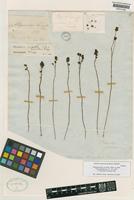
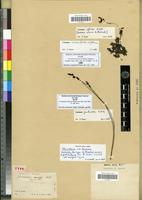
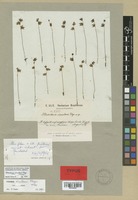
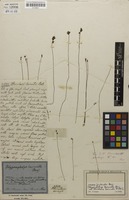
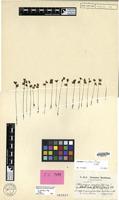
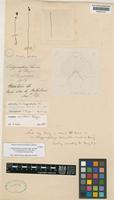
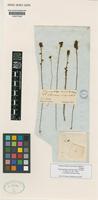
Syntype of Polypompholyx laciniata Mart. ex Benj. [family LENTIBULARIACEAE]
Filed as Utricularia simulans Pilger [family LENTIBULARIACEAE]
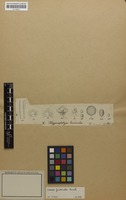
Type of Utricularia simulans Pilg. [family LENTIBULARIACEAE]
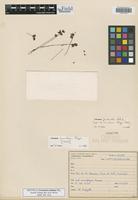
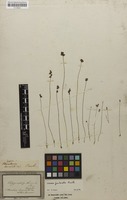
Isotype of Utricularia simulans Pilg. [family LENTIBULARIACEAE]
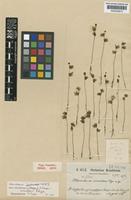
Filed as Utricularia simulans Pilg. [family LENTIBULARIACEAE]
Isotype of Utricularia simulans Pilg. [family LENTIBULARIACEAE]
Syntype of Polypompholyx laciniata Mart. ex Benj. [family LENTIBULARIACEAE]
Filed as Utricularia simulans Pilg. [family LENTIBULARIACEAE]
Type of Polypompholyx laciniata Benj. [family LENTIBULARIACEAE]
Previous
Next

Name

Identification
Isotype of Utricularia simulans Pilg. [family LENTIBULARIACEAE ] (stored under name); Verified by Not on sheet,
Related name
  • Polypompholyx laciniata
  • Utricularia simulans
  • Utricularia fimbriata
  • Utricularia longeciliata

Flora

Entry for Utricularia simulans Pilger [family LENTIBULARIACEAE]
Herbarium
Royal Botanic Gardens, Kew (K)
Collection
Flora Zambesiaca
Resource Type
Reference Sources
Entry From
FZ, Vol 8, Part 3, page 9, (1988) Author: P. Taylor
Names
Utricularia simulans Pilger [family LENTIBULARIACEAE], in Not. Bot. Gart. Berl. 6: 194 (1914). Type from Brazil.
Utricularia fimbriata [family LENTIBULARIACEAE], sensu Taylor in Kew Bull. 18: 72 (1964); in Fl. Afr. Centr., Lentibulariaceae: 26 (1972) non Kunth.
Information
Terrestrial herb. Rhizoids and stolons capillary, numerous at the base of the peduncle. Leaves numerous, rosulate at the base of the peduncle and scattered on the stolons, narrowly linear, 5–15 ×0.3–0.5 mm., 1-nerved. Traps numerous, stalked, or 0.2–0.3 mm. long; mouth lateral with a shortly conical dorsal appendage and a larger, deeply bifid ventral appendage. Inflorescence erect, 1.5–11 cm. tall; peduncle filiform, glabrous; flowers 1–5, more or less congested; scales numerous, similar to the bracts; bracts basifixed, broadly ovate in outline, 1–1.5 mm. long, the base auriculate, the margin deeply divided into up to 15 subulate acute teeth; bracteoles inserted on the first half of the pedicel, much longer than the bracts, circular in outline, narrowed at the base, c. 3 mm. long, the margin deeply divided into c. 11 subulate acute teeth; pedicels filiform, erect 0.5–1 mm. long. Calyx lobes subequal, 4–5 mm. long, circular in outline, the upper lobe with margin deeply divided into c.15 subulate acute teeth, the lower lobe slightly larger with apex bifid and margin divided into c. 18 subulate acute teeth. Corolla yellow, 5–10 mm. long; superior lip oblong with apex truncate or emarginate; inferior lip circular or broadly ovate; palate slightly raised; spur narrowly conical with apex obtuse or subacute, about as long as the inferior lip. Filaments linear, anther thecae more or less confluent. Ovary ovoid; style distinct; stigma inferior lip semi-circular; superior lip much smaller, deltoid. Capsule (not seen in African specimens) globose, c. 2 mm. long, dehiscing by a longitudinal ventral, marginally thickened slit. Seeds numerous, ovoid, c. 1.5 mm. long; testa thin, reticulate, the cells elongate.
Habitat
Wet sandy savanna
Range
America from Florida to southern Brazil, Bolivia and Paraguay
Altitude range
from sea-level to 1575 m.
1575
0
Distribution
Zambia N Mpika Distr., Serenje-Mpika Rd., fl. 5.iv.1961 Richards 14990 (K).
Distribution (external)
Senegal
Guinea Bissau
Mali
Liberia
Cameroun
Chad
Gabon
Zaire
Angola

Related Materials

  • Terms and Conditions
  • Privacy Policy
  • Cookie Policy
  • Cookie Settings
  • Accessibility
  • Help
  • Contact Us
  • Facebook
  • Twitter
ITHAKA

JSTOR is part of ITHAKA, a not-for-profit organization helping the academic community use digital technologies to preserve the scholarly record and to advance research and teaching in sustainable ways.

©2000-2026 ITHAKA. All Rights Reserved. JSTOR®, the JSTOR logo, JPASS®, Aluka®, and ITHAKA® are registered trademarks of ITHAKA.

╳