JSTOR Global Plants Home
  • Home
  • Browse
  • About
  • Access
  • Account
    • Saved Items
    • Profile
  • Log in

Global Plants

Skip to Main Content
  • JSTOR Global Plants Home
  • Global Plants

    • Browse
    • About
    • Access
    • Account
      • Saved Items
      • Profile
Log in
  • Browse
  • About
  • Access
  • Account
    • Saved Items
    • Profile
Advanced Search

Compilation
Utricularia dregei

3 Images see all

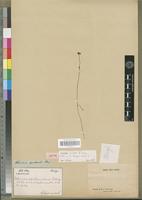
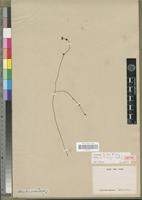
Isotype of Utricularia dregei Kam. [family LENTIBULARIACEAE]
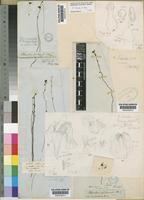
Utricularia livida E.Mey. [family LENTIBULARIACEAE]
Previous
Next

Name

Identification
Utricularia dregei Kamienski [family LENTIBULARIACEAE ] Utricularia prehensilis E.Mey. [family LENTIBULARIACEAE ] Utricularia livida E.Mey. [family LENTIBULARIACEAE ] (stored under name); Verified by Olvera G, M.,
Related name
  • Utricularia livida
  • Utricularia dregei
  • Utricularia prehensilis

Flora

Entry for UTRICULARIA livida E. Meyer [family LENTIBULARIACEAE]
Herbarium
Royal Botanic Gardens, Kew (K)
Collection
Flora Capensis
Resource Type
Reference Sources
Entry From
Flora Capensis, Vol 4, page 423, (1904) Author: By O. STAPF.
Names
UTRICULARIA livida E. Meyer [family LENTIBULARIACEAE], Comm. 281;—A. DC. Prodr. viii. 20; Oliv. in Journ. Linn. Soc. ix. 154; Kamienski in Engl. Jahrb. xxxiii. 94, incl. vars. pauciflora and micrantha; Stapf in Hook. Ic. Pl. t. 2796.
UTRICULARIA Dregei Kamienski [family LENTIBULARIACEAE], l.c., 94 (in part).
UTRICULARIA longecalcarata Benj. [family LENTIBULARIACEAE], in Linnæa, xx. 314 (from the description); Kamienski, l.c., 93.
Information
a delicate terrestrial herb, including the inflorescence 3 in. to almost 1 ft. high; stolons very short (always?), finely filiform, sparingly branched; rhizoids in tufts, 3–6 lin. long; leaves in small loose rosettes or tufts at the base of the peduncle and scattered on the stolons, usually decayed at the time of flowering; blades of the rosette-leaves orbicular to obovate-spathulate, narrowed into a usually short petiole, up to 1 1/4 lin. long, rather fleshy; scattered leaves with smaller narrower blades and longer petioles; bladders from the leaves and stolons, very shortly stalked, ovoid-globose, about 1/3 in. long, mouth terminal, 2-lipped, lips fimbriate, the lower smaller; peduncle straight or more or less flexuous, filiform, usually simple, few- to 10-flowered; flowers distant, usually spread over the whole upper half of the flowering axis; bracts ovate, about 1/2 lin. long, the lowest barren; bracteoles somewhat narrower than the bracts, of about the same length; pedicels scarcely exceeding the bracts at the time of flowering, at length up to 1 1/2 lin. long; sepals subequal, rotundate-ovate to orbicular, 1–1 1/2 lin. long, slightly enlarging after flowering and when enclosing barren fruits, more or less rolling in making the calyx appear oblong in outline; corolla purplish, variegated with yellow (Meyer), rarely white, 3 1/2–4 1/2 lin. long; upper lip about 2 lin. long, narrow, obovate to oblong, constricted towards the base, rounded or subemarginate; lower lip subquadrate, 2 1/2–4 lin. long, usually spreading almost horizontally, palate drawn up almost parallel to the upper lip, double-crested, crests dark, tubercled; spur straight or nearly so, slender, subcylindric from a conic base or almost conic, as long as or longer than the lower lip and usually parallel to it; anthers 1/4– 1/2 lin. long; filaments filiform from a broader base, up to 1/2 lin. long; style about as long as the stigma; upper stigma-lip narrow, oblong, shorter than the broad-ovate or orbicular lower lip; capsule globose, 1–1 1/4 lin. in diam.; seeds irregularly hemi-ellipsoid, more or less angular, about 1/8 lin. high, top flat, elliptic, about 1/6 lin. in diam. with a very thin margin; embryo top flat or slightly concave. null
Distribution
EASTERN REGION Griqualand East; in swamps near Kokstad, Haygarth in Herb. Wood, 4209! Pondoland; near the St. John's and Umtsikaba Rivers, Drège, 4838! Natal; Zwartkop Native Location, in swamps, 3000–4000 ft., Wood, 4612! Inanda, Wood, 378! Rehmann, 8320! Amamzimtote, Wood, 3118! Inchamba, Wood, 5811!KALAHARI REGION Transvaal; Houtbosch, Rehmann, 5909! VAR. β: Transvaal; Magalies Berg, Burke, 104! Zeyher, 1424! Hooge Veld, by the Henops River, Rehmann! between Spitzkop and the Komati River, Wilms, 1238! marsh near Rustenberg, Alice Pegler, 983!
Notes
U. Engleri, Kam., as represented by Burke's plant and Zeyher, 1424—practically the same collecting—and by Rehmann's specimen from the Henops River, differs from the typical form mainly in the inflorescence, which consists of very few flowers near the end of the floral axis. The length of the spur varies, but on the whole it is rather shorter than in the Natal plant. Kamienski also refers to U. Engleri, a plant collected by Thode in the Drakensbergen and another collected by Schlechter on the eastern slopes of Constantiaberg, Cape Division (1424!). I have not seen the former, whilst the specimen of the latter (in the Zürich Collection), which I had an opportunity of examining, is too imperfect to decide whether it belongs to U. livida, var. Engleri or to U. transrugosa. As to U. Dregei, Kam., I cannot find any difference whatever between the plant from which Bentham drew up his description of U. livida (Drège, 4838) and the specimens distributed as U. prehensilis on which Kamienski bases his U. Dregei. He also quotes under this name specimens collected by Mund and Maire, and by Bachmann (1292) in Pondoland. These I do not know. Nor have I seen Bachmann, 1294–1295, from Pondoland, or Schlechter, 12094, from Suhamdane, which is Kamienski's U. Dregei, var. stricta. There is, however, nothing in the description suggesting differences between those specimens and U. livida. Finally, Wilms, 1238, quoted above, is referred by Kamienski to U. sanguinea, an Angolan plant, which, although very similar to U. livida, differs in the longer and stouter stolons, the larger more persistent leaves, and the very faintly tubercled palate of the corolla.

Related Materials

  • Terms and Conditions
  • Privacy Policy
  • Cookie Policy
  • Cookie Settings
  • Accessibility
  • Help
  • Contact Us
  • Facebook
  • Twitter
ITHAKA

JSTOR is part of ITHAKA, a not-for-profit organization helping the academic community use digital technologies to preserve the scholarly record and to advance research and teaching in sustainable ways.

©2000-2026 ITHAKA. All Rights Reserved. JSTOR®, the JSTOR logo, JPASS®, Aluka®, and ITHAKA® are registered trademarks of ITHAKA.

╳