JSTOR Global Plants Home
  • Home
  • Browse
  • About
  • Access
  • Account
    • Saved Items
    • Profile
  • Log in

Global Plants

Skip to Main Content
  • JSTOR Global Plants Home
  • Global Plants

    • Browse
    • About
    • Access
    • Account
      • Saved Items
      • Profile
Log in
  • Browse
  • About
  • Access
  • Account
    • Saved Items
    • Profile
Advanced Search

Compilation
Urochloa mosambicensis

18 Images see all

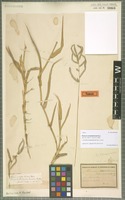
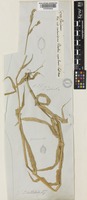
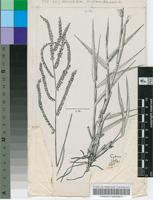
Isosyntype of Urochloa rhodesiensis Stent [family POACEAE]
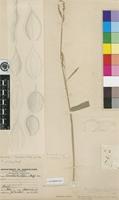
Type of Urochloa mosambicensis (Hack.) Dandy [family POACEAE]
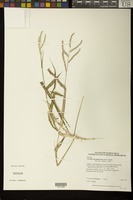
Urochloa mosambicensis (Hack.) Dandy [family POACEAE]
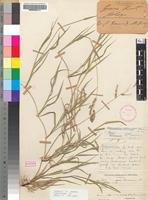
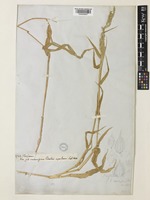
Syntype of Urochloa rhodesiensis Stent [family POACEAE]
Filed as Urochloa mosambicensis (Hack.) Dandy [family POACEAE]
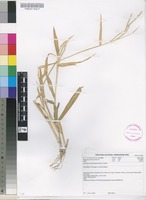
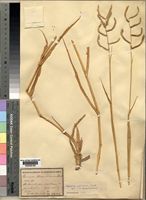
Isosyntype of Urochloa rhodesiensis Stent [family POACEAE]
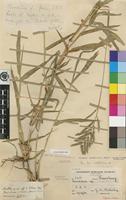
Syntype of Urochloa mosambicensis (Hack.) Dandy [family POACEAE]
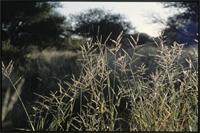
Urochloa mosambicensis (Hack.) Dandy from Botswana
Syntype of Urochloa rhodesiensis Stent [family POACEAE]
Isosyntype of Urochloa rhodesiensis Stent [family POACEAE]
Urochloa mosambicensis (Hack.) Dandy [family POACEAE]
Type of Urochloa mosambicensis (Hack.) Dandy [family POACEAE]
Type of Brachiaria stolonifera Gooss. [family POACEAE]
Urochloa mosambicensis (Hack.) Dandy
Type of Urochloa rhodesiensis Stent [family POACEAE]
Urochloa mosambicensis (Hack.) Dandy [family POACEAE]
Isotype of Panicum mosambicense Hack. [family POACEAE]
Previous
Next

Name

Identification
Urochloa mosambicensis (Hack.) Dandy [family POACEAE ]
Related name
  • Urochloa mosambicensis

Flora

Entry for UROCHLOA mosambicensis (Hack.) Dandy [family POACEAE]
Herbarium
Royal Botanic Gardens, Kew (K)
Collection
Flora of Tropical East Africa
Resource Type
Reference Sources
Entry From
Flora of Tropical East Africa, page 451, (1982) Author: W. D. CLAYTON and S.A. RENVOIZE
Names
UROCHLOA mosambicensis (Hack.) Dandy [family POACEAE], in J.B. 69: 54 (1931); Ann. list Nyasaland grasses: 65 (1958). Type: Mozambique, de Carvalho (K, iso.!)
Panicum mosambicense Hack. [family POACEAE], in Bol. Soc. Brot. 6: 140 (1888)
Urochloa pullulans Stapf [family POACEAE], in F.T.A. 9: 590 (1920); Ann. list Nyasaland grasses: 65 (1958); G.T.: 70 (1965), nom. superfl., based on Panicum mosambicense
Urochloa pullulans (Hack.) Stapf var. mosambicensis [family POACEAE], in F.T.A. 9: 592 (1920), nom. illegit.
Urochloa rhodesiensis Stent [family POACEAE], in Proc. Trans. Rhod. Sci. Ass. 32: 26 (1933). Types: Zimbabwe, Nyamandhlovu, Rattray 500 (K, isosyn.!) & Salisbury, Stent in S.R.G.H. 3669 (K, isosyn.!), 4516 (SRGH, syn.) & 5547 (K, isosyn.!)
Information
Tufted or stoloniferous perennial, the basal sheaths silky pubescent; culms 20–150 cm. high, ascending. Leaf-blades broadly linear to narrowly lanceolate, 2–30 cm. long, 3–20 mm. wide. Inflorescence of (2–)3–15 racemes on a common axis 3–12 cm. long; racemes 2–8 cm. long, bearing single or sometimes paired spikelets on a narrowly winged rhachis. Spikelets ovate, 3–5 mm. long, acuminate; lower glume oblong (1/2–)2/3–3/4 the length of the spikelet, membranous, 3-nerved, often with a tuft of hairs from the middle of the back, obtuse; upper glume glabrous or pubescent; lower lemma with or without a setose fringe; upper lemma rugulose, with a mucro 0.5–1.2 mm. long.
Range
DISTR. U1; K4, 7; T2, 3, 5–8 southwards to South Africa; also in Burma; introduced to several other tropical countries as a forage crop
Altitude range
0–1400 m.
Distribution
KENYA Meru District Meru National Park, main road to Ura Gate, 15 May 1972, Ament & Magogo 222!KENYA Kilifi District Malindi, 8 Oct. 1948, Allan 79!TANZANIA Lushoto District Kwamndolwa, May 1958, Semsei 2777!TANZANIA Morogoro, 29 Apr. 1968, Renvoize & Abdallah 1798!TANZANIA Songea District 9.5 km. SW. of Songea near R. Mtanda, 18 Feb. 1956, Milne-Redhead & Taylor 8827!UGANDA W. Nile District Inde, 16 Apr. 1957, Brooks 104!
Notes
U. mosambicensis and U. oligotricha are very closely allied, but can usually be distinguished by differences in the nervation, shape and texture of the lower glume. Needless to say intermediates occur, and the boundary between the species (and their annual counterparts) sometimes becomes blurred.

Related Materials

  • Terms and Conditions
  • Privacy Policy
  • Cookie Policy
  • Cookie Settings
  • Accessibility
  • Help
  • Contact Us
  • Facebook
  • Twitter
ITHAKA

JSTOR is part of ITHAKA, a not-for-profit organization helping the academic community use digital technologies to preserve the scholarly record and to advance research and teaching in sustainable ways.

©2000-2026 ITHAKA. All Rights Reserved. JSTOR®, the JSTOR logo, JPASS®, Aluka®, and ITHAKA® are registered trademarks of ITHAKA.

╳