JSTOR Global Plants Home
  • Home
  • Browse
  • About
  • Access
  • Account
    • Saved Items
    • Profile
  • Log in

Global Plants

Skip to Main Content
  • JSTOR Global Plants Home
  • Global Plants

    • Browse
    • About
    • Access
    • Account
      • Saved Items
      • Profile
Log in
  • Browse
  • About
  • Access
  • Account
    • Saved Items
    • Profile
Advanced Search

Compilation
Urginea lilacina

5 Images see all

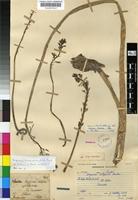
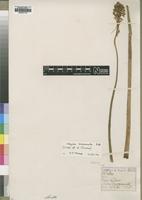
Type? of Urginea lilacina Baker [family HYACINTHACEAE]
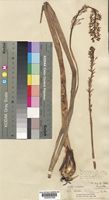
Type of Urginea lilacina Baker [family HYACINTHACEAE]
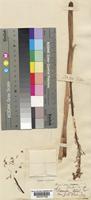
Type? of Urginea lilacina Baker [family HYACINTHACEAE]
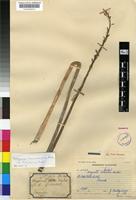
Type of Urginea lilacina Baker [family HYACINTHACEAE]
Previous
Next

Name

Identification
Urginea lilacina Baker [family HYACINTHACEAE ] Urginea macrocentra Baker [family HYACINTHACEAE ] (stored under name); Verified by Jessop,J.P.,
Related name
  • Urginea lilacina
  • Urginea macrocentra
  • Drimia macrocentra

Flora

Entry for URGINEA lilacina Baker [family HYACINTHACEAE]
Herbarium
Royal Botanic Gardens, Kew (K)
Collection
Flora Capensis
Resource Type
Reference Sources
Entry From
Flora Capensis, page 253, (1897) Author: (By J. G. BAKER).
Names
URGINEA lilacina Baker [family HYACINTHACEAE]
Information
bulb ovoid, 1 1/2 in. diam.; leaves hysteranthous, terete; peduncle reaching a length of 4 feet, stout towards the base, tapering upwards; raceme moderately dense, cylindrical, 6–8 in. long, an inch in diameter; pedicels ascending, 1/4– 1/2 in. long; bracts small, oblanceolate, membranous, early deciduous, not spurred; flowers fragrant, lilac, turning to pinkish when dried; perianth campanulate, nearly 1/4 in. long; segments oblanceolate-oblong, faintly keeled with dull green; stamens much shorter than the perianth; filaments rather flattened; anthers oblong, very small; ovary ovoid; style short. null
Distribution
EASTERN REGION Natal; Inanda, in boggy ground, Wood, 198! 642!

Related Materials

  • Terms and Conditions
  • Privacy Policy
  • Cookie Policy
  • Cookie Settings
  • Accessibility
  • Help
  • Contact Us
  • Facebook
  • Twitter
ITHAKA

JSTOR is part of ITHAKA, a not-for-profit organization helping the academic community use digital technologies to preserve the scholarly record and to advance research and teaching in sustainable ways.

©2000-2026 ITHAKA. All Rights Reserved. JSTOR®, the JSTOR logo, JPASS®, Aluka®, and ITHAKA® are registered trademarks of ITHAKA.

╳