JSTOR Global Plants Home
  • Home
  • Browse
  • About
  • Access
  • Account
    • Saved Items
    • Profile
  • Log in

Global Plants

Skip to Main Content
  • JSTOR Global Plants Home
  • Global Plants

    • Browse
    • About
    • Access
    • Account
      • Saved Items
      • Profile
Log in
  • Browse
  • About
  • Access
  • Account
    • Saved Items
    • Profile
Advanced Search

Compilation
Urelytrum pallidum

2 Images see all

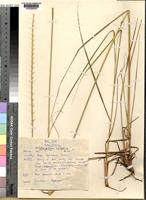
Holotype of Urelytrum pallidum C.E.Hubbard [family POACEAE]
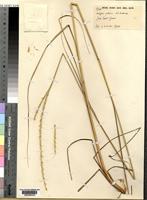
Holotype of Urelytrum pallidum C.E.Hubb. [family POACEAE]
Previous
Next

Name

Identification
Urelytrum pallidum C.E.Hubb. [family POACEAE ] Urelytrum agropyroides (Hack.) Hack. [family POACEAE ] (stored under name);
Related name
  • Urelytrum pallidum
  • Urelytrum agropyroides
Common name
  • ande (Saunders) (NIGERIA, FULA-FULFULDE (Nigeria)), Burkill, H.M. 1985. The useful plants of west tropical Africa, Vol. 2

Flora

Entry for URELYTRUM agropyroides (Hack.) Hack. [family POACEAE]
Herbarium
Royal Botanic Gardens, Kew (K)
Collection
Flora of Tropical East Africa
Resource Type
Reference Sources
Entry From
Flora of Tropical East Africa, page 451, (1982) Author: W. D. CLAYTON and S.A. RENVOIZE
Names
URELYTRUM agropyroides (Hack.) Hack. [family POACEAE], in DC., Monogr. Phan. 6: 272 (1889); F.T.A. 9: 45 (1917). Type: Angola, Lobango, Newton (COI, holo.)
Rottboellia agropyroides Hack. [family POACEAE], in Bol. Soc. Brot. 3: 135 (1885)
Urelytrum squarrosum Hack. [family POACEAE], in DC., Monogr. Phan. 6: 272 (1889); F.T.A. 9: 43 (1917). Type: South Africa, Durban [Port Natal], Gueinzius (W, holo.)
Urelytrum squarrosum Stapf var. robustum [family POACEAE], in Fl. Cap. 7: 331 (1898). Type: South Africa, Pellat Plains, Burchell 2200 (K, holo.!)
Urelytrum vanderystii Robyns [family POACEAE], Fl. Agrost. Congo Belge 1: 51 (1929) & in B.J.B.B. 8: 213 (1930). Type: Zaire, Idiofa, Vanderyst 8647 (K, fragment!)
Urelytrum monostachyum Peter [family POACEAE], F.D.O.-A. 1, Ann.: 12, fig. 15/1 (1929). Type: Tanzania, Ujiji, Kigoma to Kandaga, Peter 38947 (B, holo.†)
Urelytrum gracilius C.E. Hubbard [family POACEAE], in K.B. 4: 369 (1949); Clayton in F.W.T.A., ed. 2, 3: 504 (1972). Type: Nigeria, Shika, Bumpus 29 (K, holo.!)
Urelytrum pallidum C.E. Hubbard [family POACEAE], in K.B. 4: 376 (1949); Clayton in F.W.T.A., ed. 2, 3: 504 (1972). Type: Ghana, Yendi, Hinds 6 (K, holo.!)
Urelytrum setaceosubulatum Duvign. [family POACEAE], in B.S.B.B. 90: 221 (1958). Type: Zaire, Kansenia, Duvigneaud 3031 (BRLU, holo.)
Urelytrum semispirale W.D. Clayton [family POACEAE], in K.B. 20: 257 (1966) & in F.W.T.A., ed. 2, 3: 504 (1972). Type: Ghana, Ahamansu, Rose-Innes GC. 31325 (K, holo.!)
Information
Perennial forming hard tussocks; culms 0.5–2 m. high. Leaf-blades narrow, harsh, 10–40 cm. long, 1–6 mm. wide; ligule usually conspicuous, (2–)3–6 mm. long, acute, lacerate, often adnate to lateral auricles; sheaths seldom hairy above. Inflorescence of 1(–2) racemes each 8–25 cm. long; internodes and pedicels often pubescent. Sessile spikelet narrowly elliptic; lower glume 6–9 mm. long, glabrous or pubescent, smooth, spinulose or muricate on the keels, acute. Pedicelled spikelet 2–7 mm. long, its awn (1–)3–7(–12) cm. long.
Range
DISTR. T4 southwards to South Africa; sporadic occurrences north-westwards to Ghana
Altitude range
800–1600 m.
Distribution
TANZANIA Buha District 72 km. S. of Kibondo, 23 Mar. 1973, Mutch 275!TANZANIA Kigoma District Uvinza, Lugufu, Peter 36435 & Ujiji, Kigoma–Kandaga, Peter 38947
Distribution (external)
Madagascar
Notes
The considerable variability of this species in the southern part of its range has been insufficiently appreciated by authors dealing with its sporadic occurrence in the north, resulting in the creation of numerous synonyms.

Related Materials

  • Terms and Conditions
  • Privacy Policy
  • Cookie Policy
  • Cookie Settings
  • Accessibility
  • Help
  • Contact Us
  • Facebook
  • Twitter
ITHAKA

JSTOR is part of ITHAKA, a not-for-profit organization helping the academic community use digital technologies to preserve the scholarly record and to advance research and teaching in sustainable ways.

©2000-2026 ITHAKA. All Rights Reserved. JSTOR®, the JSTOR logo, JPASS®, Aluka®, and ITHAKA® are registered trademarks of ITHAKA.

╳