JSTOR Global Plants Home
  • Home
  • Browse
  • About
  • Access
  • Account
    • Saved Items
    • Profile
  • Log in

Global Plants

Skip to Main Content
  • JSTOR Global Plants Home
  • Global Plants

    • Browse
    • About
    • Access
    • Account
      • Saved Items
      • Profile
Log in
  • Browse
  • About
  • Access
  • Account
    • Saved Items
    • Profile
Advanced Search

Compilation
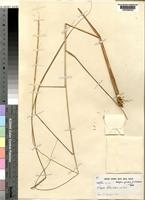
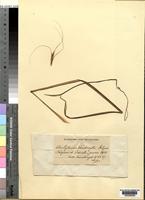
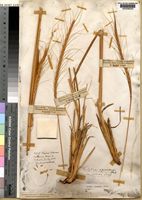
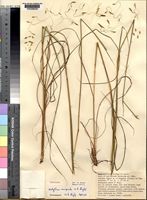
Urelytrum agropyroides

15 Images see all

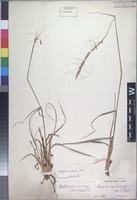
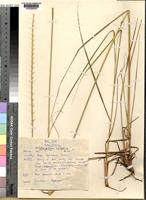
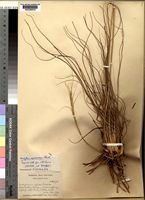
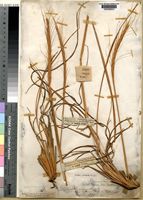
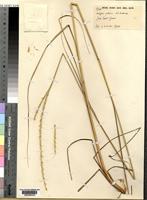
Urelytrum agropyroides (Hack.) Hack. [family POACEAE]
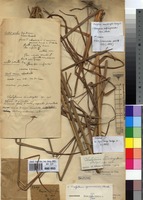
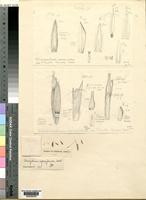
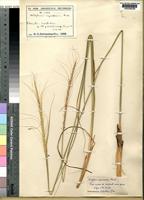
Isotype of Urelytrum vanderystii Robyns. [family POACEAE]
Isotype of Urelytrum squarrosum Hack. var. robustum Stapf. [family POACEAE]
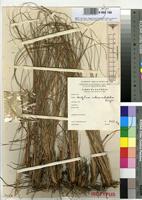
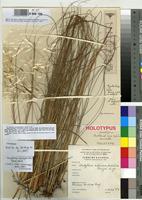
Holotype of Urelytrum semispirale W.D.Clayton [family POACEAE]
Type of Urelytrum vanderystii Robyns [family GRAMINEAE]
Urelytrum agropyroides Hack. [family POACEAE]
Holotype of Urelytrum squarrosum Hack. [family POACEAE]
Holotype of Urelytrum pallidum C.E.Hubbard [family POACEAE]
Urelytrum agropyroides (Hack.) Hack. [family POACEAE]
Isotype of Urelytrum setaceosubulatum P.A.Duvign. [family GRAMINEAE]
Urelytrum agropyroides (Hack.) Hack.
Holotype of Urelytrum setaceosubulatum P.A.Duvign. [family GRAMINEAE]
Holotype of Urelytrum squarrosum Hack. var. robustum Stapf. [family POACEAE]
Holotype of Urelytrum pallidum C.E.Hubb. [family POACEAE]
Previous
Next

Name

Identification
Urelytrum agropyroides (Hack.) Hack. [family POACEAE ]
Related name
  • Urelytrum agropyroides
Common name
  • ande (Saunders) (NIGERIA, FULA-FULFULDE (Nigeria)), Burkill, H.M. 1985. The useful plants of west tropical Africa, Vol. 2

Flora

Entry for URELYTRUM agropyroides Hack. [family POACEAE]
Herbarium
Royal Botanic Gardens, Kew (K)
Collection
Flora of Tropical Africa
Resource Type
Reference Sources
Entry From
Flora of Tropical Africa, Vol 9, page 1, (1917) Author: (By O. STAPF.)
Names
URELYTRUM agropyroides Hack. [family POACEAE], in DC. Monogr. Phan. vi. 272.
Rottbœllia agropyroides Hack. [family ], in Bolet.Soc.Brot.iii.135, t.2, fig.1, not.l.c.xvii.47.
Information
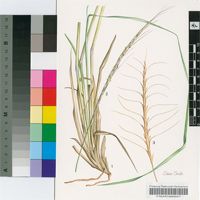
Perennial. Culms up to over 2 1/2 ft. high, rather robust, straight, terete, simple, smooth, or slightly rough below the raceme, few-noded. Leaf-sheaths glabrous or sparingly hairy upwards, the lower strongly striate, with their bases persistent; ligules membranous, truncate, about 1 lin. long; blades linear, tapering to a short setaceous point, about 1/2 ft. long and 2–3 lin. wide, flat, hirsute on both sides, rough along the margin, midrib slender. Raceme solitary, 6–8 in. long, dull purplish-brown, erect, glabrous except at the calli; joints linear, compressed, slightly concave on the inner face, about 4 lin. long, more or less rough, ciliate along the inner angle, disarticulating very obliquely, scar with a membranous toothed ciliate appendage, exceeding the joint by up to 1 lin.; pedicels similar to the joints but flatter and with a smaller membranous appendage, contiguous with them. Sessile spikelet with an obconical bearded callus, up to 1 1/2 lin. long, separated from it by a deep transverse groove, oblong-lanceolate, 4 lin. long. Glumes equal, lower acute, cartilaginous, slightly convex, glabrous, almost smooth with the exception of the keels which are rigidly ciliolate upwards, keel-nerves 2, intracarinal nerves about 4, slightly prominent; upper glume of about the same length, thinly chartaceous, boat-shaped, obliquely linear-lanceolate in profile, acute, 3-nerved, the keels ciliolate above. Lower floret: valve slightly shorter than the glume, subhyaline, lanceolate, subacute, 2-nerved, obscurely ciliate near the tip, otherwise glabrous, with a similar valvule. Upper floret: valve hyaline, oblong-lanceolate, acute, finely 3-nerved, glabrous, with a shorter faintly 2-nerved valvule. Lodicules glabrous. Anthers 2 1/2 lin. long. Stigmas 1 1/2 lin. long. Pedicelled spikelets consisting of two reduced glumes and a small hyaline valve, the outer glume passing into a rough, more or less squarrose awn, up to 8–10 lin. long.
Distribution
Angola Lower Guinea Lobango; near Humpata and Huilla, Newton !

Related Materials

  • Terms and Conditions
  • Privacy Policy
  • Cookie Policy
  • Cookie Settings
  • Accessibility
  • Help
  • Contact Us
  • Facebook
  • Twitter
ITHAKA

JSTOR is part of ITHAKA, a not-for-profit organization helping the academic community use digital technologies to preserve the scholarly record and to advance research and teaching in sustainable ways.

©2000-2026 ITHAKA. All Rights Reserved. JSTOR®, the JSTOR logo, JPASS®, Aluka®, and ITHAKA® are registered trademarks of ITHAKA.

╳