JSTOR Global Plants Home
  • Home
  • Browse
  • About
  • Access
  • Account
    • Saved Items
    • Profile
  • Log in

Global Plants

Skip to Main Content
  • JSTOR Global Plants Home
  • Global Plants

    • Browse
    • About
    • Access
    • Account
      • Saved Items
      • Profile
Log in
  • Browse
  • About
  • Access
  • Account
    • Saved Items
    • Profile
Advanced Search

Compilation
Unisema cordata

2 Images see all

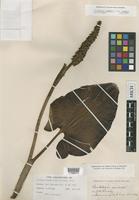
Lectotype of Unisema cordata L. f. latifolia Farw. [family PONTEDERIACEAE]
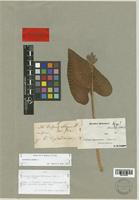
Unisema obliquata Raf. [family PONTEDERIACEAE]
Previous
Next

Name

Identification
Unisema cordata L. [family PONTEDERIACEAE ] (stored under name); Verified by R. McVaugh, 1951 Pontederia cordata L. [family PONTEDERIACEAE ] Verified by Not on sheet,
Related name
  • Pontederia cordata
  • Unisema cordata
Common name
  • langue du boeuf, Flora of North America Vol. 26
  • Pontédérie cordée, Flora of North America Vol. 26

Flora

Entry for Pontederia cordata Linnaeus [family PONTEDERIACEAE]
Herbarium
Flora of North America (FNA)
Collection
Flora of North America
Resource Type
Reference Sources
Entry From
Flora of North America, Vol 26,
Names
Pontederia cordata Linnaeus [family PONTEDERIACEAE], Sp. Pl., 1: 208. 1753
Narukila cordata (Linnaeus) Nieuwland [family ]
Pontederia angustifolia Pursh [family PONTEDERIACEAE]
Pontederia cordata var. lanceolata (Nuttall) Grisebach [family PONTEDERIACEAE]
Pontederia cordata var. lancifolia (Muhlenberg) Torrey [family PONTEDERIACEAE]
Pontederia lanceolata Nuttall [family PONTEDERIACEAE]
Pontederia lancifolia Muhlenberg [family PONTEDERIACEAE]
Unisema cordata (Linnaeus) Farwell [family ]
Information
Plants perennial, rooted in mud. Vegetative stems contracted, rhizomatous. Flowering stems erect, to 120 cm. Sessile leaves: blade linear. Petiolate leaves emersed; stipule 7–29 cm; petiole distinctly constricted just below blade, to 60 cm; blade lanceolate to cordate, 6–22 × 0.7–12 cm. Spikes with up to several hundred flowers, 2–15 cm; spathes 5–17 cm. Perianth mauve, tube 3–9 mm, limb lobes oblanceolate, 5–8 mm, distal central lobe with 2-lobed yellow spot; proximal stamens 7–13 mm, distal 1.5–6.3 mm; style 3-lobed. Utricles with dentate ridges, 4–6 × 2–3 mm.
Phenology
mar-may (spring), jun-aug (summer), sep-nov (fall)
Altitude range
0–500 m;
Distribution
MexicoCentral America (Belize)South America.USA Ala.USA Ark.USA Conn.USA Del.USA D.C.USA Fla.USA Ga.USA Ill.USA Ind.USA IowaUSA Kans.USA Ky.USA La.USA MaineUSA Md.USA Mass.USA Mich.USA Minn.USA Miss.USA Mo.USA Nebr.USA N.H.USA N.J.USA N.Y.USA N.C.USA OhioUSA Okla.USA Pa.USA R.I.USA S.C.USA S.Dak.USA Tenn.USA Tex.USA Vt.USA Va.USA W.Va.USA Wis.Canada N.B.Canada N.S.Canada Ont.Canada P.E.I.Canada Que.
Discussion
Pontederia cordata has a large number of synonyms, at the levels of species, variety, and form (see R. M. Lowden 1973 for most names). Almost all these names are based on variations in leaf shape, but extensive morphological variation has been observed within single populations and even in individual plants. Study is needed to determine the cause of the extreme leaf base forms of cuneate on lanceolate blades and cordate on ovate blades. Variation has also been observed in peduncle pubescence. A velutinous peduncle and ovate leaf blade with slightly cuneate base is consistently found among some South American populations, hence recognition there of var. ovalis (Martius) Solms.
The reproductive biology of Pontederia cordata has been well studied (R. Ornduff 1966; S. D. Price and S. C. H. Barrett 1982, 1984). It is a tristylous species, and most populations contain all three morphs (S. D. Price and S. C. H. Barrett 1982). At least some degree of self-incompatibility exists, being strongest with the short-style morphs and weakest with the midstyle morphs (R. Ornduff 1966).

Related Materials

  • Terms and Conditions
  • Privacy Policy
  • Cookie Policy
  • Cookie Settings
  • Accessibility
  • Help
  • Contact Us
  • Facebook
  • Twitter
ITHAKA

JSTOR is part of ITHAKA, a not-for-profit organization helping the academic community use digital technologies to preserve the scholarly record and to advance research and teaching in sustainable ways.

©2000-2026 ITHAKA. All Rights Reserved. JSTOR®, the JSTOR logo, JPASS®, Aluka®, and ITHAKA® are registered trademarks of ITHAKA.

╳