JSTOR Global Plants Home
  • Home
  • Browse
  • About
  • Access
  • Account
    • Saved Items
    • Profile
  • Log in

Global Plants

Skip to Main Content
  • JSTOR Global Plants Home
  • Global Plants

    • Browse
    • About
    • Access
    • Account
      • Saved Items
      • Profile
Log in
  • Browse
  • About
  • Access
  • Account
    • Saved Items
    • Profile
Advanced Search

Compilation
Ulmus floridana

5 Images see all

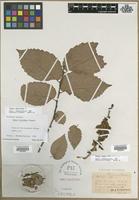
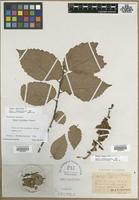
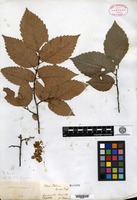
Type? of Ulmus floridana Chapm. [family ULMACEAE]
Type of Ulmus floridana Chapm. [family ULMACEAE]
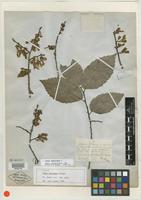
Syntype of Ulmus floridana Chapm. [family ULMACEAE]
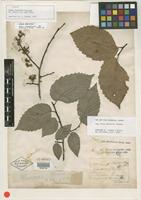
Isotype of Ulmus floridana Chapman [family ULMACEAE]
Previous
Next

Name

Identification
Ulmus floridana Chapm. [family ULMACEAE ] (stored under name); Verified by Not on sheet,
Related name
  • Ulmus floridana
  • Ulmus americana
  • Ulmus sp.
  • Ulmus rubra
Common name
  • orme d'Amérique, Flora of North America Vol. 3
  • American elm, Flora of North America Vol. 3

Flora

Entry for Ulmus americana Linnaeus [family ULMACEAE]
Herbarium
Flora of North America (FNA)
Collection
Flora of North America
Resource Type
Reference Sources
Entry From
Flora of North America, Vol 3,
Names
Ulmus americana Linnaeus [family ULMACEAE], Sp. Pl., 1: 226. 1753
Ulmus americana var. aspera Chapman [family ULMACEAE]
Ulmus americana var. floridana (Chapman) Little [family ULMACEAE]
Ulmus floridana Chapman [family ULMACEAE]
Information
Trees, 21-35 m; crowns spreading, commonly vase-shaped. Bark light brown to gray, deeply fissured or split into plates. Wood soft. Branches pendulous, old-growth branches smooth, not winged; twigs brown, pubescent to glabrous. Buds brown, apex acute, glabrous; scales reddish brown, pubescent. Leaves: petiole ca. 5 mm, glabrous to pubescent. Leaf blade oval to oblong-obovate, 7-14 × 3-7 cm, base oblique, margins doubly serrate, apex acute to acuminate; surfaces abaxially glabrous to slightly pubescent, tufts in axils of veins, adaxially glabrous to scabrous. Inflorescences fascicles, less than 2.5 cm, flowers and fruits drooping on elongate pedicels; pedicel 1-2 cm. Flowers: calyx shallowly lobed, slightly asymmetric, lobes 7-9, margins ciliate; stamens 7-9; anthers red; stigmas white-ciliate, deeply divided. Samaras yellow-cream when mature, sometimes tinged with reddish purple (s range of species), ovate, ca. 1 cm, narrowly winged, margins ciliate, cilia yellow to white, to 1 mm. Seeds thickened, not inflated. 2n = 56.
Phenology
Flowering winter-early spring
Altitude range
0-1400 m
Distribution
planted as street treesUSA Ala.USA Ark.USA Conn.USA Del.USA D.C.USA Fla.USA Ga.USA Ill.USA Ind.USA IowaUSA Kans.USA Ky.USA La.USA MaineUSA Md.USA Mass.USA Mich.USA Minn.USA Miss.USA Mo.USA Mont.USA Nebr.USA N.H.USA N.J.USA N.Y.USA N.C.USA N.Dak.USA OhioUSA Okla.USA Pa.USA R.I.USA S.C.USA S.Dak.USA Tenn.USA Tex.USA Vt.USA Va.USA W.Va.USA Wis.USA Wyo.Canada Man.Canada N.B.Canada N.S.Canada Ont.Canada P.E.I.Canada Que.Canada Sask.
Discussion
Ulmus americana is reported as widely escaped in Idaho, which is not part of the natural range of this taxon. It is occasionally cultivated outside its native distribution, and it has escaped sporadically from cultivation. It is also reported as naturalized in Arizona, but I have seen no specimens.
Ulmus americana is the state tree for Massachusetts and for North Dakota.
The American elm is susceptible to numerous diseases, including Dutch elm disease. Ulmus americana has been a street and shade tree of choice because of its fast growth and pleasant shape and size. The species still exists in substantial numbers both as shade trees and in nature.
Numerous infraspecific taxa have been recognized in Ulmus americana (A. J. Rehder 1949; P. S. Green 1964).
Native American tribes frequently used parts of Ulmus americana for a variety of medicinal purposes, including treatment of coughs and colds, sore eyes, dysentary, diarrhea, broken bones, gonorrhea, and pulmonary hemorrhage, as a gynecological aid, as a bath for appendicitis, and as a wash for gunwounds (D. E. Moerman 1986).

Related Materials

  • Terms and Conditions
  • Privacy Policy
  • Cookie Policy
  • Cookie Settings
  • Accessibility
  • Help
  • Contact Us
  • Facebook
  • Twitter
ITHAKA

JSTOR is part of ITHAKA, a not-for-profit organization helping the academic community use digital technologies to preserve the scholarly record and to advance research and teaching in sustainable ways.

©2000-2026 ITHAKA. All Rights Reserved. JSTOR®, the JSTOR logo, JPASS®, Aluka®, and ITHAKA® are registered trademarks of ITHAKA.

╳