JSTOR Global Plants Home
  • Home
  • Browse
  • About
  • Access
  • Account
    • Saved Items
    • Profile
  • Log in

Global Plants

Skip to Main Content
  • JSTOR Global Plants Home
  • Global Plants

    • Browse
    • About
    • Access
    • Account
      • Saved Items
      • Profile
Log in
  • Browse
  • About
  • Access
  • Account
    • Saved Items
    • Profile
Advanced Search

Compilation
Ugena microphylla

3 Images see all

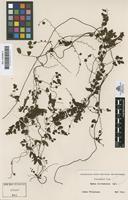
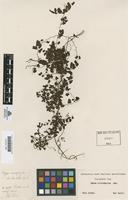
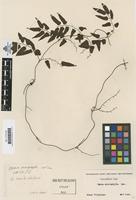
Type of Ugena microphylla Cav. [family SCHIZAEACEAE]
Previous
Next

Name

Identification
Ugena microphylla Cav. [family SCHIZAEACEAE ] (stored under name); Verified by Not on Sheet,
Related name
  • Ugena microphylla
Common name
  • Small-leaved climbing fern, Flora of North America Vol. 2

Flora

Entry for Lygodium microphyllum (Cavanilles) R. Brown [family SCHIZAEACEAE]
Herbarium
Flora of North America (FNA)
Collection
Flora of North America
Resource Type
Reference Sources
Entry From
Flora of North America, Vol 2,
Names
Lygodium microphyllum (Cavanilles) R. Brown [family SCHIZAEACEAE], Prodr., 162. 1810
Ugena microphylla Cavanilles [family SCHIZAEACEAE], Icon., 6: 76, plate 595. 1801
Treatment Author(s)
Clifton E. Nauman
Information
Stems creeping. Leaves to ca. 10 m. Petioles borne 2-5 mm apart, 7-25 cm. Sterile pinnae on 0.5-1.5 cm stalks, oblong, 1-pinnate, 5-12 × 3-6 cm; ultimate segments triangular-lanceolate to oblong-lanceolate, truncate to shallowly cordate or somewhat auriculate proximally, usually not lobed, but if lobed, lobes rounded at apex and not directed toward leaf apex; segment apex rounded-acute to obtuse; segments articulate to petiolules, leaving wiry stalks when detached; blade tissue glabrous abaxially. Fertile pinnae on 0.5-1 cm stalks, oblong, 1-pinnate, 3-14 × 2.5-6 cm; ultimate segments ovate to lanceolate-oblong, fringed with fertile lobes, otherwise similar to sterile segments.
Discussion
Lygodium microphyllum is native to southeastern Asia and recently naturalized. The species may be very abundant locally and may climb to a height of 9 meters in trees. Sometimes it forms thick mats covering considerable areas at ground level (J. Beckner 1968; C. E. Nauman and D. F. Austin 1978).

Related Materials

  • Terms and Conditions
  • Privacy Policy
  • Cookie Policy
  • Cookie Settings
  • Accessibility
  • Help
  • Contact Us
  • Facebook
  • Twitter
ITHAKA

JSTOR is part of ITHAKA, a not-for-profit organization helping the academic community use digital technologies to preserve the scholarly record and to advance research and teaching in sustainable ways.

©2000-2026 ITHAKA. All Rights Reserved. JSTOR®, the JSTOR logo, JPASS®, Aluka®, and ITHAKA® are registered trademarks of ITHAKA.

╳