

Compilation
Uapaca greenwayi
3 Images see all
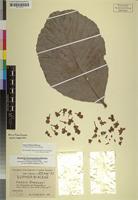
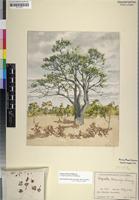
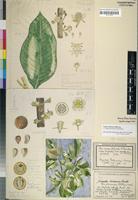
Name
Identification
Uapaca greenwayi Suess. [family EUPHORBIACEAE ] Verified by Bräuchler, C., 2006 Uapaca kirkiana Müll.Arg. [family EUPHORBIACEAE ] (stored under name); Verified by Esser, H.-J., 2005
Related name
- Uapaca kirkiana
- Uapaca greenwayi
Flora
Entry for Uapaca kirkiana Müll. Arg. [family EUPHORBIACEAE]
Herbarium
Royal Botanic Gardens, Kew (K)
Collection
Flora Zambesiaca
Resource Type
Reference Sources
Entry From
FZ, Vol 9, Part 4, (1996) Author: A. Radcliffe-Smith
Names
Uapaca kirkiana Müll. Arg. [family EUPHORBIACEAE], in Flora 47: 517 (1864); in De Candolle, Prodr. 15, 2: 491 (1866). —Engler, Pflanzenw. Ost-Afrikas C: 237 (1895). —S. Moore in J. Linn. Soc., Bot. 40: 194 (1911). —Hutchinson in F.T.A. 6, 1: 636 (1912). —R.E. Fries, Wiss. Ergebn. Schwed. Rhod.-Kongo-Exped. 1, 1: 118 (1914). —Eyles in Trans. Roy. Soc. South Africa 5: 394 (1916). —Engler, Pflanzenw. Afrikas (Veg. Erde 9) 3, 2: 37 (1921). —Pax in Engler, Pflanzenr. [IV, fam. 147, xv] 81: 302 (1922). —De Wildeman, Contrib. Ét. Esp. Gen. Uapaca: 135 (1936). —Brenan, Check-list For. Trees Shrubs Tang. Terr.: 228 (1949); in Mem. N.Y. Bot. Gard. 9, 1: 71 (1954). —Topham, Check List For. Trees Shrubs Nyasaland Prot.: 53 (1958). —White, F.F.N.R.: 207 (1962). —Drummond in Kirkia 10: 251 (1975). —K. Coates Palgrave, Trees Southern Africa, ed. 2, rev.: 408 (1983). —Radcliffe-Smith in F.T.E.A., Euphorb. 2: 567 (1988); in Kew Bull. 48: 612 (1993). Type: Malawi, Southern Province, Soche Hill, Manganja Country, male fl. 8.iii.1862, Kirk s.n. (K, holotype).
Uapaca benguelensis Müll. Arg. [family EUPHORBIACEAE], in J. Bot. 2: 332 (1864); in De Candolle, Prodr. 15, 2: 491 (1866). —Hutchinson in F.T.A. 6, 1: 637 (1912). —Engler, Pflanzenw. Afrikas (Veg. Erde 9) 3, 2: 37 (1921). —Pax in Engler, Pflanzenr. [IV, fam. 147, xv] 81: 303 (1922). —De Wildeman, Contrib. Ét. Esp. Gen. Uapaca: 95 (1936). Type from Angola (Benguela Province).
Uapaca goetzei Pax [family EUPHORBIACEAE], in Bot. Jahrb. Syst. 28: 418 (1900). Type from Tanzania (Southern Highlands Province).
Uapaca kirkiana var. goetzei Pax Pax [family EUPHORBIACEAE], in Bot. Jahrb. Syst. 34: 370 (1904).
Uapaca greenwayi Suesseng. [family EUPHORBIACEAE], in Trans. Rhod. Sci. Assoc. 43: 85 (1951). Syntypes: Zimbabwe, Marondera (Marandellas), 22.x.1941, Dehn 373; 374 (M, syntypes); 29.i.1942, Dehn 666 (M, syntype).
Information
A much-branched evergreen tree up to 12 m high, with a wide spreading rounded crown and a short clear bole (usually up to c. 1–2 m) up to c. 30 cm d.b.h.; bark striated to longitudinally fissured and finely transversely cracked or reticulate, corky, brittle, dark grey or blackish, occasionally exuding a viscous transparent fluid.Wood somewhat pulpy, reddish.Young twigs 0.4–1 cm in diameter, fairly stout, evenly to densely crisped-puberulous or crisped-pubescent.Stipules 5 mm long, filiform, pubescent, soon falling.Leaves subsessile to shortly-petiolate, petioles 0.5–2(4.5) cm long, stout.Leaf blades (7)10–27(30) × (5)7–17 cm, broadly obovate to suborbicular-obovate, saddle-shaped, rounded or retuse at the apex, attenuate to rounded-cuneate at the base, entire or undulate-sinuate, usually thickly coriaceous, glabrous above, usually ferrugineous crisped-puberulous and minutely glandular-lepidote beneath, sometimes glabrescent, dull mid- to dark green above, paler beneath, midrib often pale yellowish-green; lateral nerves in 12–24 pairs, sometimes almost perpendicular to the midrib, not prominent or slightly impressed above, prominent beneath, subcraspedodromous, interstititials rarely present, tertiary nerves subparallel.Inflorescences usually borne for 15–30 cm below the leaves.Male peduncles 0.7–2 cm long, sometimes 1–2-bracteolate; inflorescence bracts (5)7–11, 5–7 × 3–5 mm, broadly elliptic or elliptic-obovate, the outer pubescent without, the inner mostly glabrous, pale yellow or whitish; head (5)7–8 mm in diameter.Male flowers: calyx lobes 4–5, 1 mm long, acute or bifid, glabrous; stamens 4, filaments 1 mm long, flattened, anthers 1 × 1 mm, yellow; pistillode 1.5 mm high, infundibuliform, pubescent.Female peduncles 4–5 mm long, extending to c. 1 cm and thickening in fruit, 2-bracteolate, minutely lepidote, the bracteoles ferrugineous crisped-puberulous; bracts more or less as in the male.Female flower: calyx 3 mm in diameter, shallowly cupular, 5–8-lobed, the lobes 0.5 mm long, broadly triangular; ovary 3–4 × 3–4 mm, subglobose, 4-locular, densely ferrugineous-tomentose; styles 4, 3 mm long, multifid-flabelliform, the segments oblong, rounded, flattened, shallowly rugulose, abaxially puberulous, stigmatic surface glabrous.Fruits 4 × 4 cm (fresh), 3 × 3 cm (dried), subglobose to imperceptibly 4-lobed, smooth, reddish-brown or greenish at first, later becoming orange-yellow.Pyrenes 4, 2 × 1.1–1.2 × 0.8 cm, strongly carinate, bisulcate, apiculate, tricuspidate-emarginate at the base, lateral lobes smooth, entire.Seeds 1.5 × 0.8 × 0.5 cm, resembling the pyrenes in shape, brown.
Habitat
Plateau woodlands on well drained soils, often as understorey tree of Brachystegia woodlands, sometimes locally dominant on gravelly soils, or co-dominant as Brachystegia/Uapaca wooodland, or with Marquesia and Isoberlinia or in Brachystegia taxifolia/B. spiciformis woodlands, often on rocky escarpment and hillsides, and among granite boulders, also on dambo margins
Altitude range
30–1830 m.
1830
30
Distribution
Mozambique MS Chimoio (Vila Pery) Distr., Mavita–frontier, fr. 20.vi.1942, Torre 4388 (LISC).Mozambique T Zóbuè, male fl. 2.x.1942, Mendonça 551 (LISC).Mozambique Z entre o Alto Ligonha e o Alto Molócuè, 14.6 km do Alto Ligonha, o. fr. 13.x.1949, Barbosa & Carvalho in Barbosa 4407 (K; LMA).Malawi S Mulanje Mt., Likhubula (Likabula) Gorge, y. fr. 20.vi.1946, Brass 16376 (K; NY; SRGH).Malawi C Ntchisi For. Res., male fl. 25.iii.1970, Brummitt 9365 (K; PRE; SRGH).Zimbabwe E Chipinge Distr., Gungunyana For. Res., male fl. iii.1967, Goldsmith 39/67 (K; LISC; SRGH).Zimbabwe S Masvingo (Fort Victoria)–Gweru (Gwelo), fr. 3.vii.1930, Pole Evans 2733 (40) (K; PRE; SRGH).Zimbabwe C Harare, male fl. ii.1920, Eyles 2051 (K; PRE; SRGH).Zambia S Mazabuka Distr., 67 km WNW of Chirundu, male fl. 28.ii.1960, Leach 9806 (K; LISC; PRE; SRGH).Zambia E west of Mwangozi R., st. iii.1930, Bush 65 (K).Zambia C north of Kabwe (Broken Hill), male fl. i.1906, Allen 446 (K; SRGH).Zambia W c. 27 km south of Mwinilunga on Kabompo road, fr. 6.vi.1963, Loveridge 791 (K; LISC; SRGH).Zambia N Misamfu, 6.4 km north of Kasama, fr. 5.iv.1961, Angus 2676 (FHO; K; SRGH).Mozambique N 6 km from Marrupa to Nungo, o. fr. 4.viii.1981, Jansen, de Koning & de Wilde 23 (K; MO; SRGH; WAG).Malawi N Mzimba Distr., Mzuzu, y. male fl. 5.iii.1975, Pawek 9117 (K; MAL; MO; PRE; SRGH; UC).Zimbabwe N near Umvukwe Mts., 6.4 km north of Banket, male fl. & fr. 23.iv.1948, Rodin 4410A (K; SRGH; UC).Zambia B Chavuma, o. fr. 5.vii.1954, Gilges 396 (K; PRE; SRGH).
Distribution (external)
Zaire (Shaba)
Burundi
Tanzania
Angola
Notes
Vernacular names as recorded in specimen data include: “chibaba” (Chisamba area); “mahobohobo” (Kabwe arae); “mapopolo” (Chavuma area); “masugwa” (chiKaonde); “masuko”, “masuku”, “musuku” (chiChewa, ciSenga, chiTonga, chiLozi, chiBemba); “mesange”, “metongoso”, “m'jange” (Manica area); “messuco” (Tete); “mobura” (Chilinda area); “mpotopoto” (Ngoni area); “m'suku” (Ayaua, chiNyanja, chiYao); “mukumapa” (Zambézia area); “n'tjunku”, “n’chunkuri” (eMakhuwa); “wild loquat”.Fruit edible and much sought after, the wood although soft does not rot quickly and is used for hut poles and planks, and for making spoons.There is considerable overlap between this species and Uapaca benguelensis Müll. Arg. (e.g. in petiole length, numbers of lateral nerves in the leaves and peduncle length and number).The author therefore placed the latter species in synonymy under Uapaca kirkiana Müll. Arg. (Kew Bulletin 48: 612 (1993)).However, having subsequently examined further Zambian material it is considered possible that this may be a separate taxon after all and if, as a result of further investigation, this is recognized as distinct then material such as Harder, Merello & Nkhoma 2181 (K; MO) should be referred to Uapaca benguelensis Müll. Arg. sensu stricto.The indumentum of the leaf lower surface does not provide a reliable taxonomic character, since crisped ferrugineous hairs, short straight whitish hairs or hairs ± absent may be found in either taxon.