JSTOR Global Plants Home
  • Home
  • Browse
  • About
  • Access
  • Account
    • Saved Items
    • Profile
  • Log in

Global Plants

Skip to Main Content
  • JSTOR Global Plants Home
  • Global Plants

    • Browse
    • About
    • Access
    • Account
      • Saved Items
      • Profile
Log in
  • Browse
  • About
  • Access
  • Account
    • Saved Items
    • Profile
Advanced Search

Compilation
Urogentias ulugurensis

11 Images see all

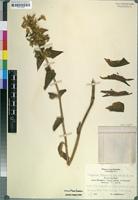
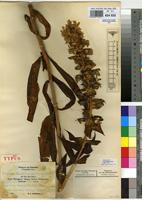
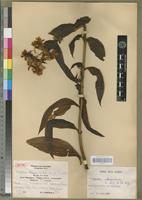
Isotype of Urogentias ulugurensis Gilg & Gilg-Benedict [family GENTIANACEAE]
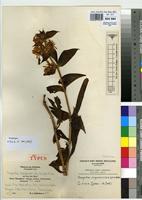
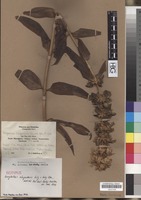
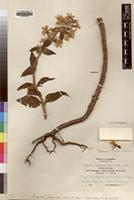
Isotype of Urogentias ulugurensis Gilg & Gilg-Ben. [family GENTIANACEAE]
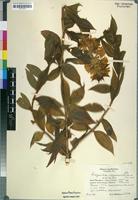
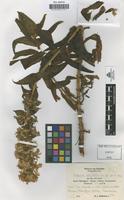
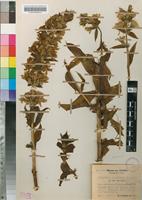
Isotype of Urogentias ulugurensis Gilg & Gilg-Benedict [family GENTIANACEAE]
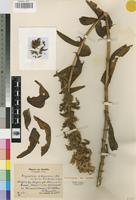
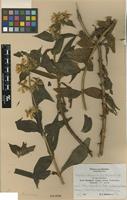
Isotype of Urogentias ulugurensis E.Gilg. & Ch.Gilg. [family GENTIANACEAE]
Isotype of Urogentias ulugurensis Gilg & Gilg-Ben. [family GENTIANACEAE]
Type of Urogentias ulugurensis Gilg & Gilg-Ben. [family GENTIANACEAE]
Isotype of Urogentias ulugurensis Gilg & Gilg-Ben. [family GENTIANACEAE]
Isotype of Urogentias ulugurensis Gilg&Gilg-Ben. [family GENTIANACEAE]
Type of Urogentias ulugurensis Gilg&Gilg-Ben. [family GENTIANACEAE]
Isotype of Urogentias ulugurensis Gilg & Gilg-Ben. [family GENTIANACEAE]
Previous
Next

Name

Identification
Urogentias ulugurensis Gilg&Gilg-Ben. [family GENTIANACEAE ] (stored under name);
Related name
  • Urogentias ulugurensis

Flora

Entry for UROGENTIAS ulugurensis Gilg & Gilg-Ben. [family GENTIANACEAE]
Herbarium
Royal Botanic Gardens, Kew (K)
Collection
Flora of Tropical East Africa
Resource Type
Reference Sources
Entry From
Flora of Tropical East Africa, page 1, (2002) Author: SILESHI NEMOMISSA
Names
UROGENTIAS ulugurensis Gilg & Gilg-Ben. [family GENTIANACEAE], in N.B.G.B. 11: 944 (1933). Type: Tanzania, Morogoro District, Uluguru Mts, Schlieben 2786 (B†, holo., BM!, iso.)
Information
Perennial herb, 0.6–1.5 m high. Stem hollow, simple at base, branched at inflorescence. Leaves narrowed into very short pseudo-petiole, up to 10 mm long; lamina lanceolate to ovate-lanceolate, (2.5–)8–20 cm long, 2.6–5 cm wide, decreasing towards apex of plant, acute to acuminate, amplexicaul, strongly 3-veined, veins impressed above, prominent beneath. Inflorescences strictly axillary, many-flowered; bracteoles linear or narrowly linear-lanceolate, up to 22 mm long, ± 1.6 mm wide, acuminate. Flowers sessile. Calyx tube 4–7.2 mm long, with 8 teeth; teeth 7–15 mm long, up to 1 mm wide at base, with a single row of colleters on inner surface at base. Corolla white to pink to mauvish blue, tube 13–18.4 mm long, cylindrical, with 8 thickened ridges on inner surface above ovary; ridges 4–5 mm long, ± 0.6 mm wide, apically becoming free from tube, ending in a ruffled, scale-like, lanceolate appendage, 0.8 mm long, 0.8 mm wide, decurrent on ridge, appendages forming a corona; lobes spatulate or obovate, 14–19 mm long, 4.5–8 mm wide, deeply notched with awn to 1 cm long arising from the middle of the notch. Filaments 6–10 mm long, inserted on the corolla tube, behind corona scale; anthers dark mauve, oblong or elliptic, 3–4 mm long, apiculate. Ovary ellipsoid or ovate-oblong, 9–13 mm long, 3–4 mm diameter, unilocular; style up to 6–9 mm long; stigma capitate, bilobed, lobes 0.8 mm long, 1.9 mm wide, wider than long, crescent-shaped, papillose. Capsule ovoid, 12–18 mm long, 6–8 mm diameter, bivalved. Seeds slightly curved at the median or ± crescent-shaped, 0.75 mm long, 0.5 mm diameter, surface winged all over, wings ± 0.4 mm wide, continuous in outline. Fig. 5 (p. 23).
Range
DISTR. T 6 not known elsewhere
Altitude range
1350–1650 m
Distribution
TANZANIA Kilosa District Ukaguru Mts, Ihanga rock, SE of Mnyera peak on the same ridge, 9 Aug. 1972, Mabberley 1432!;TANZANIA Morogoro District NW Uluguru Mts, Uluguru N Forest Reserve, ridge to E of Mwere Valley, on ridge track to Palata, 22 July 1972, Mabberley 1250! & 26 Sept. 1932, Wallace 175!
Notes
The number of the floral parts indicates this species is related to the Eurasian genus Blackstonia. In Blackstonia, however, the corolla lobes are without an awn, and the calyx lobes are free to the base. The insertion of the leaves provides a further difference between the genera. worthy in U. ulugurensis are the bracteoles subtending the individual flowers. They are a good indicator of a reduction of the peduncles and pedicels resulting in sessile, congested, axillary inflorecences.

Related Materials

  • Terms and Conditions
  • Privacy Policy
  • Cookie Policy
  • Cookie Settings
  • Accessibility
  • Help
  • Contact Us
  • Facebook
  • Twitter
ITHAKA

JSTOR is part of ITHAKA, a not-for-profit organization helping the academic community use digital technologies to preserve the scholarly record and to advance research and teaching in sustainable ways.

©2000-2026 ITHAKA. All Rights Reserved. JSTOR®, the JSTOR logo, JPASS®, Aluka®, and ITHAKA® are registered trademarks of ITHAKA.

╳