JSTOR Global Plants Home
  • Home
  • Browse
  • About
  • Access
  • Account
    • Saved Items
    • Profile
  • Log in

Global Plants

Skip to Main Content
  • JSTOR Global Plants Home
  • Global Plants

    • Browse
    • About
    • Access
    • Account
      • Saved Items
      • Profile
Log in
  • Browse
  • About
  • Access
  • Account
    • Saved Items
    • Profile
Advanced Search

Compilation
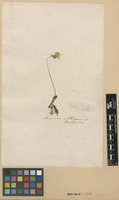
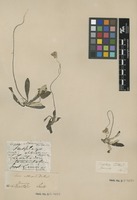
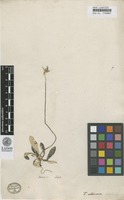
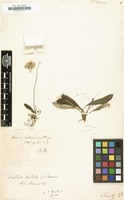
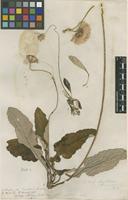
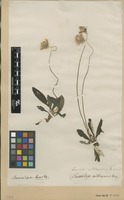
Tussilago albicans

8 Images see all

Filed as Chaptalia albicans (Sw.) Vent. ex B.D.Jacks. [family ASTERACEAE]
Tussilago albicans Sw. [family ASTERACEAE]
Filed as Tussilago albicans [family COMPOSITAE]
Filed as Tussilago nutans L. [family ASTERACEAE]
Filed as Chaptalia albicans (Sw.) Vent. ex B.D.Jacks. [family ASTERACEAE]
Previous
Next

Name

Identification
Tussilago nutans L. [family ASTERACEAE ] (stored under name); Verified by Not on sheet, Tussilago albicans Sw. [family ASTERACEAE ] Verified by Smith, Sir James Edward, Leontodon tomentosum L.f. [family ASTERACEAE ] Verified by Smith, Sir James Edward,
Related name
  • Tussilago nutans
  • Tussilago albicans
  • Leontodon tomentosum
Common name
  • White sunbonnet, Flora of North America Vol. 19

Flora

Entry for Chaptalia albicans (Swartz) Ventenat ex B. D. Jackson [family COMPOSITAE]
Herbarium
Flora of North America (FNA)
Collection
Flora of North America
Resource Type
Reference Sources
Entry From
Flora of North America, Vol 19,
Names
Chaptalia albicans (Swartz) Ventenat ex B. D. Jackson [family COMPOSITAE], Index Kew, 1: 506. 1893
Tussilago albicans Swartz [family COMPOSITAE], Prodr., 113. 1788
Chaptalia leiocarpa (de Candolle) Urban [family COMPOSITAE]
Treatment Author(s)
Guy L. Nesom
Information
Leaves sessile or nearly so; blades obovate to obovate-elliptic, 2–14 cm, margins retrorsely serrulate to denticulate-apiculate, abaxial faces white-tomentose, adaxial faces green, glabrous or glabrate. Heads erect in bud, flowering, and fruit. Peduncles ebracteate, 6–15 cm in flowering, 12–37 cm in fruit, dilated distally. Florets: outer pistillate, corollas creamy white, rarely purple tinged, laminae 0.2–0.3 mm wide; inner florets bisexual, fertile. Cypselae 8.4–11.2 mm, beaks filiform, lengths 0.5–0.6+ times bodies, faces glabrous or sparsely glandular (usually only along the nerves). 2n = 24, ca. 29.
Phenology
mar-may (spring), jun-jul (summer), nov (fall)
Altitude range
0–50 m;
Distribution
MexicoWest IndiesCentral America.USA Fla.
Discussion
Chaptalia albicans was treated by A. Cronquist (1980) as C. dentata (Linnaeus) Cassini. The latter is known only from the West Indies (G. Nesom 1984) and contrasts with C. albicans in having outer pistillate florets with corollas white to greenish (versus white) and laminae (0.2–)0.4–0.7 mm (versus 0.2–0.3 mm) wide, style branches of pistillate florets (0.5–)0.7–0.9 mm (versus 0.8–1.3 mm), cypselae 5.5–7.5(–8.5) mm (versus 8.4–11.2 mm), orange (versus white) carpopodia, and pappus bristles 5.8–8.5 mm (versus 7.8–10.5 mm).

Related Materials

  • Terms and Conditions
  • Privacy Policy
  • Cookie Policy
  • Cookie Settings
  • Accessibility
  • Help
  • Contact Us
  • Facebook
  • Twitter
ITHAKA

JSTOR is part of ITHAKA, a not-for-profit organization helping the academic community use digital technologies to preserve the scholarly record and to advance research and teaching in sustainable ways.

©2000-2026 ITHAKA. All Rights Reserved. JSTOR®, the JSTOR logo, JPASS®, Aluka®, and ITHAKA® are registered trademarks of ITHAKA.

╳