JSTOR Global Plants Home
  • Home
  • Browse
  • About
  • Access
  • Account
    • Saved Items
    • Profile
  • Log in

Global Plants

Skip to Main Content
  • JSTOR Global Plants Home
  • Global Plants

    • Browse
    • About
    • Access
    • Account
      • Saved Items
      • Profile
Log in
  • Browse
  • About
  • Access
  • Account
    • Saved Items
    • Profile
Advanced Search

Compilation
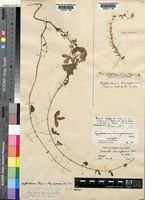
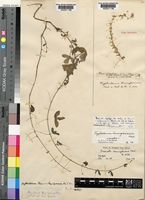
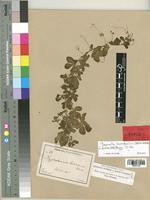
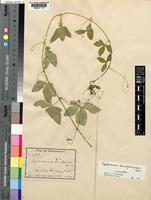
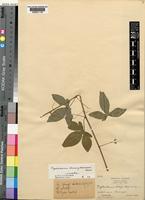
Tryphostemma hanningtonianum

5 Images see all

Basananthe hanningtoniana (Mast.) W.J.de Wilde [family PASSIFLORACEAE]
Type of Tryphostemma hanningtonianum Mast. [family PASSIFLORACEAE]
Isotype of Tryphostemma hanningtonianum var. latiloba Harms [family PASSIFLORACEAE]
Tryphostemma hanningtoniana ( Mast. ) de Wilde [family PASSIFLORACEAE]
Basananthe hanningtoniana (Mast.) W.J.de Wilde [family PASSIFLORACEAE]
Previous
Next

Name

Identification
Basananthe hanningtoniana (Mast.) W. J. de Wilde [family PASSIFLORACEAE ] (stored under name); Verified by Data not digitized, Isotype of Tryphostemma hanningtonianum [family PASSIFLORACEAE ] Verified by Data not digitized,
Related name
  • Basananthe hanningtoniana
  • Tryphostemma volkensii
  • Tryphostemma hanningtoniana
  • Tryphostemma hanningtonianum
  • Tryphostemma stolzii

Flora

Entry for BASANANTHE hanningtoniana (Mast.) de Wilde [family PASSIFLORACEAE]
Herbarium
Royal Botanic Gardens, Kew (K)
Collection
Flora of Tropical East Africa
Resource Type
Reference Sources
Entry From
Flora of Tropical East Africa, page 1, (1975) Author: W. J. J. O. de Wildem (Rijksherbarium, Leiden)
Names
BASANANTHE hanningtoniana (Mast.) de Wilde [family PASSIFLORACEAE], in Blumea 21 : 342, fig. 3/a–c (1973). Types : Kenya, Teita District, Maungu, Johnston & Tanzania, Morogoro District, Kwa Chiropa, Hannington (both K, syn. !)
Tryphostemma hanningtonianum Mast. [family PASSIFLORACEAE], in Hook., Ic. Pl., t. 1484 (1885); Engl. in E.J. 14 : 390 (1891); Hutch. & Pearce in K.B. : 261 (1921); U.K.W.F. : 166 (1974)
Tryphostemma niloticum Engl. [family PASSIFLORACEAE], in E.J. 14 : 389 (1891) & 15 : 577 (1893); Hutch. & Pearce in K.B. : 261 (1921). Type : Sudan, Baker 214 in Herb. Schweinfurth (B, holo.†, BM, drawing of leaf)
Tryphostemma volkensii Harms [family PASSIFLORACEAE], in E.J. 19, Beibl. 47 : 40 (1894); Hutch. & Pearce in K.B. : 261 (1921). Type : Tanzania, Moshi District, Marangu, Volkens 1485 (B, holo.†, BM, drawing of leaf)
Tryphostemma hanningtonianum Harms var. latilobum [family PASSIFLORACEAE], in P.O.A. C : 280 (1895), as “ latiloba ”. Type : Tanzania, Lushoto District, Derema [Nderema], Volkens 117 (B, holo.†, BM, iso. !)
Tryphostemma latilobum (Harms) Engl. [family PASSIFLORACEAE], V.E. 3 (2) : 599 (1921)
Tryphostemma snowdenii Hutch. & Pearce [family PASSIFLORACEAE], in K.B. : 261, fig. 1 (1921). Type : Kenya, Kiambu District, Limuru, Snowden 598 (K, holo. !, BM, iso. !)
Tryphostemma stolzii Engl. [family PASSIFLORACEAE], V.E. 3 (2) : 599 (1921); Harms in N.B.G.B. 8 : 291 (1923). Types : Tanzania, Rungwe District, Kyimbila, Stolz 603 (B, syn.†, BM, K, L, isosyn. !) & Njombe District, Bulongwa, Stolz 2186 (B, syn.†)
Tryphostemma foetida Lebrun & Taton [family PASSIFLORACEAE], in B.J.B.B. 18 : 283 (1947). Type : Zaire, Kivu Province, Kasindi-Lubango, Lebrun 4715 (BR, holo. !)
Tryphostemma sp. A [family PASSIFLORACEAE], sensu Agnew, U.K.W.F. : 166 (1974)
Information
Erect or climbing 0.1–3 m., branched, annual or perennial, glabrous, pubescent, scabrous or hispid. Tendrils 1–15 cm. Leaf-blades 3–5-lobed, rarely unlobed, ovate to suborbicular in outline, 1–13 by 1–13 cm., glabrous or hairy (often only beneath), base truncate to cordate; lobes ovate or elliptic to lanceolate, or obovate, up to 8.5 cm., top acute to broadly obtuse; margin dentate or with remote slender gland-teeth to ± 3 mm., often more dense towards the base; petiole 0.2–8 cm., sometimes with a few gland-teeth at the top. Stipules 3–15 mm. False stipules absent. Inflorescences (1–)2-flowered; peduncle 1–10 cm.; bracts 0.5–4 mm., sometimes caducous or absent. Flower-stipe 2–10 mm. Hypanthium 1.5–4 mm. wide. Sepals 3–8 mm., obtuse to acute, glabrous or hairy. Petals 2–6 mm. Outer corona-tube 1.5–2.3 mm., threads 1.5–2.3 mm. Disk 0.2–0.5 mm. Inner corona cup-shaped, 0.7–1.5 mm. Stamens 5(–9); filaments 2–3 mm., anthers 1–1.5(–2.5) mm. Ovary 0.6–2 mm.; styles 3(–4), free, 1–3 mm. Fruit (excluding the 2–6 mm. long gynophore) 1–1.8 cm., containing 1–5 seeds. Seeds 6–7 mm. Fig. 8.
Range
DISTR. U3, 4; K1, 4, 7; T1–7
Altitude range
(0–)200–2150 m.
Distribution
KENYA Northern Frontier Province Laisamis, Dec. 1956, J. Adamson 608 !KENYA Machakos District near Kiboko, 9 Jan. 1964, Verdcourt 3861 !KENYA Lamu District Witu, Feb. 1957, Rawlins 340 !TANZANIA Lushoto District World’s View, 4 June 1953, Drummond & Hemsley 2842 !TANZANIA Dodoma District Imagi Hill, 28 Jan. 1962, Polhill & Paulo 1281 !TANZANIA Ulanga District Mahenge, 28 Dec. 1931, Schlieben 1577 !UGANDA Mbale District Budadiri, Jan. 1932, Chandler 417 !UGANDA Masaka District Bugabo, Sept. 1963, Tallantire 615 !UGANDA Mengo District Kiwala, Jan. 1917, Dummer 3047 !
Distribution (external)
Sudan
Ethiopia
? Somali Republic
Zaire
Zambia
Rhodesia
Malawi
Mozambique
Notes
This is a complex species which includes a number of more or less recognizable forms. Variability abounds in the growth form and habit. There are delicate erect annual forms, with weak roots, in which the cotyledons are persistent. These annuals have often relatively small flowers and fruits. Later on they may develop a climbing habit, becoming biennial or perennial. Coarse perennial forms are found mostly in mountainous areas (Usambara Mts.), and. have a thick perennial rootstock. Often the flowers are variable in size in a single specimen, apparently partly in relation to their age. The indumentum varies as much. Glabrous forms are probably most common, but glabrescent or hairy forms are frequent as well; hairy specimens occur apparently only in the perennial forms. A few specimens (Greenway & Kanuri 11271, 11883, Makin 14036 and Gillett 19182) are remarkably scabrous. Leaf shape and texture is very variable. Unlobed leaves are rarely found.A few specimens, viz. Haerdi 385/0, Schlieben 1577 and 2078, all from Ulanga District in Tanzania (T6), have some characters in common with B. hanningtoniana and 6, B. lanceolata, as well as with 4, B. zanzibarica. All have unlobed leaves, with distinct unwinged petioles with a few slender gland-teeth near the top. A toothed petiole is characteristic of certain forms of B. lanceolata. In habit the three specimens resemble B. zanzibarica, but the flowers are petalous; Schlieben 1577 has 5 or 6 sepals and petals, Schlieben 2078 has 4 or 5. Haerdi 385/0 has the normal 5 sepals and petals, but is in habit and nearly all other characters identical with Semsei 1327, a specimen without petals and doubtlessly belonging to 4, B. zanzibarica.  As in certain other annual species, sometimes large elliptic cotyledons are still present in full-grown annual specimens. In some annual forms bracts in the inflorescences are absent.

Related Materials

  • Terms and Conditions
  • Privacy Policy
  • Cookie Policy
  • Cookie Settings
  • Accessibility
  • Help
  • Contact Us
  • Facebook
  • Twitter
ITHAKA

JSTOR is part of ITHAKA, a not-for-profit organization helping the academic community use digital technologies to preserve the scholarly record and to advance research and teaching in sustainable ways.

©2000-2026 ITHAKA. All Rights Reserved. JSTOR®, the JSTOR logo, JPASS®, Aluka®, and ITHAKA® are registered trademarks of ITHAKA.

╳