JSTOR Global Plants Home
  • Home
  • Browse
  • About
  • Access
  • Account
    • Saved Items
    • Profile
  • Log in

Global Plants

Skip to Main Content
  • JSTOR Global Plants Home
  • Global Plants

    • Browse
    • About
    • Access
    • Account
      • Saved Items
      • Profile
Log in
  • Browse
  • About
  • Access
  • Account
    • Saved Items
    • Profile
Advanced Search

Compilation
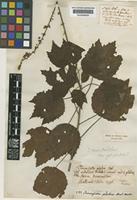
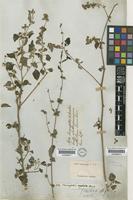
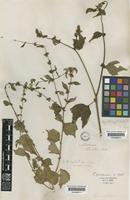
Triumfetta trilocularis

3 Images see all

Triumfetta glabra Spreng. [family TILIACEAE]
Triumfetta pentandra A.Rich. [family TILIACEAE]
Previous
Next

Name

Identification
Triumfetta trilocularis Roxb. [family TILIACEAE ] Triumfetta pentandra A.Rich. [family TILIACEAE ] (stored under name);
Related name
  • Triumfetta pentandra
  • Triumfetta semitriloba
  • Triumfetta trilocularis
  • Triumfetta glabra
  • Triumfetta glandulosa

Flora

Entry for TRIUMFETTA rhomboidea Jacq. [family TILIACEAE]
Herbarium
Royal Botanic Gardens, Kew (K)
Collection
Flora of Tropical Africa
Resource Type
Reference Sources
Entry From
Flora of Tropical Africa, Vol 1, page 240, (1868) Author: (by Dr. Maxwell T. Masters).
Names
TRIUMFETTA rhomboidea Jacq. [family TILIACEAE], DC. Prod. i. 507.
TRIUMFETTA velutina Vahl [family TILIACEAE], Symb. iii. 62.
TRIUMFETTA glandulosa Lam. [family TILIACEAE], Dict. iii. 421.
TRIUMFETTA trilocularis Guill. et Perr. [family TILIACEAE], Fl. Seneg. i. 93.
TRIUMFETTA Vahlii Poir. [family TILIACEAE], Dict. Suppl. iii. 300.
TRIUMFETTA mollis Schum. et Thonn. [family TILIACEAE], Pl. Guin. 239.
TRIUMFETTA Thonningiana DC. [family TILIACEAE], Pl. Rar. Gen. 64.
? TRIUMFETTA angulata Hook. f. [family ], in Fl. Nigrit. 235, nec Lam.
TRIUMFETTA trilocularis Roxb. [family TILIACEAE], Fl. Ind., fide Hook. f. in Fl. Nigrit. 235.
TRIUMFETTA eriophlebia Hook. f. [family TILIACEAE], Fl. Nigrit. 235.
Information
Herbaceous or shrubby, glabrous, villose, stellate-pilose or velvety. Stalks of lower leaves nearly as long as the blades. Leaves polymorphous, often differing much on the same specimen, ovate, cordate or rhomboid at the base, acute or somewhat 3-lobed at the apex, palmately 3–5–7-nerved, unequally serrate; the lower serratures sometimes reflexed and glandular; surfaces exceedingly variable in regard to degree of pubescence. Flowers numerous, in cymose clusters along the sides and ends of the branches. Pedicels short. Flower-buds oblong or somewhat clavate, apiculate. Sepals hispid or downy, oblong, apiculate. Petals yellow, oblong, tapering at the base. Stamens 10–15. Capsules globose, the size of a small pea, albido-tomentose, 3–5-valved; valves covered with smooth, hooked, conical prickles.
Range
Widely distributed throughout tropical Africa, whence specimens have been received from almost every collector. It is also a native of the West Indies, Arabia, East Indies, etc.
Notes
The plant is excessively variable, now apparently an annual, at other times a rigid branching undershrub. Leaves of almost every possible size, form, and quality of pubescence, now glabrous or nearly so, pilose, hispid, tomentose, sometimes covered with cream-coloured tomentum along the nerves of the leaf principally (T. eriophlebia, Hook. f.), at other times densely covered with thick tomentum. Hence it is not to be wondered at that many supposed distinct species and varieties have been described. The extensive series of specimens at Kew, and especially the copious illustrations particularly selected by Dr. Welwitsch to show the amount of variation, amply suffice to show that these so-called species merge one into the other, as even on the same plant characters belonging to two or three of the established varieties may be met with. Dr. Welwitsch's testimony on this point is emphatic. The most constant character, and one that runs through almost all the varieties, resides in the small, globular, whitish-tomentose fruit, which is covered with comparatively stout hooked bristles; the white tomentum, however, is not always to be seen on the mature capsules. One variety is stated to have clove-scented flowers.

Related Materials

  • Terms and Conditions
  • Privacy Policy
  • Cookie Policy
  • Cookie Settings
  • Accessibility
  • Help
  • Contact Us
  • Facebook
  • Twitter
ITHAKA

JSTOR is part of ITHAKA, a not-for-profit organization helping the academic community use digital technologies to preserve the scholarly record and to advance research and teaching in sustainable ways.

©2000-2026 ITHAKA. All Rights Reserved. JSTOR®, the JSTOR logo, JPASS®, Aluka®, and ITHAKA® are registered trademarks of ITHAKA.

╳