JSTOR Global Plants Home
  • Home
  • Browse
  • About
  • Access
  • Account
    • Saved Items
    • Profile
  • Log in

Global Plants

Skip to Main Content
  • JSTOR Global Plants Home
  • Global Plants

    • Browse
    • About
    • Access
    • Account
      • Saved Items
      • Profile
Log in
  • Browse
  • About
  • Access
  • Account
    • Saved Items
    • Profile
Advanced Search

Compilation
Triumfetta dekindtiana

9 Images see all

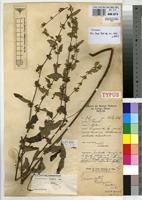
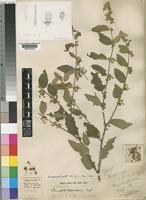
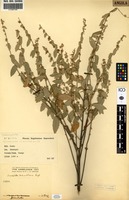
Type of Triumfetta robynsii De Wild. [family TILIACEAE]
Filed as Triumfetta dekindtiana Engl. [family TILIACEAE]
Type of Triumfetta robynsii De Wild. [family TILIACEAE]
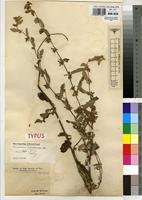
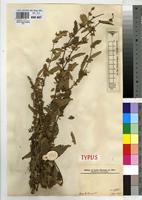
Type of Triumfetta sapinii De Wild. [family TILIACEAE]
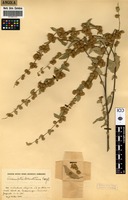
Isotype of Triumfetta dekindtiana Engl. [family TILIACEAE]
Type of Triumfetta sapinii De Wild. [family TILIACEAE]
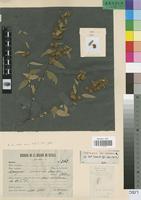
Triumfetta dekindtiana Engl. [family TILIACEAE]
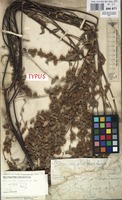
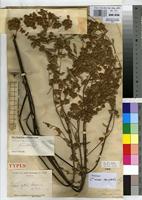
Type of Triumfetta robynsii De Wild. [family TILIACEAE]
Filed as Triumfetta dekindtiana Engl. [family TILIACEAE]
Previous
Next

Name

Identification
Triumfetta robynsii De Wild. [family TILIACEAE ] Verified by Not on sheet, Triumfetta dekindtiana Engl. [family TILIACEAE ] (stored under name); Verified by Wilczek R., 1963
Related name
  • Triumfetta reflexa
  • Triumfetta robynsii
  • Triumfetta sapinii
  • Triumfetta dekindtiana

Flora

Entry for TRIUMFETTA dekindtiana Engl. [family TILIACEAE]
Herbarium
Royal Botanic Gardens, Kew (K)
Collection
Flora of Tropical East Africa
Resource Type
Reference Sources
Entry From
Flora of Tropical East Africa, page 1, (2001) Author: C. WHITEHOUSE, M. CHEEK, S. ANDREWS & B. VERDCOURT
Names
TRIUMFETTA dekindtiana Engl. [family TILIACEAE], in E.J. 39: 580 (1907); Sprague & Hutch. in J.L.S. 39: 254 (1909); T.T.C.L.: 622 (1949); C.F.A. 1: 230 (1951); F.F.N.R.: 240 (1962); Wild in F.Z. 2: 70, t. 5/c (1963); R. Wilczek in F.C.B. 10: 62 (1963); Wild & Gonç. in Fl. Moçamb. 28: 43 (1969); T.V. Jacobs in Phyton 61: 88, fig. 1/c (1997). Type: Angola, Huila, Monhino, Antunes 363 (B†, holo., LISC, iso.)
Information
Erect shrub 1(–1.5) m tall; stems much branched, ultimate branches 1–3 mm thick, orange-brown, densely stellate-scabrid. Leaves narrowly ovate, occasionally elliptic, 10–59(–93) mm long, 6–30(–35) mm wide, tip acute to ± rounded, base rounded (rarely truncate), margin singly or doubly finely to coarsely serrate, upper surface grey-green, shortly stellate-hairy, lower surface grey or white, densely shortly and softly stellate-hairy (rarely subscabrid); petiole 6–17 mm, terete, swollen at top, dark brown, stellate-scabrid; stipules falling early, linear, 2 mm long, papery, brown, stellate-hairy. Inflorescences subopposite the leaf, cymes (1–)4–5(–8) per node, each cyme with 1–5 flowers; peduncles 2–5 mm long, shortly stellate-hairy; bracts 1–3, linear, 1.5 mm long; pedicels 2–3 mm long, hairy. Sepals linear-lanceolate, 6–7 mm long, 1.5 mm wide, tip retuse, densely stellate-hairy outside. Petals elliptic, 4 mm long, 1 mm wide, with rounded tip and clawed base; stamens 8, 4 mm long; ovary globose, densely stellate-hairy. Fruits 1–3 per node, spherical, 6–10(–13) mm diameter, 4-locular, at maturity dehiscing completely into 4 separate valves, surface largely covered with 80–100 bristles each ± 2 mm long, yellow-brown, densely stellate-tomentose, the long hairs obscuring the fruit-body, the bristle crowned at the tip with 4–7 very small radiate hairs. Fig. 12/1–3.
Range
DISTR. T 1, 4, 5, 7, 8
Altitude range
800–2250 m
Distribution
TANZANIA Mwanza District Butimba [Butonbo], 15 Mar. 1952, Tanner 561!TANZANIA Tabora District Kigwa Forest Reserve, 5 June 1968, Ngoundai 30!TANZANIA Dodoma District Itigi Station, Chunya road, 16 Apr. 1964, Greenway & Polhill 11589!
Distribution (external)
; Congo (Kinshasa)
Burundi
Angola
Zambia
Mozambique
Zimbabwe
Notes
T. dekindtiana is most likely to be confused with T. setulosa. For differences, see there.

Related Materials

  • Terms and Conditions
  • Privacy Policy
  • Cookie Policy
  • Cookie Settings
  • Accessibility
  • Help
  • Contact Us
  • Facebook
  • Twitter
ITHAKA

JSTOR is part of ITHAKA, a not-for-profit organization helping the academic community use digital technologies to preserve the scholarly record and to advance research and teaching in sustainable ways.

©2000-2026 ITHAKA. All Rights Reserved. JSTOR®, the JSTOR logo, JPASS®, Aluka®, and ITHAKA® are registered trademarks of ITHAKA.

╳