JSTOR Global Plants Home
  • Home
  • Browse
  • About
  • Access
  • Account
    • Saved Items
    • Profile
  • Log in

Global Plants

Skip to Main Content
  • JSTOR Global Plants Home
  • Global Plants

    • Browse
    • About
    • Access
    • Account
      • Saved Items
      • Profile
Log in
  • Browse
  • About
  • Access
  • Account
    • Saved Items
    • Profile
Advanced Search

Compilation
Triumfetta brachyceras

12 Images see all

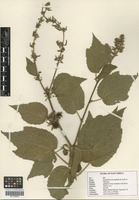
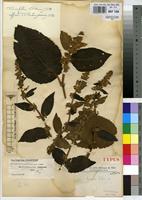
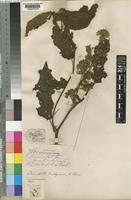
Filed as Triumfetta brachyceras K. Schum. [family TILIACEAE]
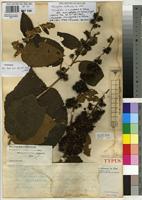
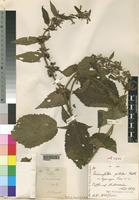
Type of Triumfetta elskensii De Wild. [family TILIACEAE]
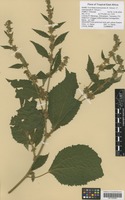
Triumfetta macrophylla Vahl [family TILIACEAE]
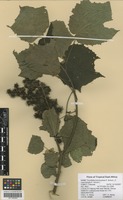
Filed as Triumfetta brachyceras K. Schum. [family TILIACEAE]
Type of Triumfetta elskensii De Wild. [family TILIACEAE]
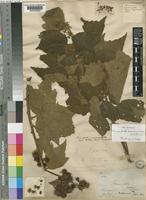
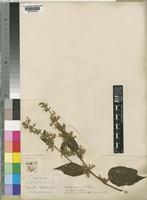
Triumfetta brachyceras K.Schum. [family TILIACEAE]
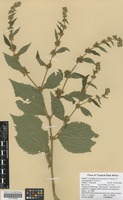
Triumfetta pilosa Roth [family TILIACEAE]
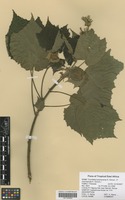
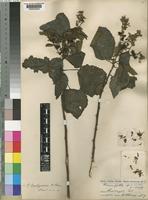
Holotype of Triumfetta ruwenzoriensis Sprague [family TILIACEAE]
Triumfetta brachyceras K.Schum. [family TILIACEAE]
Previous
Next

Name

Identification
Triumfetta elskensii De Wild. [family TILIACEAE ] Verified by Not on sheet, Triumfetta brachyceras K.Schum. [family TILIACEAE ] (stored under name); Verified by Not on sheet,
Related name
  • Triumfetta semitriloba
  • Triumfetta macrophylla
  • Triumfetta cordifolia
  • Triumfetta brachyceras
  • Triumfetta pilosa
  • Triumfetta ruwenzoriensis
  • Triumfetta elskensii
  • Triumfetta tomentosa

Flora

Entry for TRIUMFETTA brachyceras K. Schum. [family TILIACEAE]
Herbarium
Royal Botanic Gardens, Kew (K)
Collection
Flora of Tropical East Africa
Resource Type
Reference Sources
Entry From
Flora of Tropical East Africa, page 1, (2001) Author: C. WHITEHOUSE, M. CHEEK, S. ANDREWS & B. VERDCOURT
Names
TRIUMFETTA brachyceras K. Schum. [family TILIACEAE], in E.J. 28: 432 (1900); F.P.S. 1: 227 (1950); E.P.A.: 527 (1958); Blundell, Wild Flow. E. Afr.: 70, t. 283 (1987); U.K.W.F., ed. 2: 96, t. 25 (1994); Vollesen in Fl. Eth. 2(2): 161, fig. 79.7/12 (1995). Type: Tanzania, Iringa District, Kisinga, Goetze 589 (B, holo.)
TRIUMFETTA macrophylla K. Schum. [family TILIACEAE], [in E.J. 15: 130 (1892) & in P.O.A. C: 265 (1892); T.T.C.L.: 622 (1949); K.T.S. 572 (1961); F.P.U., ed. 2: 60, fig. 15 (1971); Hanid in U.K.W.F.: 190, fig. on 189 (wrongly labelled ‘ Triumfetta rhomboidea ’)(1974); Troupin, Fl. Pl. Lign. Rwanda: 682 (1982) & Fl. Rwanda 2: 376 (1983); T.V. Jacobs in Phyton 61: 90, fig. 2k (1997), nom. illegit ., non Vahl (1798). Type: East Africa, ‘Kabotschi’, Fischer 61 (B, holo., K!, iso.)]
TRIUMFETTA telekii Schweinf. [family TILIACEAE], in von Hoehnel, Zum Rudolf-See Append.: 15 (1892); K. Schum. in P.O.A. C: 265 (1895), nom. nud .
TRIUMFETTA ruwenzoriensis Sprague [family TILIACEAE], in J.L.S. 37: 503 (1906); T.V. Jacobs in Phyton 61: 92, fig. 2p (1997). Type: Uganda, Toro District, Ruwenzori, Dawe 657 (K!, holo.)
TRIUMFETTA macrophylla (Sprague) Sprague & Hutch. var. ruwenzoriensis [family TILIACEAE], in J.L.S. 39: 272 (1909); Burret in Z.A.E.: 499 (1912); F.P.N.A. 1: 572 (1948); T.T.C.L.: 623 (1949); K.T.S.: 572 (1961)
TRIUMFETTA macrophylla Sprague & Hutch. var. rothii [family TILIACEAE], in J.L.S. 39: 273 (1909); T.T.C.L.: 623 (1949). Type: Ethiopia, Ankober, Roth 52 (K!, holo.)
TRIUMFETTA brachyceras Cufod. var. macrophylla [family TILIACEAE], B.J.B.B. 39 (4), suppl.: XXVIII (1969) & E.P.A.: 527 (1958), nom. invalid .; R. Wilczek in F.C.B. 10: 55 (1963), nom. invalid . Type as for T. macrophylla K. Schum.
TRIUMFETTA brachyceras (K. Schum.) Cufod. var. rothii [family TILIACEAE], B.J.B.B. 39 (4), suppl.: XXVIII (1969) & E.P.A.: 527 (1958), nom. invalid .
Information
Shrub (1–)2–4 m high, sometimes spreading over a wide area by horizontal stems; stems usually up to 8 mm thick, covered in long soft rufous hairs, but varying to dark brown subscabrid. Leaves shortly oblong to ovate, 7.5–24 cm long, 6.5–15 cm wide, shallowly 3-lobed, rarely entire, the apical lobe ± 5 cm long, the lateral lobes 0.5–2 cm long, base markedly cordate, often with a sinus 6–8 mm deep, margin coarsely 2-crenate or 2-serrate, densely stellate-hairy, the hairs usually long, soft and reddish but sometimes short, subscabrid and brown or grey, more densely stellate-tomentose beneath; petiole 3.2–9(–14) cm long, 1.5–2.5(–4) mm wide, indumentum as stem; stipules sometimes persistent, triangular, 5–10 mm long, 1–3 mm wide, indumentum as stem. Inflorescence terminal, with numerous stout branches 7–60 cm long, bearing dense clusters of large flowers at nodes 1–4 cm apart, the lowest nodes with reduced leaves, the lowermost almost as large as the stem leaves, but entire, reducing steadily to narrowly ovate or elliptic leaves to 2.8 cm long, 1 cm wide, each node with 5–10(–12) cymes opposite the leaf, cymes sometimes inserted at end of a short leafless stem 1–3 cm long, cymes (1–)3-flowered; peduncle 6–10 mm long; bracts 2–5 mm long, 0.5 mm wide, as stipules; pedicels 2–5 mm long. Sepals narrowly oblanceolate, slightly pandurate, 11–19 mm long, 1(–2) mm wide, with a short terminal spine up to 0.5 mm long, densely covered in long (1 mm) rufous hairs. Petals oblong-elliptic, 10–12 mm long, 3–4 mm wide, the lower part gradually tapered into a claw, basal 1.5 mm densely hairy; stamens (10–)12–22; ovary hairy. Fruit dehiscing by 4–5 valves, subglobose, 13–20 mm diameter, reddish brown to black, glabrous, rarely with a few scattered white simple hairs, bristles 64–80, each 5–7(–9) mm long, patent, tightly hooked, with a single terminal hair. Fig. 14/4–6.
Range
DISTR. U 2–4; K 1, 3–6; T 1, 2, 4, 7
Altitude range
1200–2650 m
Distribution
KENYA Northern Frontier Province Warges [Uaragess], 2 Dec. 1958, Newbould 3047!KENYA Elgeyo-Marakwet District E Cherangani Hills, Kipkunurr Forest Reserve, 14 Apr. 1975, Hepper & Field 4983!KENYA Kiambu District 6 km, Nairobi–Thika, 1 Dec. 1957, Verdcourt 1950!TANZANIA Bukoba District Bwanjai, 1935, Gillman 385!TANZANIA Masai District Great Ardai Plain, Block B, 9 July 1943, Greenway 7856!TANZANIA Njombe District 14 km S of Njombe, 5 July 1956, Milne-Redhead & Taylor 10952!UGANDA Toro District Ruwenzori, Mobuku Valley, 2 Jan. 1939, Loveridge 307!UGANDA Mbale District Elgon, Jan. 1918, Dummer 3629!UGANDA Mengo District Entebbe, Sept. 1922, Maitland 191!
Distribution (external)
; Congo (Kinshasa)
Rwanda
Sudan
Ethiopia
Notes
Most of the literature pertaining to this common species of high elevation East Africa can be found under the name T. macrophylla K. Schum., recently found to be a later homonym of an American species. Although it did not prove possible to resolve infraspecific variation satisfactorily within the present study, it is worth noting that two variants, strikingly different in their appearance at the extremes of the range in morphology, have long been recognized in East Africa. The first, T. macrophylla var. macrophylla must now be called T. brachyceras K. Schum. var. macrophylla (K. Schum.) Cufod. This has the largest stature and leaves, and the thickest stem of all East African Triumfetta. It is instantly recognizable by the thick red woolly hairs on leaves, stem and sepals and is also distinguished by the large flowers, the sepals 16–29 mm long, 15–20 stamens and the large fruits, 1.5–2 cm in diameter. T. macrophylla var. ruwenzoriensis (Sprague) Sprague & Hutch., now more correctly known as T. brachyceras K. Schum. var. brachyceras K. Schum. (of which T. macrophylla var. rothii Sprague & Hutch., known only from the type, seems to be a synonym) is smaller in all its parts and lacks the distinctive rufous woolly indumentum of var. macrophylla, being subscabrid on the underside of the leaf. Although the flowers reach the size of var. macrophylla, those of var. brachyceras usually have only 10–12 stamens and the fruits are generally smaller, about 1.5 cm in diameter. T. brachyceras var. brachyceras has been confused with T. cordifolia var. tomentosa. Although the latter can usually be immediately distinguished by the shorter, greyish-white indumentum on the lower leaf-surface, some specimens which appear to have resulted from shade growth, have an open, looser indumentum, similar to that part of T. brachyceras corresponding with var. brachyceras. Although fruits are normally a rich source of diagnostic qualitative characters amongst the species of Triumfetta, they provide little help in distinguishing between T. cordifolia and T. brachyceras. However, the latter can usually be distinguished by the more deeply cordate leaves, the larger flowers (more than 11 mm long) and fruits (more than 12 mm diameter), but the distinction is not always clear-cut. Since both taxa share the same habitat and geographical region, introgression cannot be ruled out.

Related Materials

  • Terms and Conditions
  • Privacy Policy
  • Cookie Policy
  • Cookie Settings
  • Accessibility
  • Help
  • Contact Us
  • Facebook
  • Twitter
ITHAKA

JSTOR is part of ITHAKA, a not-for-profit organization helping the academic community use digital technologies to preserve the scholarly record and to advance research and teaching in sustainable ways.

©2000-2026 ITHAKA. All Rights Reserved. JSTOR®, the JSTOR logo, JPASS®, Aluka®, and ITHAKA® are registered trademarks of ITHAKA.

╳