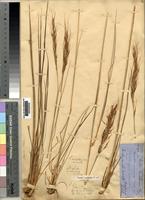
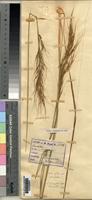
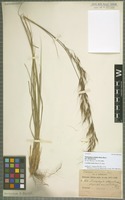
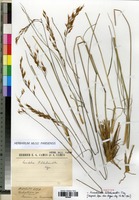
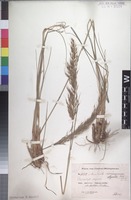
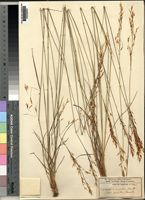
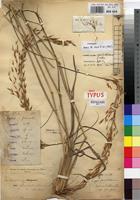
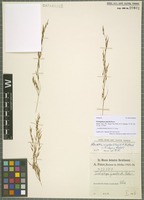
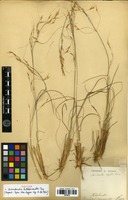
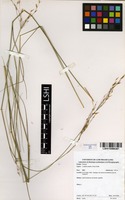
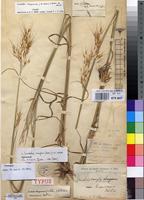
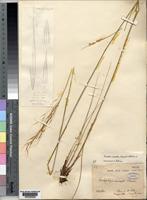
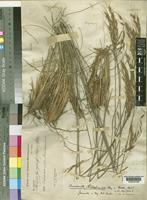
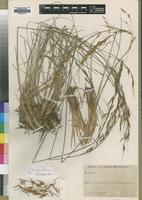
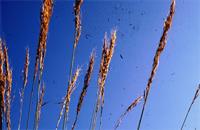
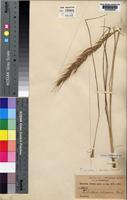
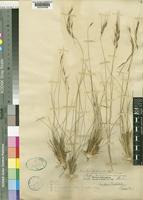
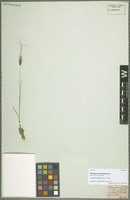
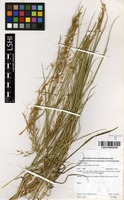
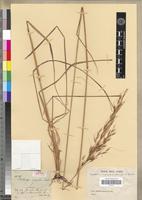
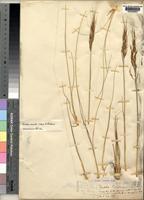
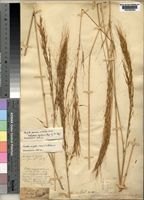
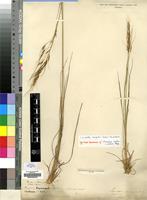
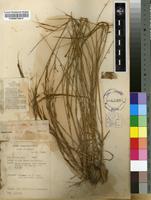
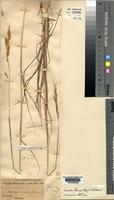
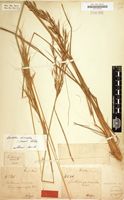
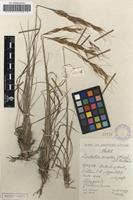
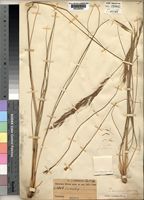
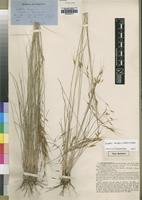
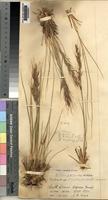
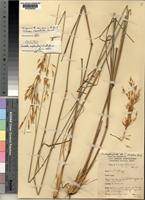
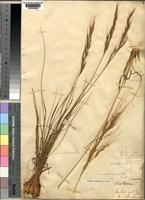
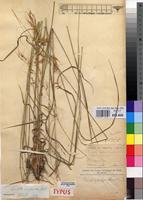
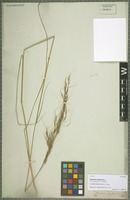
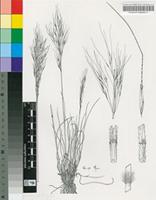
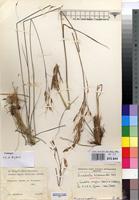
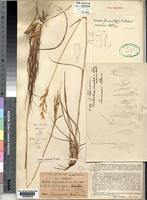
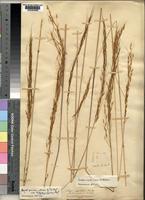
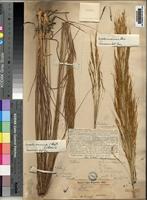
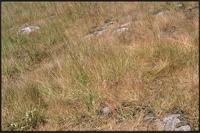
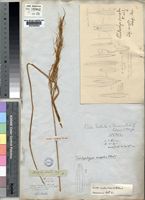
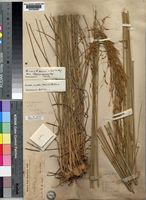
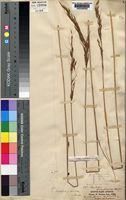
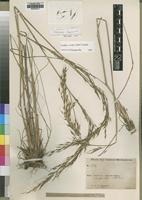
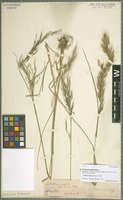
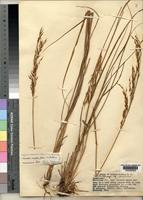
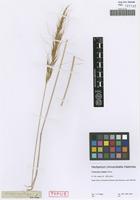
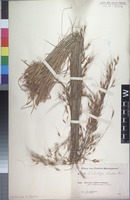
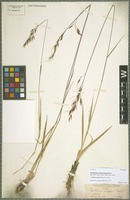
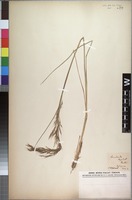
densely tufted; culms 2–3 ft. long, glabrous, 2- (rarely 3-) noded; leaves all but 2 or 3 near the base, sheathing the culms to 1/2 ft.; sheaths firm, tight, glabrous or more or less hispid, bearded at the nodes, the lowest tomentose at the base and finally splitting into rigid fibres; blades narrow linear, tapering to a long setaceous point, 1/2 ft. by 2 lin. or less, flat or convolute, rigid, hirsute or glabrescent; panicle erect, contracted, 6–10 in. long; rhachis glaucous; branches fascicled or geminate, erect, very unequal, the longest to 2–3 in. long, filiform, sparingly branched, scabrid or almost smooth; spikelets light brown, 5–6 lin. long; glumes glabrous, rarely sparingly bristly, the lower lanceolate-oblong, minutely subtruncate, 2 1/2–3 lin. long, the upper lanceolate, produced into a linear convolute truncate beak, 5–7 lin. long; lower floret ♂: valve lanceolate, acute or acutely acuminate, usually shorter than the upper glume, glabrous or with a very few bristles along the outer nerves; pale linear-oblong, 3 1/2 lin. long; stamens 2, anthers 1 1/2–2 lin. long; hermaphrodite floret: valve oblong-linear, terete, 2 1/2–3 lin. long (in this and the following species measured from the callus to the base of the awn), pubescent, faintly 7-nerved, shortly bifid; lobes acute; callus 2-toothed, villous, bearded, 1/2 lin. long; column of awn 4–5 lin. long; bristle 9–15 lin. long; pale lanceolate, acute, 3 lin. long; stamens as in the ♂. null