JSTOR Global Plants Home
  • Home
  • Browse
  • About
  • Access
  • Account
    • Saved Items
    • Profile
  • Log in

Global Plants

Skip to Main Content
  • JSTOR Global Plants Home
  • Global Plants

    • Browse
    • About
    • Access
    • Account
      • Saved Items
      • Profile
Log in
  • Browse
  • About
  • Access
  • Account
    • Saved Items
    • Profile
Advanced Search

Compilation
Trillium viridescens

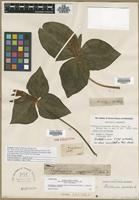
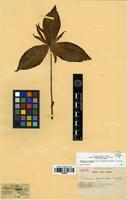
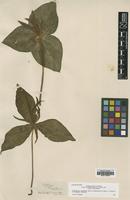
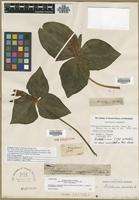
8 Images see all

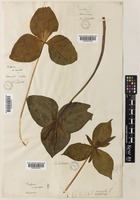
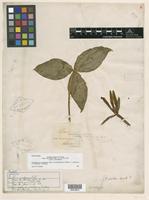
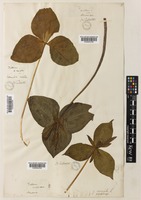
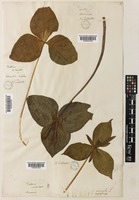
Syntype of Trillium viridescens Nutt. [family TRILLIACEAE]
Type? of Trillium viridescens Nuttall [family TRILLIACEAE]
Lectotype of Trillium viridescens Nutt. [family MELANTHIACEAE]
Trillium viridescens Nutt. [family TRILLIACEAE]
Isotype of Trillium viridescens Nutt. [family LILIACEAE]
Isotype of Trillium viridescens Nutt. [family TRILLIACEAE]
Trillium viridescens Nutt. [family TRILLIACEAE]
Previous
Next

Name

Identification
Trillium viridescens Nutt. [family MELANTHIACEAE ] (stored under name); Verified by John Daniel Freeman,
Related name
  • Trillium cernuum
  • Trillium discolor
  • Trillium viridescens
  • Trillium sessile
Common name
  • Ozark trillium, Flora of North America Vol. 26
  • Ozark green trillium, Flora of North America Vol. 26

Flora

Entry for Trillium viridescens Nuttall [family TRILLIACEAE]
Herbarium
Flora of North America (FNA)
Collection
Flora of North America
Resource Type
Reference Sources
Entry From
Flora of North America, Vol 26,
Names
Trillium viridescens Nuttall [family TRILLIACEAE], Trans. Amer. Philos. Soc., n. s., 5: 155. 1837
Treatment Author(s)
Frederick W. Case Jr.
Information
Rhizomes horizontal, brownish, short, thick, praemorse, not brittle. Scapes 1–3, round in cross section, 2–5 dm, ± stout, glabrous to scabrous. Bracts touching ground in early anthesis or not at all, sessile; blade dark green, obscurely marked with few–many darker blotches (very rarely unmottled), mottling becoming obscure with age, few or no stomates adaxially, ovate-elliptic to broadly so, 8.5–14 × 6.8–9 cm, apex acuminate. Flower erect, odor, if present, spicy or musty; sepals displayed above bracts, widely spreading, green or variously purple marked, lanceolate, 38–60 × 5–12 mm, margins entire, apex acute; petals long-lasting, erect, ± connivent, ± concealing stamens and ovary, purplish black on claw, greenish to yellow-green distally, sometimes all dark purple, occasionally slightly twisted, linear to narrowly spatulate, 4–8 × 0.8–1.2 cm, thick-textured, base slightly thickened and clawed, margins entire, apex rounded, lacking nipple; stamens erect, connivent (clustered together, leaning upon each other), 16–25 mm; filaments olive or purplish brown, 2.5–5 mm, very slender, widened basally; anthers erect, straight or slightly incurved, olive-brown, 13–20 mm, ± slender, dehiscence latrorse; connectives brownish, barely extending beyond anther sacs; ovary pale greenish white basally, purplish distally, ovoid, 6-angled, 5.5–10 mm; stigmas erect, divergent-recurved, distinct, purplish abaxially, sessile, almost linear, 6–10 mm, ± equaling ovary, ± not fleshy, very slightly widened basally. Fruits dark purplish green or green, odor unreported, ovoid, obscurely angled, with remains of persistent stigma, 0.7–1.5 cm, pulpy, not juicy at time of separation from receptacle.
Conservation Status
of conservation concern;
Phenology
mar-may (spring)
Altitude range
100–400 m;
Distribution
USA Ark.USA Kans.USA Mo.USA Okla.USA Tex.
Discussion
J. D. Freeman (1975) considered that Trillium viridescens intergrades with T. gracile in northeastern Texas and stated that these putative intergrades produce purple petals, but purple-petaled forms also occur in Arkansas, far from the influence of T. gracile.

Related Materials

  • Terms and Conditions
  • Privacy Policy
  • Cookie Policy
  • Cookie Settings
  • Accessibility
  • Help
  • Contact Us
  • Facebook
  • Twitter
ITHAKA

JSTOR is part of ITHAKA, a not-for-profit organization helping the academic community use digital technologies to preserve the scholarly record and to advance research and teaching in sustainable ways.

©2000-2026 ITHAKA. All Rights Reserved. JSTOR®, the JSTOR logo, JPASS®, Aluka®, and ITHAKA® are registered trademarks of ITHAKA.

╳