JSTOR Global Plants Home
  • Home
  • Browse
  • About
  • Access
  • Account
    • Saved Items
    • Profile
  • Log in

Global Plants

Skip to Main Content
  • JSTOR Global Plants Home
  • Global Plants

    • Browse
    • About
    • Access
    • Account
      • Saved Items
      • Profile
Log in
  • Browse
  • About
  • Access
  • Account
    • Saved Items
    • Profile
Advanced Search

Compilation
Trillium stylosum

8 Images see all

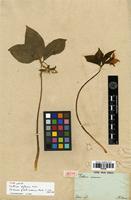
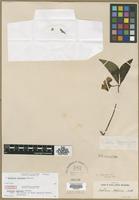
Type? of Trillium stylosum Nutt [family TRILLIACEAE]
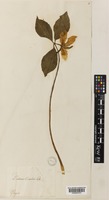
Trillium stylosum Nutt. [family TRILLIACEAE]
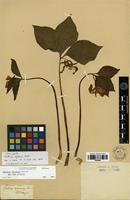
Holotype of Trillium stylosum Nutt. [family TRILLIACEAE]
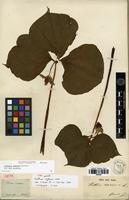
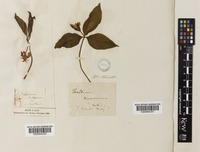
Trillium stylosum Nutt. [family TRILLIACEAE]
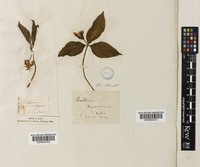
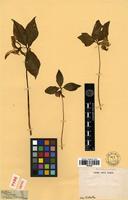
Type of Trillium stylosum Nutt [family TRILLIACEAE]
Previous
Next

Name

Identification
Trillium stylosum Nutt. [family TRILLIACEAE ] (stored under name); Trillium nervosum Elliott [family TRILLIACEAE ] Trillium discolor Wray ex Hook. [family TRILLIACEAE ]
Related name
  • Trillium nervosum
  • Trillium cernuum
  • Trillium stylosum
  • Trillium discolor
  • Trillium catesbaei
Common name
  • bashful trillium, Flora of North America Vol. 26
  • Catesby’s trillium, Flora of North America Vol. 26

Flora

Entry for Trillium catesbaei Elliott [family TRILLIACEAE]
Herbarium
Flora of North America (FNA)
Collection
Flora of North America
Resource Type
Reference Sources
Entry From
Flora of North America, Vol 26,
Names
Trillium catesbaei Elliott [family TRILLIACEAE], Sketch Bot. S. Carolina, 1: 429. 1817
Trillium affine Rendle [family TRILLIACEAE]
Trillium nervosum Elliott [family TRILLIACEAE]
Trillium stylosum Nuttall [family TRILLIACEAE]
Treatment Author(s)
Frederick W. Case Jr.
Information
Rhizomes short, tapered to a point distally. Scapes 1–2, round in cross section, 2–4.5 dm, slender, glabrous. Bracts usually raised somewhat, exposing flower; blade green, often with underlying purplish maroon in well-lighted plants, major veins on adaxial surface deeply engraved, elliptic-ovate, 6.5–15 × 4–8 cm, including elongated, petiolelike base, proximal 1/3 of leaf gradually tapered to base, margins often slightly raised, apex blunt-acute to acuminate. Flower opening at or recurved below bracts, rarely erect; sepals falcate-recurved, green or streaked with purple, linear-lanceolate, 20–45 × 7–8 mm, margins ± flat, apex acuminate; petals falcate-recurved distally, white, pink, or rose, darkening to pink or nonfading with age, veins visible but not appearing engraved, elliptic-oblong to oblong-lanceolate, 3.5–5 × 1–2+ cm, thin-textured, bases somewhat imbricated, forming funnel-like tube, margins undulate, apex acuminate; stamens prominent, recurved, 16–25 mm; filaments white, slightly longer and narrower than anthers; anthers recurving, bright yellow, 5–14 mm, thick, dehiscence introrse; ovary inconspicuous, white, angular-ovoid, deeply 6-angled, 4–12 × 3–7 mm, slender, base narrow; style 2–6 mm; stigmas prominent, strongly curled (circinate) to erect, connate basally, pale green or white, not lobed, 4–10 mm, uniformly thin; pedicel deflexed or recurved, rarely erect, angled, 2–4(–5) cm. Fruits baccate, greenish or whitish, ovoid-globose, angles less prominent when mature, 1–1.5 cm diam., pulpy but not juicy.
Phenology
mar-may (spring), jun-aug (summer)
Altitude range
50–800 m;
Distribution
USA Ala.USA Ga.USA N.C.USA S.C.USA Tenn.
Discussion
Elliott, author of Trillium catesbaei, apparently recognized one of its forms separately as T. nervosum. This name is still mentioned in British horticultural and botanical literature, but it is rarely found in U.S. literature. North American botanists treat T. nervosum as a synonym of T. catesbaei.
Plants of Trillium catesbaei from deep coves in South Carolina tend to have petals that are deeper pink and longer and wider than those of many other populations.

Related Materials

  • Terms and Conditions
  • Privacy Policy
  • Cookie Policy
  • Cookie Settings
  • Accessibility
  • Help
  • Contact Us
  • Facebook
  • Twitter
ITHAKA

JSTOR is part of ITHAKA, a not-for-profit organization helping the academic community use digital technologies to preserve the scholarly record and to advance research and teaching in sustainable ways.

©2000-2026 ITHAKA. All Rights Reserved. JSTOR®, the JSTOR logo, JPASS®, Aluka®, and ITHAKA® are registered trademarks of ITHAKA.

╳