JSTOR Global Plants Home
  • Home
  • Browse
  • About
  • Access
  • Account
    • Saved Items
    • Profile
  • Log in

Global Plants

Skip to Main Content
  • JSTOR Global Plants Home
  • Global Plants

    • Browse
    • About
    • Access
    • Account
      • Saved Items
      • Profile
Log in
  • Browse
  • About
  • Access
  • Account
    • Saved Items
    • Profile
Advanced Search

Compilation
Trillium flexipes

13 Images see all

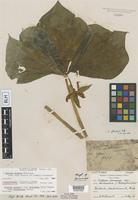
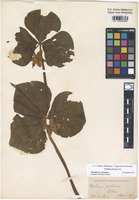
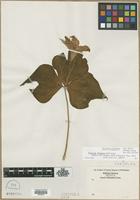
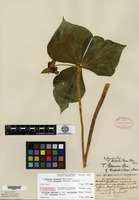
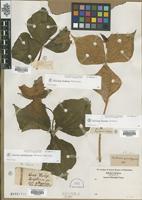
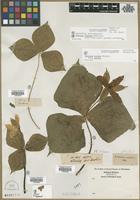
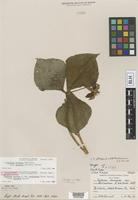
Lectotype of Trillium cernuum L. f. billingtonii Farw. [family TRILLIACEAE]
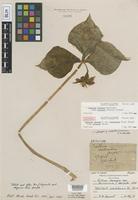
Filed as Trillium flexipes Raf. [family LILIACEAE]
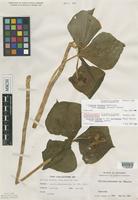
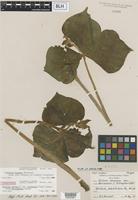
Filed as Trillium flexipes Raf. [family TRILLIACEAE]
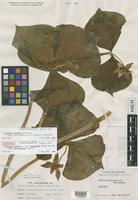
Isosyntype of Trillium cernuum Linnaeus var. walpolei Farwell [family LILIACEAE]
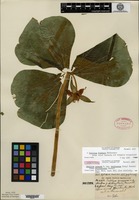
Isolectotype of Trillium cernuum L. f. billingtonii Farw. [family TRILLIACEAE]
Filed as Trillium sp. [family TRILLIACEAE]
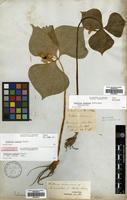
Lectotype of Trillium cernuum L. f. walpolei Farw. [family TRILLIACEAE]
Isotype of Trillium cernuum L. f. walpolei Farw. [family TRILLIACEAE]
Lectotype of Trillium cernuum L. f. billingtonii Farw. [family TRILLIACEAE]
Filed as Trillium sp. [family TRILLIACEAE]
Isosyntype of Trillium cernuum Linnaeus f. billingtonii Farwell [family LILIACEAE]
Filed as Trillium flexipes Raf. [family MELANTHIACEAE]
Isolectotype of Trillium cernuum L. f. walpolei Farw. [family TRILLIACEAE]
Previous
Next

Name

Identification
Trillium cernuum L. [family TRILLIACEAE ] (stored under name); Verified by T.S. Patrick, 1983 Trillium flexipes Raf. [family TRILLIACEAE ] Verified by T.S. Patrick, 1983
Related name
  • Trillium cernuum
  • Trillium sp.
  • Trillium flexipes
Common name
  • declined trillium, Flora of North America Vol. 26
  • Bent trillium, Flora of North America Vol. 26

Flora

Entry for Trillium flexipes Rafinesque [family TRILLIACEAE]
Herbarium
Flora of North America (FNA)
Collection
Flora of North America
Resource Type
Reference Sources
Entry From
Flora of North America, Vol 26,
Names
Trillium flexipes Rafinesque [family TRILLIACEAE], Autik. Bot., 133. 1840
Trillium declinatum Gleason [family TRILLIACEAE]
Trillium gleasonii Fernald [family TRILLIACEAE]
Treatment Author(s)
Frederick W. Case Jr.
Information
Rhizomes somewhat erect, thick, praemorse. Scapes 1–several from single rhizome, round in cross section, 2–5 dm, glabrous. Bracts sessile; blade medium green without red or maroon undertones, rhombic, 7–25 × 7–25 cm, frequently wider than long, base attenuate from just above middle, apex acuminate. Flower flexed ca. 90° on summit of pedicel to face outward rather than upward, or variously carried on strongly declined pedicels; sepals weakly recurved, green, lanceolate, 14–45 mm, shorter than or barely equaling petals, margins entire, apex acuminate; petals flat or recurved in distal 1/2, creamy white, not 2-colored, veins conspicuously engraved, ovate-lanceolate to broadly ovate, 2–5 × 1–4 cm, texture heavy, margins entire, apex acute; stamens large, ± erect, 9–23 mm; filaments white, less than 1/2 anther length, thin; anthers straight or very slightly recurving, creamy white or yellow, 5–18 mm, thick, dehiscence ± introrse; ovary white, ovoid to flask-shaped, strongly 6-angled, 5–16 × 4–12 mm, widely attached basally; stigmas recurved, distinct but closely grouped, white, not lobed adaxially, linear-subulate, short, thick, 4–13 mm, ± equaling ovary, fleshy; pedicel stiffly erect, carried horizontally, or declined beneath bracts, rarely recurved, 4–12 cm. Fruits baccate, rosy red to purplish, fragrant of ripe fruit, ovoid to somewhat pyramidal at summit, strongly angled, 2–3.5 × 1–3 cm, very juicy at maturity. 2n = 10.
Phenology
mar-may (spring), jun (summer)
Altitude range
100–600 m;
Distribution
USA Ala.USA Del.USA Ill.USA Ind.USA IowaUSA Ky.USA Mich.USA Minn.USA Mo.USA N.Y.USA OhioUSA Pa.USA S.Dak.USA Tenn.USA Va.USA W.Va.USA Wis.Canada Ont.
Discussion
Although there are no named varieties of Trillium flexipes, many forms exist and at least one has been named, forma walpolei (Farwell) Fernald. F. W. Case and G. L. Burrows (1962) mapped the occurrence of forma walpolei for Michigan and found it to occur only along the contact zone between T. flexipes and T. erectum. F. W. Case and R. B. Case (1993) crossed typical T. erectum and T. flexipes to produce identical color variations as occur in these wild, mixed-species populations. I consider this form to be a hybrid expression. Some of the hybrids have petals colored proximally and white distally, superficially resembling T. undulatum. Dried specimens, when hastily examined, resemble T. undulatum superficially and probably account for reports of that species from locations near Ann Arbor, Michigan, and various places in Indiana and Illinois, all of which are well out of the range of T. undulatum.

Related Materials

  • Terms and Conditions
  • Privacy Policy
  • Cookie Policy
  • Cookie Settings
  • Accessibility
  • Help
  • Contact Us
  • Facebook
  • Twitter
ITHAKA

JSTOR is part of ITHAKA, a not-for-profit organization helping the academic community use digital technologies to preserve the scholarly record and to advance research and teaching in sustainable ways.

©2000-2026 ITHAKA. All Rights Reserved. JSTOR®, the JSTOR logo, JPASS®, Aluka®, and ITHAKA® are registered trademarks of ITHAKA.

╳