JSTOR Global Plants Home
  • Home
  • Browse
  • About
  • Access
  • Account
    • Saved Items
    • Profile
  • Log in

Global Plants

Skip to Main Content
  • JSTOR Global Plants Home
  • Global Plants

    • Browse
    • About
    • Access
    • Account
      • Saved Items
      • Profile
Log in
  • Browse
  • About
  • Access
  • Account
    • Saved Items
    • Profile
Advanced Search

Compilation
Trillium chloropetalum

12 Images see all

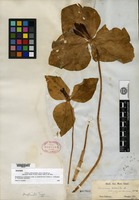
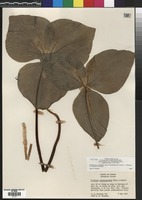
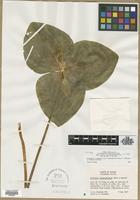
Isotype of Trillium sessile Linnaeus var. giganteum Hooker & Arnott [family LILIACEAE]
Type? of Trillium chloropetalum (Torr.) Howell var. giganteum (Hook. & Arnott) Munz [family MELANTHIACEAE]
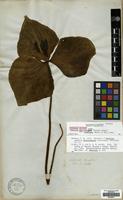
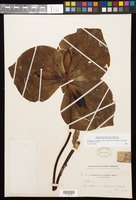
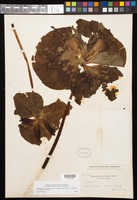
Type of Trillium chloropetalum Howell var. giganteum (Hook. & Arn.) Munz [family TRILLIACEAE]
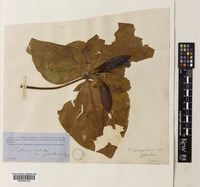
Trillium chloropetalum Howell var. giganteum (Hook. & Arn.) Munz [family TRILLIACEAE]
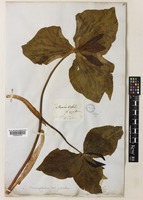
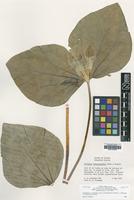
Isotype of Trillium albidum J.D. Freeman [family LILIACEAE]
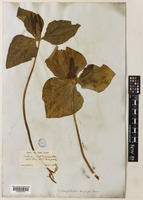
Trillium chloropetalum variety chloropetalum (Torr.) Howell [family LILIACEAE]
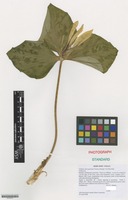
Nomenclatural Standard of Trillium chloropetalum (Torrey) Howell cultivar 'Val Mulvihill' [family MELANTHIACEAE]
Isotype of Trillium albidum J.D.Freeman [family TRILLIACEAE]
Isotype of Trillium albidum J.D.Freeman [family MELANTHIACEAE]
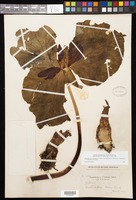
Type of Trillium chloropetalum Howell var. giganteum (Hook. & Arn.) Munz [family TRILLIACEAE]
Trillium chloropetalum variety chloropetalum (Torr.) Howell [family LILIACEAE]
Previous
Next

Name

Identification
Trillium chloropetalum (Torr.) Howell [family MELANTHIACEAE ] (stored under name); Verified by John Daniel Freeman, Isotype of Trillium albidum J.D.Freeman [family MELANTHIACEAE ] Verified by John Daniel Freeman,
Related name
  • Trillium sessile
  • Trillium chloropetalum
  • Trillium albidum
Common name
  • Giant trillium, Flora of North America Vol. 26

Flora

Entry for Trillium chloropetalum (Torrey) Howell [family TRILLIACEAE]
Herbarium
Flora of North America (FNA)
Collection
Flora of North America
Resource Type
Reference Sources
Entry From
Flora of North America, Vol 26,
Names
Trillium chloropetalum (Torrey) Howell [family TRILLIACEAE], Fl. N.W. Amer., 661. 1902
Trillium sessile Linnaeus var. chloropetalum Torrey [family TRILLIACEAE], Pacif. Railr. Rep., 4(5): 151. 1857
Trillium giganteum (Hooker & Arnott) A. Heller var. chloropetalum (Torrey) R. R. Gates [family TRILLIACEAE]
Treatment Author(s)
Frederick W. Case Jr.
Information
Rhizomes ± erect, brownish, somewhat compressed-thickened, superficially bulblike, praemorse, not brittle. Scapes 1–3, green, round in cross section, 2–6.5 dm, robust. Bracts held well above ground, sessile (narrowing of bract blade may give bract subsessile appearance); blade densely to weakly mottled in dark brownish green, mottling becoming more obscure to absent as bract matures, broadly ovate, 7–17.6 × 7.4–17.7 cm, not glossy, apex obtuse-rounded. Flower erect, odor roselike, spicy; sepals spreading-ascending above bracts, green, lanceolate, 35–65 × 7–12 mm, margins entire, flat, apex obtusely rounded; petals long-lasting, erect, connivent, ± concealing stamens and ovary, yellow, bronze, maroon, brown, deep purple, reddish brown, pink, dark purplish red, purplish bronze, rarely greenish white, not spirally twisted, veins not engraved, oblanceolate to obovate, 6.5–10 × 1.5–2.5 cm, thick-textured, base cuneate, margins entire, apex variably acute to almost truncate, erose; stamens erect, purplish, 17–26 mm; filaments purple, ca. 4 mm, widest at base, much shorter than anther sacs; anthers erect, straight, ± purple-brown, 13–22 mm, dehiscence introrse; connectives purple, straight, extended ca. 1–1.5 mm beyond anther sacs; ovary purple, ovoid, 6-angled, 6–12 mm; stigmas small, divergent or erect, distinct, purple, subulate, 4–8 mm, not fleshy. Fruits red-purple, fragrance not reported, ovoid, obscurely 6-angled, 2.5–3 cm, pulpy, juicy. 2n = 10.
Distribution
USA California.
Discussion
J. D. Freeman (1975) considered that Trillium chloropetalum differs from T. albidum in having introrse (not latrorse) anther sacs, and that the purple pigments present on anther and ovary tissue here are absent in T. albidum. In some places, hybridization between the two certainly has occurred, and a complete range of intergrades exists.
This species merits further study. The following varieties are only weakly differentiated and perhaps ought to be dropped.

Related Materials

  • Terms and Conditions
  • Privacy Policy
  • Cookie Policy
  • Cookie Settings
  • Accessibility
  • Help
  • Contact Us
  • Facebook
  • Twitter
ITHAKA

JSTOR is part of ITHAKA, a not-for-profit organization helping the academic community use digital technologies to preserve the scholarly record and to advance research and teaching in sustainable ways.

©2000-2026 ITHAKA. All Rights Reserved. JSTOR®, the JSTOR logo, JPASS®, Aluka®, and ITHAKA® are registered trademarks of ITHAKA.

╳