JSTOR Global Plants Home
  • Home
  • Browse
  • About
  • Access
  • Account
    • Saved Items
    • Profile
  • Log in

Global Plants

Skip to Main Content
  • JSTOR Global Plants Home
  • Global Plants

    • Browse
    • About
    • Access
    • Account
      • Saved Items
      • Profile
Log in
  • Browse
  • About
  • Access
  • Account
    • Saved Items
    • Profile
Advanced Search

Compilation
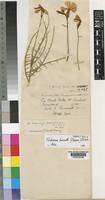
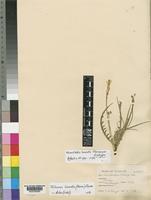
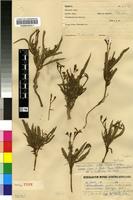
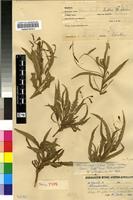
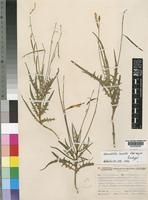
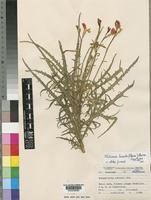
Tricliceras schinzii

6 Images see all

Paratype of Tricliceras lacerata (Oberm.) Oberm. [family TURNERACEAE]
Isotype of Wormskioldia lacerata Oberm. [family TURNERACEAE]
Isosyntype of Tricliceras schinzii (Urb.) R.Fern. var. juttae (Dinter & Urb.) R.Fern. [family TURNERACEAE]
Paratype of Wormskioldia lacerata Oberm. [family TURNERACEAE]
Paratype of Tricliceras lacerata (Oberm.) Oberm. [family TURNERACEAE]
Previous
Next

Name

Identification
Tricliceras schinzii (Urb.) R.Fern. [family TURNERACEAE ] (stored under name); Verified by Not on sheet,
Related name
  • Tricliceras schinzii

Flora

Entry for Tricliceras schinzii Urb. R. Fernandes [family TURNERACEAE]
Herbarium
Royal Botanic Gardens, Kew (K)
Collection
Flora Zambesiaca
Resource Type
Reference Sources
Entry From
FZ, Vol 4, Part 0, page 348, (1978) Author: R. Fernandes
Names
Tricliceras schinzii Urb. R. Fernandes [family TURNERACEAE], in Bol. Soc. Brot., Sér. 2, 49: 23, t. 7 (1975). Type from Angola.
Wormskioldia schinzii Urb. [family TURNERACEAE], in Engl., Bot. Jahrb. 15: 159 (1893).—A. & R. Fernandes in Bol. Soc. Brot., Sér. 2, 35: 160 (1961); in Mem. Junta Invest. Ultramar, Sér. 2, 28: 15 (1961); in C.F.A. 4: 211 (1970). Type as above.
Information
A perennial herb, 11·5–47 cm. high (incl. the racemes). Stems 1–several from a long, woody, noduled rootstock, 4–25 cm. long, dark brownish when dry, erect, simple or sometimes branched from the base, more or less setose like the leaves, peduncles, pedicels, calyx and capsule, the setae spreading, not bulbous at the base, minutely capitate-glandular. Leaves more or less dense, usually attenuate to the acute apex subcontracted or attenuate into a subpetiolar base 1–5 mm. long, setose especially on the inferior surface; midrib and nerves raised on both surfaces. Peduncles up to 26 cm. long, usually exceeding the upper leaves, 2–7-flowered; pedicels 5–10 mm. long, deflexed in fruit. Calyx (9)11–15 mm. long. Petals obovate, cuneate, salmon to orange-red. Anthers 2–2·5 mm. long. Ovary densely setose. Capsule setose, pendulous.

Related Materials

  • Terms and Conditions
  • Privacy Policy
  • Cookie Policy
  • Cookie Settings
  • Accessibility
  • Help
  • Contact Us
  • Facebook
  • Twitter
ITHAKA

JSTOR is part of ITHAKA, a not-for-profit organization helping the academic community use digital technologies to preserve the scholarly record and to advance research and teaching in sustainable ways.

©2000-2026 ITHAKA. All Rights Reserved. JSTOR®, the JSTOR logo, JPASS®, Aluka®, and ITHAKA® are registered trademarks of ITHAKA.

╳