JSTOR Global Plants Home
  • Home
  • Browse
  • About
  • Access
  • Account
    • Saved Items
    • Profile
  • Log in

Global Plants

Skip to Main Content
  • JSTOR Global Plants Home
  • Global Plants

    • Browse
    • About
    • Access
    • Account
      • Saved Items
      • Profile
Log in
  • Browse
  • About
  • Access
  • Account
    • Saved Items
    • Profile
Advanced Search

Compilation
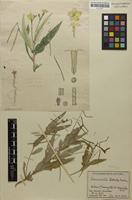
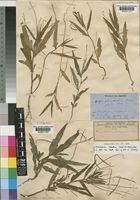
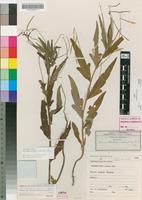
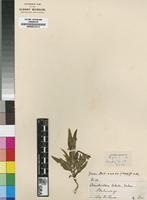
Tricliceras lobatum

8 Images see all

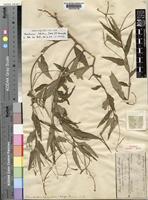
Filed as Wormskioldia lobata Urb. [family TURNERACEAE]
Tricliceras lobatum (Urb.) R.Fern. [family TURNERACEAE]
Syntype of Wormskioldia lobata Urb. [family TURNERACEAE]
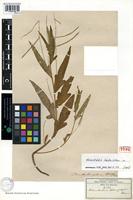
Type? of Wormskioldia lobata Urb. [family TURNERACEAE]
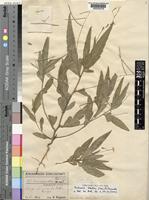
Syntype of Wormskioldia pilosa Schweinf. ex Urban [family TURNERACEAE]
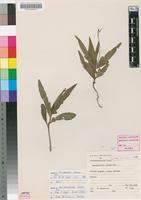
Lectotype of Wormskioldia lobata Urb. [family TURNERACEAE]
Tricliceras lobatum (Urb.) R.Fern. [family TURNERACEAE]
Syntype of Wormskioldia lobata Urb. [family TURNERACEAE]
Previous
Next

Name

Identification
Tricliceras lobatum (Urb.) Fernandes [family TURNERACEAE ] (stored under name); Verified by Not on Sheet, Wormskioldia lobata Urb. [family TURNERACEAE ] Verified by Not on Sheet, Wormskioldia pilosa (Willd.) Scweinf. [family TURNERACEAE ] Verified by Not on Sheet, Wormskioldia heterophylla Schum. [family TURNERACEAE ] Verified by Not on Sheet,
Related name
  • Wormskioldia heterophylla
  • Wormskioldia lobata
  • Wormskioldia pilosa
  • Tricliceras lobatum

Flora

Entry for Tricliceras lobatum Urb. R. Fernandes [family TURNERACEAE]
Herbarium
Royal Botanic Gardens, Kew (K)
Collection
Flora Zambesiaca
Resource Type
Reference Sources
Entry From
FZ, Vol 4, Part 0, page 348, (1978) Author: R. Fernandes
Names
Tricliceras lobatum Urb. R. Fernandes [family TURNERACEAE], in Bol. Soc. Brot., Sér. 2, 49: 21 (1975). Syntypes from Sudan, Kenya and Angola.
Wormskioldia lobata Urb. [family TURNERACEAE], in Jahrb. Königl. Bot. Gart. Berl. 2: 52 (1883).—Gilg in Engl. & Prantl, Pflanzenfam. 3, 6a: 61 (1893); op. cit. ed. 2, 21: 463 (1925).—Engl. in Sitz.-Ber. Königl. Preuss. Akad. Wiss. Berl. 52: 13 (1906); Pflanzenw. Afr. 3, 2: 593 (1921).—Thonn., Fl. Pl. Afr.: t. 105 (1915).—Broun & Massey, Fl. Sudan: 56 (1929).—F. W. Andr., Fl. Pl. Anglo-Egypt. Sudan 1: 29, fig. 22 (1950).—Martineau, Rhod. Wild Fl.: 55 (1953).—Garcia in Est. Ens. Doc. Junta Invest. Ultramar 12: 162 (1954).—J. Lewis in F.T.E.A., Turneraceae: 10 (1954).—A. & R. Fernandes in Mem. Junta Invest. Ultramar, Sér. 2, 28: 14 (1961); op. cit. 34: 15 (1962); in C.F.A. 4: 210 (1970).—W. Robyns in F.C.B., Turneraceae: 7–8 (1967).—Binns, H.C.L.M.: 101 (1968).—Tikovsky & Schreiber in Prodr. Fl. SW. Afr. 88: 4 (1968). Syntypes as above.
Information
An annual herb. Stem 5–100 cm. high, erect, simple or branched, more or less crisply puberulous and also sparsely setose, the setae short (up to 0–5 mm. long), yellow or brown with swollen base. Leaves heteromorphic, acute at the apex, shallowly crenate-serrate or subentire at the margin, membranous, slightly discolorous, subpatently hairy, rarely subglabrous above, the 2–3 lower ones up to 5 × 1·3 cm., elliptic, unlobed and petiolate (petiole up to 4 mm. long), the others larger (up to 15 × 3·5(4·5) cm.), lanceolate or rarely ovate-lanceolate, irregularly lobed in the lower 1/2–2/3 (lobes 1–4, blunt, frequently with a sessile gland at the top) and with a pair of very small glandular auricle-like lobes at the base, subsessile to sessile, rarely all the leaves unlobed. Flowers 1–4 per raceme; peduncles slender, straight, 2–9 cm. long in flower, up to 20 cm. long in fruit, with indumentum as on the stem but more sparse and also with patent, soft white hairs up to 2 mm. long, denser towards the base of the peduncles; bracteoles c. 1 mm. long, pubescent; pedicels 3(4) mm. long. Calyx hairy and sometimes also setose on the outside; tube 9–10·5 mm. long, hairy inside on the lower 4 mm.; lobes 3–5 mm. long, oblong, usually obtuse, with hyaline, ciliolate margin. Petals 15–18(20) × 3·5–5 mm., obovate-cuneate, pale yellow to orange, rarely white; ligules 1·5 mm. long. Stamens with 9–13 mm. long filaments, 2 shorter and 3 longer; anthers c. 2·5 mm. long. Ovary c. 4·5 × 1 mm., narrowly ellipsoid, glabrous; styles 8–10 mm. long. Capsule 4–7 cm. long and 1–1·5 mm. in diameter, moniliform, at right angles to the peduncle or deflexed, glabrous; beak 2·5 mm. long. Seeds 2–2·5 × 1 mm., obovate or obovate-oblong; aril up to 2/3 the length of the seed.
Habitat
Common in open situations in mopane woodland, fringing forests, secondary savannas, on rocky outcrops, sand soils, etc., or as a weed in old African gardens
Range
Widespread through tropical Africa (Sudan, Uganda, Kenya, Tanzania, Zaire, Angola, SW. Africa, etc.).
Altitude range
up to 1500 m.
1500
0
inferred only top
Distribution
Mozambique MS 24 km. from Manica on road to Vila Pery, fl. 25.xi.1965, Torre & Correia 13277 (LISC).Malawi S Shire R., near Liwonde Ferry, 475 m., fr. 13.iii.1955, E. M. & W. 836 (BM; LISC; SRGH).Malawi C Bunda Hill, Lilongwe, 1250 m., fl. & fr. 7.ii.1959, Robson 1494 (BM; LISC; PRE; SRGH).Zimbabwe S Chibi Kopje, near Madzivire, fl. & fr. 30.xii.1962, Moll 478 (LISC; SRGH).Zimbabwe E Umtali, Muhuni (Muhenye?) Purchase area, fl. & fr. i.1960, Davies 2680 (SRGH).Zimbabwe C Hartley, Poole Farm, fl. & fr. 3.iii.1948, Hornby 2910 (PRE; SRGH).Zimbabwe W Bulawayo, xii.1897, Rand 13 (BM).Zambia S Mazabuka, c. 6·5 km. from Chirundu bridge on Lusaka road, fl. & fr. 6.ii.1958, Drummond 5502 (BR; LISC; PRE; SRGH).Zambia E near Changwe, between Petauke and Mwape, fl. 16.xii.1958, Robson 958 (BM; LISC; PRE; SRGH).Zambia N Mbala (Abercorn), fl. 6.i.1955, Bock 157 (COI; PRE).Mozambique N Cabo Delgado, Macondes, between Nantulo and Mueda, c. 310 m., fl. & fr. 30.xii.1963, Torre & Paiva 9778 (LISC).Malawi N c. 13 km. W. of Karonga, 25.ii.1953, Williamson 179 (BM).Zimbabwe N Urungwe, Zambesi Escarpment, main Salisbury-Lusaka road, fl. 31.i.1958, Drummond 5392 (BR; LISC; PRE; SRGH).Zambia B Mongu Lealui, fl. & fr. 10.i.1960, Gilges 954 (SRGH).Caprivi Strip c. 915 m., fl. 20.xii.1958, Killick & Leistner 3005 (PRE; SRGH).

Related Materials

  • Terms and Conditions
  • Privacy Policy
  • Cookie Policy
  • Cookie Settings
  • Accessibility
  • Help
  • Contact Us
  • Facebook
  • Twitter
ITHAKA

JSTOR is part of ITHAKA, a not-for-profit organization helping the academic community use digital technologies to preserve the scholarly record and to advance research and teaching in sustainable ways.

©2000-2026 ITHAKA. All Rights Reserved. JSTOR®, the JSTOR logo, JPASS®, Aluka®, and ITHAKA® are registered trademarks of ITHAKA.

╳