JSTOR Global Plants Home
  • Home
  • Browse
  • About
  • Access
  • Account
    • Saved Items
    • Profile
  • Log in

Global Plants

Skip to Main Content
  • JSTOR Global Plants Home
  • Global Plants

    • Browse
    • About
    • Access
    • Account
      • Saved Items
      • Profile
Log in
  • Browse
  • About
  • Access
  • Account
    • Saved Items
    • Profile
Advanced Search

Compilation
Trichopteryx ternata

5 Images see all

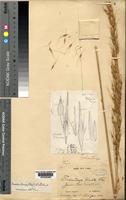
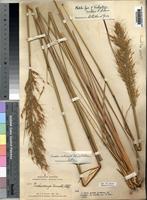
Holotype of Trichopteryx ternata Stapf [family POACEAE]
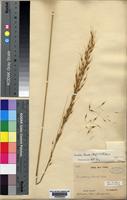
Type of Trichopteryx elegans (A.Braun) Hack. var. subulifolia Franch. [family POACEAE]
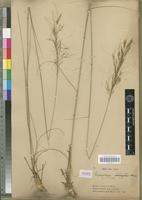
Type of Trichopteryx ternata Stapf [family POACEAE]
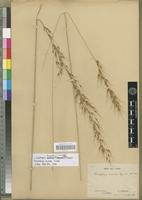
Loudetiopsis ambiens (K.Schum.) Conert [family POACEAE]
Previous
Next

Name

Identification
Trichopteryx ternata Stapf [family POACEAE ] Loudetiopsis ambiens (K.Schum.) Conert [family POACEAE ] (stored under name); Trichopteryx ambiens K.Schum. [family POACEAE ] Verified by Hubbard,C.E., Loudetia ambiens (K.Schum.) C.E.Hubbard [family POACEAE ] Verified by Hubbard,C.E.,
Related name
  • Trichopteryx ternata
  • Loudetia ambiens
  • Loudetia ternata
  • Loudetiopsis ambiens
  • Trichopteryx ambiens
  • Loudetiopsis ternata

Flora

Entry for LOUDETIA ternata C. E. Hubbard [family ]
Herbarium
Royal Botanic Gardens, Kew (K)
Collection
Flora of Tropical Africa
Resource Type
Reference Sources
Entry From
Flora of Tropical Africa, Vol 10, page 1, (1937) Author: (By C. E. HUBBARD.)
Names
LOUDETIA ternata C. E. Hubbard [family ], in Kew Bulletin, 1934, 431. —Hutch. in Hutch. & Dalz. Fl. W. Trop. Afr. ii. 544.
Trichopteryx ternata Stapf [family POACEAE], in Morot, Journ. de Bot. xix. 106 (1905); Pobéguin, Ess. Fl. Guin. Franç. 218.
Information
Perennial. Culms erect, up to 5 1/2 ft. high, stout, straight, terete, simple, 2-noded, pruinose, glabrous and smooth. Leaves glabrous; sheaths stout, tight, longer than the internodes, smooth; ligule a ciliate rim; blade linear, tapering to a very fine tip, up to 2 1/2 ft. or more long, 2–3 lin. wide at the base, convolute, rigid, scabrid towards the tip. Panicle narrow, contracted, dense or loose, straight, 1–1 1/4 ft. long, 1–1 1/4 in. wide; rhachis terete and glabrous in the lower part, angular and scaberulous upwards; branches 4–6-nate, erect, sparingly branched or simple, like the branchlets finely filiform to capillary, glabrous, scabrid, the longest up to 4 in. long; pedicels glabrous and smooth, 1/2–1 1/2 lin. long. Spikelets in threes at the ends of the branches and branchlets, lanceolate, pale brown, 3 3/4–4 1/2 lin. long. Glumes firmly chartaceous, 3-nerved; lower oblong-ovate, very obtuse, 2–2 1/2 lin. long, setose near the margins above the middle with 4–8 whitish bristles from large brownish-purple tubercles; upper as long as the spikelet, lanceolate, narrowed into a truncate convolute beak, sparsely setulose about the middle with submarginal rows of bristly hairs from minute brown tubercles, or glabrous. Lower floret ♂: valve lanceolate-oblong, rotundate-obtuse at the apex, slightly shorter than the upper glume, glabrous, 3-nerved, chartaceous; valvule linear, truncate, 2–3 lin. long, membranous, with very narrowly winged ciliolate keels. Upper floret linear-lanceolate: callus emarginate and 2-toothed, about 3/8 lin. long, densely bearded; valve 2–3 lin. long, 2-lobed, with the very acute lobes up to 3/4 lin. long, finely 7-nerved, thinly coriaceous, minutely pubescent towards the tip, the remainder glabrous; awn slender, 3/4–1 1/4 in. long; column minutely pubescent, pale brown, about 3/8 in. long; valvule linear, truncate, 2–2 1/2 lin. long. Anthers 2, 1–1 1/2 lin. long.
Distribution
French Guinea Upper Guinea Kouroussa, Pobéguin, 510!Dahomey Upper Guinea between Sokode and Basari, Koukomba, 660 ft., Kersting, 575!
Notes
The species of the section Pseudotristachya resemble the genus Tristachya in bearing the spikelets in clusters of three at the tips of the branches and branchlets, but in the structure of their spikelets they agree with Loudetia. There is no doubt that the two genera are very closely allied, but they are usually readily distinguished.

Related Materials

  • Terms and Conditions
  • Privacy Policy
  • Cookie Policy
  • Cookie Settings
  • Accessibility
  • Help
  • Contact Us
  • Facebook
  • Twitter
ITHAKA

JSTOR is part of ITHAKA, a not-for-profit organization helping the academic community use digital technologies to preserve the scholarly record and to advance research and teaching in sustainable ways.

©2000-2026 ITHAKA. All Rights Reserved. JSTOR®, the JSTOR logo, JPASS®, Aluka®, and ITHAKA® are registered trademarks of ITHAKA.

╳