JSTOR Global Plants Home
  • Home
  • Browse
  • About
  • Access
  • Account
    • Saved Items
    • Profile
  • Log in

Global Plants

Skip to Main Content
  • JSTOR Global Plants Home
  • Global Plants

    • Browse
    • About
    • Access
    • Account
      • Saved Items
      • Profile
Log in
  • Browse
  • About
  • Access
  • Account
    • Saved Items
    • Profile
Advanced Search

Compilation
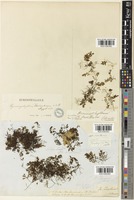
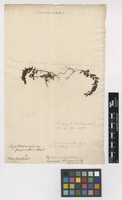
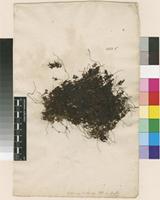
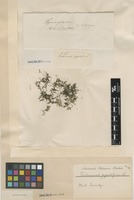
Trichomanes tunbrigense

4 Images see all

Hymenophyllum revolutum Colenso [family HYMENOPHYLLACEAE]
Filed as Trichomanes tunbrigense L. [family HYMENOPHYLLACEAE]
Filed as Trichomanes pyxidiferum L. [family TRICHOMANACEAE]
Previous
Next

Name

Identification
Trichomanes tunbrigense L. [family HYMENOPHYLLACEAE ] (stored under name); Verified by Not on sheet,
Related name
  • Trichomanes tunbrigense
  • Trichomanes fucoides
  • Hymenophyllum tunbrigense
  • Leptocionium fucoides
Common name
  • Tunbridge filmy fern, Flora of North America Vol. 2

Flora

Entry for Hymenophyllum tunbrigense (Linnaeus) Smith [family HYMENOPHYLLACEAE]
Herbarium
Flora of North America (FNA)
Collection
Flora of North America
Resource Type
Reference Sources
Entry From
Flora of North America, Vol 2,
Names
Hymenophyllum tunbrigense (Linnaeus) Smith [family HYMENOPHYLLACEAE], 5: 418. 1793
Trichomanes tunbrigense Linnaeus [family ], Sp. Pl., 2: 1098. 1753
Treatment Author(s)
Donald R. Farrar
Information
Plants on rock. Leaves oblong, 2--3-pinnatifid, 2--6 × 0.5--1.5 cm, with minute, 2-celled, glandular hairs scattered on veins; margins distantly dentate. Gametophyte gemmae absent. 2 n = 26.
Altitude range
350--500 m
Distribution
MexicoWest IndiesCentral AmericaSouth AmericaEuropeAsiain tropical and temperate regions.USA S.C.
Discussion
About two dozen small populations of Hymenophyllum tunbrigense exist in a single river gorge in Pickens County, South Carolina. It is slow to recover from disturbance, and its numbers have been substantially reduced by collecting since its initial discovery in 1936. Gametophytes characteristic of the genus but lacking gemmae have been described from Great Britain, where populations are more vigorous and where spore production and sexual reproduction via gametophytes are more common (F. J. Rumsey et al. 1990; C. A. Raine et al. 1991). In plants in the flora, spore production is relatively rare, and gametophytes have not been observed.

Related Materials

  • Terms and Conditions
  • Privacy Policy
  • Cookie Policy
  • Cookie Settings
  • Accessibility
  • Help
  • Contact Us
  • Facebook
  • Twitter
ITHAKA

JSTOR is part of ITHAKA, a not-for-profit organization helping the academic community use digital technologies to preserve the scholarly record and to advance research and teaching in sustainable ways.

©2000-2026 ITHAKA. All Rights Reserved. JSTOR®, the JSTOR logo, JPASS®, Aluka®, and ITHAKA® are registered trademarks of ITHAKA.

╳