JSTOR Global Plants Home
  • Home
  • Browse
  • About
  • Access
  • Account
    • Saved Items
    • Profile
  • Log in

Global Plants

Skip to Main Content
  • JSTOR Global Plants Home
  • Global Plants

    • Browse
    • About
    • Access
    • Account
      • Saved Items
      • Profile
Log in
  • Browse
  • About
  • Access
  • Account
    • Saved Items
    • Profile
Advanced Search

Compilation
Tricholaena minutiflora

10 Images see all

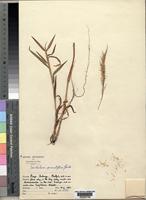
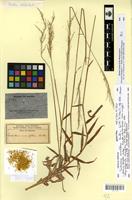
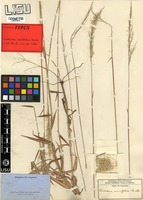
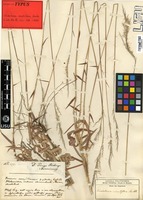
Isolectotype of Tricholaena minutiflora Rendle [family POACEAE]
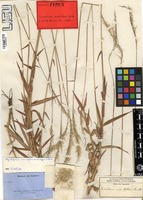
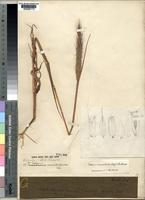
Lectotype of Tricholaena minutiflora Rendle [family POACEAE]
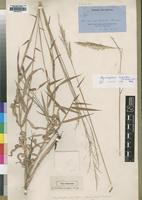
Melinis macrochaeta Stapf & C.E.Hubb. [family POACEAE]
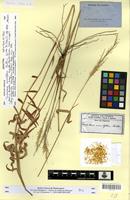
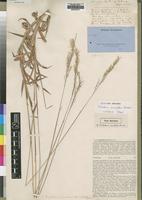
Lectotype of Tricholaena minutiflora Rendle [family POACEAE]
Isolectotype of Tricholaena minutiflora Rendle [family POACEAE]
Previous
Next

Name

Identification
Rhynchelytrum minutiflorum (Rendle) Stapf & C.E.Hubb. [family POACEAE ] Verified by Zizka, Melinis longiseta (A.Rich.) Zizka [family POACEAE ] (stored under name); Tricholaena minutiflora Rendle [family POACEAE ]
Related name
  • Melinis macrochaeta
  • Tricholaena minutiflora
  • Rhynchelytrum minutiflorum
  • Melinis minutiflora
  • Melinis longiseta
  • Rhynchelytrum longisetum

Flora

Entry for RHYNCHELYTRUM longisetum (A. Rich.) Stapf & Hubbard [family POACEAE]
Herbarium
Royal Botanic Gardens, Kew (K)
Collection
Flora of Tropical East Africa
Resource Type
Reference Sources
Entry From
Flora of Tropical East Africa, page 451, (1982) Author: W. D. CLAYTON and S.A. RENVOIZE
Names
RHYNCHELYTRUM longisetum (A. Rich.) Stapf & Hubbard [family POACEAE], in F.T. A. 9: 902 (1930). Types: Ethiopia, Chiré, Quartin Dillon (P, syn.) & Schimper 1803 (K, isosyn.!)
Tricholaena longiseta A. Rich. [family POACEAE], Tent. Fl. Abyss. 2: 446 (1851)
Saccharum longisetum (A. Rich.) Walp. [family POACEAE], Ann. Bot. Syst. 3: 793 (1852)
Panicum macrotrichum Steud. [family POACEAE], Syn. Pl. Glum. 1: 92 (1854). Based on Tricholaena longiseta A. Rich., non Panicum longisetum Poir. (1816)
Tricholaena minutiflora Rendle [family POACEAE], Cat. Afr. Pl. Welw. 2: 198 (1899). Type: Angola, Sansamanda, Welwitsch 2731 (K, iso.!)
Tricholaena melinioides Stent [family POACEAE], in K.B. 1925: 364 (1925). Type: Zimbabwe, Salisbury, Eyles 2191 (K, holo.!)
Rhynchelytrum minutiflorum (Rendle) Stapf & Hubbard [family POACEAE], in F.T.A. 9: 903 (1930); Ann. list Nyasaland grasses: 55 (1958)
Rhynchelytrum minutiflorum (Stent) Stapf & Hubbard var. melinioides [family POACEAE], in F.T.A. 9: 904 (1930); Ann. list Nyasaland grasses: 55 (1958)
Information
Loosely tufted perennial; culms 30–100 cm. high, geniculately ascending. Leaf-blades flat, 3–15 cm. long, 3–8 mm. wide, ± hairy. Panicle linear to narrowly oblong, 7–20 cm. long; pedicels hairy. Spikelets oblong, 2.5–3.5 mm. long, variously pilose with purplish or silvery hairs mostly exceeding the tip by up to 4 mm.; lower glume a little oblong scale 0.5–1 mm. long, characteristically with a little internode separating it from the upper but occasionally close to it; upper glume gently curved on the back, coriaceous (rarely somewhat chartaceous), smooth and shining below with a membranous tip, ciliate on the margins, emarginate, with an awn 2–6 mm. long; lower floret ♂, its palea scaberulous on the keels, the lemma similar to the upper glume with an awn 5–10 mm. long.
Range
DISTR. T5, 7, 8 Sudan and Ethiopia to Zimbabwe and Angola
Altitude range
1300–1800 m.
Distribution
TANZANIA Dodoma District about 40 km. S. of Itigi Station on the Chunya road, 20 Apr. 1964, Greenway & Polhill 11659!TANZANIA Mbeya District Magangwe, 18 May 1968, Renvoize & Abdallah 2244! & 5 km. W. of Magangwe Ranger Post, 10 May 1972, Bjørnstad 1716!
Notes
This species is not always easy to distinguish from Melinis ambigua, but the indurated 5-nerved upper glume (often distant from the lower) is usually sufficiently diagnostic. It grades into Rhynchelytrum bellespicatum (Rendle) Stapf & Hubbard from Nigeria and southern Africa, which has larger (4–5 mm.) less strongly indurated spikelets; however there is no sharp separation between the two, and their treatment as separate species is open to doubt.

Related Materials

  • Terms and Conditions
  • Privacy Policy
  • Cookie Policy
  • Cookie Settings
  • Accessibility
  • Help
  • Contact Us
  • Facebook
  • Twitter
ITHAKA

JSTOR is part of ITHAKA, a not-for-profit organization helping the academic community use digital technologies to preserve the scholarly record and to advance research and teaching in sustainable ways.

©2000-2026 ITHAKA. All Rights Reserved. JSTOR®, the JSTOR logo, JPASS®, Aluka®, and ITHAKA® are registered trademarks of ITHAKA.

╳