JSTOR Global Plants Home
  • Home
  • Browse
  • About
  • Access
  • Account
    • Saved Items
    • Profile
  • Log in

Global Plants

Skip to Main Content
  • JSTOR Global Plants Home
  • Global Plants

    • Browse
    • About
    • Access
    • Account
      • Saved Items
      • Profile
Log in
  • Browse
  • About
  • Access
  • Account
    • Saved Items
    • Profile
Advanced Search

Compilation
Trichilia umbrosa

9 Images see all

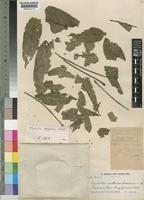
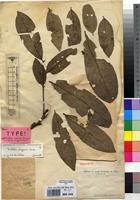
Trichilia dregeana Sond. [family MELIACEAE]
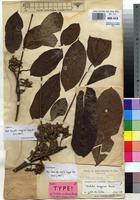
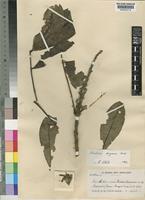
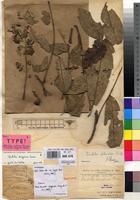
Lectotype of Trichilia umbrosa Vermoesen [family MELIACEAE]
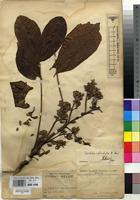
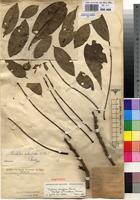
Syntype of Trichilia umbrosa Vermoesen [family MELIACEAE]
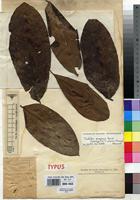
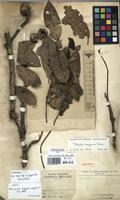
Trichilia dregeana Sond. [family MELIACEAE]
Syntype of Trichilia umbrosa Vermoesen [family MELIACEAE]
Previous
Next

Name

Identification
Trichilia umbrosa Vermoesen [family MELIACEAE ] Verified by Not on sheet, Trichilia dregeana Sond. [family MELIACEAE ] (stored under name); Verified by Not on sheet,
Related name
  • Trichilia dregeana
  • Trichilia umbrosa

Flora

Entry for Trichilia dregeana Sond. [family MELIACEAE]
Herbarium
Royal Botanic Gardens, Kew (K)
Collection
Flora Zambesiaca
Resource Type
Reference Sources
Entry From
FZ, Vol 2, Part 1, page 285, (1963) Author: F. White and B. T. Styles
Names
Trichilia vestita C. DC. [family MELIACEAE], in Bull. Herb. Boiss. 4: 428 (1896). Type from Angola.
Trichilia splendida A. Chev. [family MELIACEAE], in Bull. Soc. Bot. Fr., 58, mém. 8: 147 (1911). — Staner in Bull. Jard. Bot. Brux. 16: 159, t. 4. et fig. 9 (1941). — Keay, F.W.T.A. ed. 2, 1: 705 (1958). — Staner & Gilbert, F.C.B. 7: 165 (1958). Type from Guinée.
Trichilia chirindensis Swynnerton & Bak. f. [family MELIACEAE], in Journ. Linn. Soc., Bot. 40: 39–41 (1911). — Eyles in Trans. Roy. Soc. S. Afr. 5: 390 (1916). — Steedman, Trees etc. S. Rhod.: 33 (1933). — Brenan; T.T.C.L.: 319 (1949). Type: S. Rhodesia, Chirinda Forest, fl. x.1906, Swynnerton 1 (BM, holotype; K; SRGH).
Trichilia grotei Harms [family MELIACEAE], in Notizbl. Bot. Gart. Berl. 7: 230 (1917). — Brenan, loc. cit. Type from Tanganyika.
Trichilia umbrosa Vermoes. [family MELIACEAE], in Rev. Zool. Afr. 10, Suppl. Bot.: 53 (1922). Type from the Congo.
Trichilia schliebenii Harms [family MELIACEAE], in Notizbl. Bot. Gart. Berl. 11: 1070 (1934). — Brenan, loc. cit. Type from Tanganyika.
Trichilia dregeana Sond. [family MELIACEAE], in Harv. & Sond., F.C. 1: 246 (1860). — Monro in Trans. Rhod. Sci. Ass. 7: 67 (1908). Type from S. Africa.
Trichilia dregeana var. oblonga Sond. [family MELIACEAE], loc. cit. — Harv., Thes. Cap. 1: 49, t. 76 (1859) Type from S. Africa.
Trichilia dregei E. Mey ex C. DC. [family MELIACEAE], in A. & C. DC., Mon. Phan. 1: 657 (1878). Type from S. Africa.
Trichilia dregei var. oblonga C. DC. [family MELIACEAE], op. cit.: 658 (1878). Type from S. Africa.
Trichilia strigulosa Welw. ex C. DC. [family MELIACEAE], loc. cit. — Exell & Mendonça, C.F.A. 1, 2: 314–15 (1951). Type from Angola.
Information
Large evergreen tree 25–40 m. tall; bole slightly buttressed, up to 2 m. in diam.; bark grey and smooth like a Ficus. Leaves imparipinnate; petiole and rhachis up to 26 cm. long, glabrous or densely pilose; leaflets up to 21 × 8·5 cm., opposite or alternate, (2) 3–4 (5)-jugate, obovate to oblanceolate or oblanceolate-elliptic, nearly always distinctly broadest near the apex, apex nearly always acute or acuminate, rarely rounded or emarginate, base rounded or cuneate, upper surface drying dark brown, lateral nerves in 8–9 (12) pairs, lower surface glabrous or with a few strigose hairs, very rarely sparsely to densely pilose; petiolules up to 1 cm. long. Flowers dirty white, in axillary cymes or cymose panicles. Pedicels up to 1 cm. long. Calyx usually 5–7 mm. long, strigulose-tomentellous, lobed to half-way or more, lobes subcircular, imbricate. Petals (1·3) 1·4–2·4 (2·6) cm. long, linear, tomentellous on both surfaces. Filaments usually 1–1·5 cm. long, united for about half their length, sparsely puberulous outside, densely villous in the upper half inside. Appendages deltate, nearly 3/4 as long as the anthers; anthers 2 mm. long, slightly apiculate, antherodes a little smaller, not producing pollen. Disk glabrous, thin, with 10 deltate teeth alternating with the filaments. Ovary 3 (4)-locular; style usually 8–10 mm. long, columnar, densely setulose-puberulous almost to the apex; stylehead capitate, with a crateriform apical (?)stigmatic region. Pistillode with vestigial ovules. Capsule c. 3 × 3 cm., obovoid-globose, without a stipe, slightly sulcate, surface transversely wrinkled, fulvous-tomentellous, opening by 3 (4) valves. Seed black, almost completely concealed by the scarlet aril.
Habitat
In patches of evergreen forest in regions of higher rainfall.
Distribution
Zambia W Ndola, fr., Trapnell 1400 (K).Mozambique MS Chimoio, st. iv.1948, Simão 3901 (LISC).Malawi N Mugesse Forest Reserve, fl. xi.1952, Chapman 50 (FHO; K).Zimbabwe E Chirinda, fl. x.1947, Wild 2057 (K; SRGH).Zambia N Kawimbe, Abercorn, fl. x.1956, Richards 6415 (K; SRGH).Malawi S Zomba, fr. i.1932, Clements 179 (FHO).Malawi C Nchisi Mountain, fl. ix.1929, Burtt Davy 21250 (FHO).
Distribution (external)
Guinée
Uganda
Kenya
Tanganyika
Congo
Angola
Transvaal
Natal
Cape Prov.
Notes
It is one of the commonest of the larger trees in Chirinda Forest, S. Rhodesia.The timber is pink, easily worked, polishes well and is used by Africans for dishes, pillows and other carved work, a previous boiling being said to prevent subsequent attack by Bostrichidae (Swynnerton). Fat from the seed is used in the same way as in T. emetica. The aril is eaten by Africans and baboons. On Kilimanjaro the seeds are used as a bait for the barbel fish and the fat from the seeds for soap-making and anointing the body (Haarer 1729).In the majority of specimens the leaves are glabrous or, at most, have a few strigose hairs on the lower leaflet surface. A few specimens have densely pilose leaf-rhachides and sometimes lower leaf-surfaces as well. This variant (T.strigulosa, T. vestita) occurs sporadically through most of the range of the species.

Related Materials

  • Terms and Conditions
  • Privacy Policy
  • Cookie Policy
  • Cookie Settings
  • Accessibility
  • Help
  • Contact Us
  • Facebook
  • Twitter
ITHAKA

JSTOR is part of ITHAKA, a not-for-profit organization helping the academic community use digital technologies to preserve the scholarly record and to advance research and teaching in sustainable ways.

©2000-2026 ITHAKA. All Rights Reserved. JSTOR®, the JSTOR logo, JPASS®, Aluka®, and ITHAKA® are registered trademarks of ITHAKA.

╳