JSTOR Global Plants Home
  • Home
  • Browse
  • About
  • Access
  • Account
    • Saved Items
    • Profile
  • Log in

Global Plants

Skip to Main Content
  • JSTOR Global Plants Home
  • Global Plants

    • Browse
    • About
    • Access
    • Account
      • Saved Items
      • Profile
Log in
  • Browse
  • About
  • Access
  • Account
    • Saved Items
    • Profile
Advanced Search

Compilation
Tribulus kotschyanus

3 Images see all

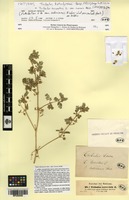
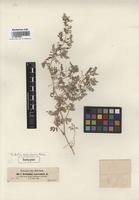
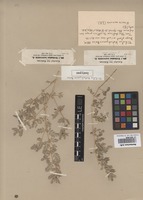
Isotype of Tribulus kotschyanus Boiss. [family ZYGOPHYLLACEAE]
Previous
Next

Name

Identification
Isotype of Tribulus kotschyanus Boiss. [family ZYGOPHYLLACEAE ] (stored under name); Tribulus terrestris L. [family ZYGOPHYLLACEAE ] Tribulus terrestris L. [family ZYGOPHYLLACEAE ]
Related name
  • Tribulus kotschyanus
  • Tribulus terrestris

Flora

Entry for TRIBULUS terrestris Linn. [family ZYGOPHYLLACEAE]
Herbarium
Royal Botanic Gardens, Kew (K)
Collection
Flora of Tropical Africa
Resource Type
Reference Sources
Entry From
Flora of Tropical Africa, Vol 1, page 282, (1868) Author: (by Prof. Oliver).
Names
TRIBULUS terrestris Linn. [family ZYGOPHYLLACEAE], DC. Prod. i. 703.
TRIBULUS albus Poir. [family ZYGOPHYLLACEAE], DC. Prod. i. 703.
TRIBULUS humifusus Schum. et Thonn. [family ZYGOPHYLLACEAE], Guin. Pl. 215.
TRIBULUS Kotschyanus Boiss. [family ZYGOPHYLLACEAE], Diag. Ser. 2. i. 111.
TRIBULUS mollis Ehrenb. [family ZYGOPHYLLACEAE], in Schweinf. Fl. Æthiop. 29.
TRIBULUS excrucians Wawr. et Peyr. [family ZYGOPHYLLACEAE], Sert. Beng. 17.
Information
A spreading prostrate or decumbent annual, occasionally more or less frutescent below and persisting two or more years. Branches from a few inches to 2 or 3 ft. in length, pubescent, villous or hispid. Leaves in unequal pairs, the larger 1–2 1/2 in., with 5–8 pairs of oblong or linear-oblong, more or less acute, sessile or subsessile, opposite leaflets, oblique at the base, villous beneath, often glabrescent above. Peduncles 1/4–1 in., scarcely or not at all thickened in fruit. Flowers usually yellow. Stigmatic lobes longer than the diameter of the style (or shorter in β. cistoides). Calyx deciduous. Fruit-carpels tubercled and often setose on the back and above, each carpel usually with 2 lateral divergent, straight, acute spines inserted above the middle and 2 shorter spines near the base directed downwards; the spines rarely reduced to mere tubercles.
Range
A widely-spread and very variable weed, common throughout tropical Africa as, indeed, through the tropics of the Old World, extending into South Europe and Australia.

Related Materials

  • Terms and Conditions
  • Privacy Policy
  • Cookie Policy
  • Cookie Settings
  • Accessibility
  • Help
  • Contact Us
  • Facebook
  • Twitter
ITHAKA

JSTOR is part of ITHAKA, a not-for-profit organization helping the academic community use digital technologies to preserve the scholarly record and to advance research and teaching in sustainable ways.

©2000-2026 ITHAKA. All Rights Reserved. JSTOR®, the JSTOR logo, JPASS®, Aluka®, and ITHAKA® are registered trademarks of ITHAKA.

╳