JSTOR Global Plants Home
  • Home
  • Browse
  • About
  • Access
  • Account
    • Saved Items
    • Profile
  • Log in

Global Plants

Skip to Main Content
  • JSTOR Global Plants Home
  • Global Plants

    • Browse
    • About
    • Access
    • Account
      • Saved Items
      • Profile
Log in
  • Browse
  • About
  • Access
  • Account
    • Saved Items
    • Profile
Advanced Search

Compilation
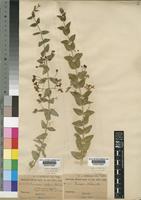
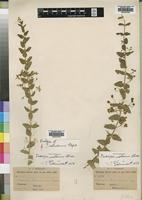
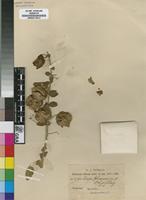
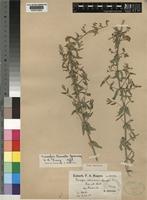
Triaspis rehmannii

5 Images see all

Triaspis nelsonii Oliv. [family MALPIGHIACEAE]
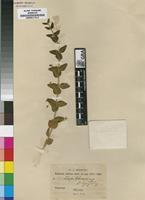
Isotype of Triaspis rehmannii Szyszyl. [family MALPIGHIACEAE]
Isosyntype of Triaspis rehmannii Szyszyl. [family MALPIGHIACEAE]
Type of Triaspis ternata Greenway & Burtt Davy [family MALPIGHIACEAE]
Isosyntype of Triaspis rehmannii Szyszyl. [family MALPIGHIACEAE]
Previous
Next

Name

Identification
Triaspis nelsonii Oliver [family MALPIGHIACEAE ] (stored under name); Isotype of Triaspis rehmannii Szyszyl. [family MALPIGHIACEAE ] Verified by Launert,E., 1959
Related name
  • Triaspis ternata
  • Triaspis hypericoides
  • Triaspis rehmannii
  • Triaspis nelsonii

Flora

Entry for Triaspis nelsonii Oliv. [family MALPIGHIACEAE]
Herbarium
Royal Botanic Gardens, Kew (K)
Collection
Flora Zambesiaca
Resource Type
Reference Sources
Entry From
FZ, Vol 2, Part 1, page 109, (1963) Author: E. Launert
Names
Triaspis rehmannii Szyszyl. [family MALPIGHIACEAE], in Polypet. Discifl. Rehm.: 3 (1888). — Niedenzu in Engl., Pflanzenr. IV, 141: 52 (1928). Type from the Transvaal.
Triaspis nelsonii Oliv. [family MALPIGHIACEAE], in Hook., Ic. Pl.: t. 1418 (1883). — Niedenzu in Arb. Bot. Inst. Akad. Braunsb. 6: 251 (1915); in Verz. Vorl. Akad. Braunsb. S.-Sem. 1924: 6 (1924); in Engl., Pflanzenr. IV, 141: 47 (1928). — Burtt Davy in F.P.F.T. 2: 286 (1932). Type from the Transvaal.
Information
Erect to suberect, scandent or straggling shrub, up to 1 m. high. Younger stems and inflorescences densely sericeous to villous, older ones canescent or glabrescent. Leaves sessile or shortly petiolate; lamina 1·5–3·5 (5) × 1–2 (3·4) cm., ovate or oblong-ovate, apex subacute to acute and usually finely apiculate, base obliquely rotundate or subcordate, subcoriaceous, pale green or glaucous, ± densely appressed-pilose on both surfaces when young, later villous-canescent or glabrescent, but usually only the midrib beneath remaining sericeous or pubescent, usually with 2–4 small glands underneath near the base; petiole 1–2 (4) mm. long, stout, densely hairy. Flowers 1·5 mm. long, ovate. Sepals 3–4 mm. long, ovate-elliptic, sub-glabrous. Petals 8–10 mm. long, obovate, ± spathulate, mauve, pinkish or purplish-blue, fimbriate, shortly unguiculate. Stamens with anthers 1·5–2 mm. long, oblong-elliptic; filaments glabrous, somewhat curved. Ovary densely sericeous; styles about 6 mm. long, glabrous. Samara with the lateral wing 2·5–4 cm. in diam., circular, slightly retuse at the apex; dorsal wing ± developed or much reduced, up to 2·5 × 0·8 cm., obliquely lanceolate.

Related Materials

  • Terms and Conditions
  • Privacy Policy
  • Cookie Policy
  • Cookie Settings
  • Accessibility
  • Help
  • Contact Us
  • Facebook
  • Twitter
ITHAKA

JSTOR is part of ITHAKA, a not-for-profit organization helping the academic community use digital technologies to preserve the scholarly record and to advance research and teaching in sustainable ways.

©2000-2026 ITHAKA. All Rights Reserved. JSTOR®, the JSTOR logo, JPASS®, Aluka®, and ITHAKA® are registered trademarks of ITHAKA.

╳