JSTOR Global Plants Home
  • Home
  • Browse
  • About
  • Access
  • Account
    • Saved Items
    • Profile
  • Log in

Global Plants

Skip to Main Content
  • JSTOR Global Plants Home
  • Global Plants

    • Browse
    • About
    • Access
    • Account
      • Saved Items
      • Profile
Log in
  • Browse
  • About
  • Access
  • Account
    • Saved Items
    • Profile
Advanced Search

Compilation
Triaspis auriculata

3 Images see all

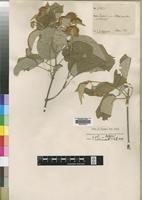
Isotype of Triaspis auriculata Radlk. [family MALPIGHIACEAE]
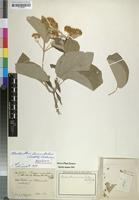
Holotype of Triaspis auriculata Radlk. [family MALPIGHIACEAE]
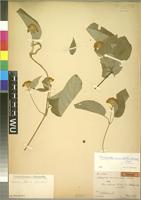
Isotype of Triaspis auriculata Radlk. [family MALPIGHIACEAE]
Previous
Next

Name

Identification
Caucanthus auriculatus (Radlk.) Nied. [family MALPIGHIACEAE ] (stored under name); Isotype of Triaspis auriculata Radlk. [family MALPIGHIACEAE ] Verified by Launert,E., 1959
Related name
  • Caucanthus auriculatus
  • Triaspis auriculata

Flora

Entry for Caucanthus auriculatus Radlk. Niedenzu [family MALPIGHIACEAE]
Herbarium
Royal Botanic Gardens, Kew (K)
Collection
Flora Zambesiaca
Resource Type
Reference Sources
Entry From
FZ, Vol 2, Part 1, page 109, (1963) Author: E. Launert
Names
Caucanthus argenteus Niedenzu [family MALPIGHIACEAE], in Bull. Herb. Boiss., Sér. 2, 4: 1010 (1904). Type: Mozambique, Boroma, Menyhart 964 (B †).
Triaspis auriculata Radlk. [family MALPIGHIACEAE], in Abhandl. Naturw. Ver. Bremen, 8: 379 (1884). — Engl., Pflanzenw. Ost-Afr. A: 57 (1895) in obs. Type as above.
Caucanthus auriculatus Radlk. Niedenzu [family MALPIGHIACEAE], in Arb. Bot. Inst. Akad. Braunsb. 4: 18 (1915); in Verz. Vorl. Akad. Braunsb. S.-Sem. 1924: 2 (1924); in Engl., Pflanzenr. IV, 141: 35 (1928). — Brenan, T.T.C.L.: 296 (1949). — Cufod. in Bull. Jard. Bot. Brux. 26, Suppl.: 403 (1956). TAB. 16. Type from Kenya.
Information
Climber up to 5 m. in length; younger stems densely covered with short soft white sericeous hairs, older ones very finely pubescent or glabrescent. Leaves petiolate; lamina 6–12 × 4–9·5 cm., ovate-cordate, apex acute to shortly acuminate, membranous, pubescent or glabrescent above, grey-tomentose beneath and with 2 large glands near the base (usually concealed by the indumentum); petiole 1–3 cm. long, densely sericeous with usually 2 small glands above the middle. Flowers c. 1·5 cm. in diam., in dense axillary and terminal corymbs, evil-smelling; peduncles and rhachis sericeous; pedicels 1–1·5 cm. long, sericeous; bracts ovate; bracteoles lanceolate or linear-subulate. Sepals 2–2·5 mm. long, broadly ovate with a narrowed base, sericeous outside. Petals 6–7 mm. long, pale yellow, shortly unguiculate, ovate, carinate, subhastate at the base, usually reflexed. Stamens with anthers subversatile, 2·3–2·5 mm. long, oblong; filaments somewhat fleshy. Ovary densely sericeous; styles 2·5–3 mm. long, fairly stout, sericeous. Samara with lateral wing 1–2 cm. in diam., oblong-elliptic or oblong-obovate, with entire margins; dorsal wing absent.
Habitat
Climbing in thickets and on small trees outside forests.
Distribution
Mozambique T Between Mutarara and Doa, fr. 16.vi.1949, Barbosa & Carvalho 3108 (EA; LISC).Malawi S Port Herald, c. 150 m., fl. 25. iii.1960, Phipps 2732 (BM; K; SRGH).Zimbabwe N Darwin Distr., between Chiswiti and Musengezi, c. 600 m., fl. 28.i.1960, Phipps 2474 (BM; K; SRGH).
Distribution (external)
Ethiopia
Kenya
Tanganyika

Related Materials

  • Terms and Conditions
  • Privacy Policy
  • Cookie Policy
  • Cookie Settings
  • Accessibility
  • Help
  • Contact Us
  • Facebook
  • Twitter
ITHAKA

JSTOR is part of ITHAKA, a not-for-profit organization helping the academic community use digital technologies to preserve the scholarly record and to advance research and teaching in sustainable ways.

©2000-2026 ITHAKA. All Rights Reserved. JSTOR®, the JSTOR logo, JPASS®, Aluka®, and ITHAKA® are registered trademarks of ITHAKA.

╳