JSTOR Global Plants Home
  • Home
  • Browse
  • About
  • Access
  • Account
    • Saved Items
    • Profile
  • Log in

Global Plants

Skip to Main Content
  • JSTOR Global Plants Home
  • Global Plants

    • Browse
    • About
    • Access
    • Account
      • Saved Items
      • Profile
Log in
  • Browse
  • About
  • Access
  • Account
    • Saved Items
    • Profile
Advanced Search

Compilation
Tragus arenarius

4 Images see all

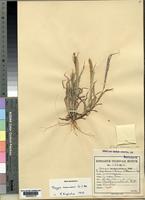
Holotype of Tragus arenarius Bremek. & Oberm. [family POACEAE]
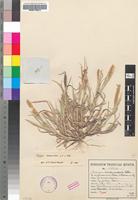
Syntype of Tragus arenarius Bremek. & Oberm. [family POACEAE]
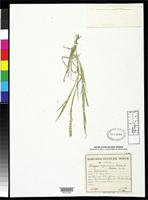
Filed as Tragus arenarius Bremekamp, C.E.B. & Obermeyer, A.A. 1935 [family POACEAE]
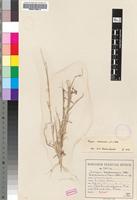
Type? of Tragus arenarius Bremek. & Oberm. [family POACEAE]
Previous
Next

Name

Identification
Tragus arenarius Bremek. & Oberm. [family POACEAE ] Tragus racemosus (L.) All. [family POACEAE ] (stored under name); Verified by Kupicha, F.,
Related name
  • Tragus arenarius
  • Tragus racemosus

Flora

Entry for Tragus racemosus L. All. [family GRAMINEAE]
Herbarium
Royal Botanic Gardens, Kew (K)
Collection
Flora Zambesiaca
Resource Type
Reference Sources
Entry From
FZ, Vol 10, Part 2, (1999) Author: T. Cope
Names
Tragus racemosus L. All. [family GRAMINEAE], Fl. Pedem. 2: 241 (1785). —Schweickerdt in Ann. Natal Mus. 10: 24, fig. 3 (1941). —Chippindall in Meredith, Grasses & Pastures of South Africa: 107, fig. 78 (1955). —Launert in Merxmüller, Prodr. Fl. SW. Afrika, fam. 160: 206 (1970). —Gibbs Russell et al., Grasses Southern Africa [Mem. Bot. Surv. S. Africa No. 58]: 338 (1990). Type from southern Europe.
Cenchrus racemosus L. [family GRAMINEAE], Sp. Pl. 2: 1049 (1753).
Tragus arenarius Bremek. & Oberm. [family GRAMINEAE], in Ann. Transvaal Mus. 16: 403 (1935). Type: Botswana, Kaotwe, 10.iv.1930, van Son 28651 (K, holotype).
Information
Annual up to 25 cm tall, erect or geniculately ascending; leaf laminas 2–6 cm × 1.5–4.5 mm, flat or plicate, glaucous, the margins thickened, whitish, pectinate with bulbous-based hairs or barbellate.Inflorescence 2.5–6 cm long, compactly cylindrical, congested; racemelets comprising (1)2–4 fertile and (1)2 sterile spikelets borne on a short peduncle.Spikelets 3.2–4 mm long; superior glume prominently 7-nerved, the nerves bearing hooked, bulbous-based prickles, glabrous between the nerves; anthers 0.5–0.7 mm long.
Habitat
In shallow soil over exposed rock and in cracks in limestone, in mopane and Acacia woodland on sandy or stony soil, and on compacted soil on pan margins
Range
Mediterranean region and Arabia, and southwards through tropical Africa to South Africa
Altitude range
910–1070 m.
1070
910
Distribution
Botswana N near theBotswana /Namibia border at 19°38'S, 21°00'E, 27.iv.1982, P.A. Smith 3898 (K; SRGH).Zimbabwe W Hwange (Wankie) National Park, near Kennedy 1 Pan, c. 30 km SSE of Main Camp, 1070 m, 14.i.1969, Rushworth 1411 (K).Botswana SW Kgalagadi Distr., Bosobogolo Pan, 1.ii.1978, Skarpe 232 (K; SRGH).Botswana SE Kweneng Distr., 28 km NW of entry to Khutse Game Reserve, via Salajwe, 7.iii.1977, Skarpe 178 (K; SRGH).

Related Materials

  • Terms and Conditions
  • Privacy Policy
  • Cookie Policy
  • Cookie Settings
  • Accessibility
  • Help
  • Contact Us
  • Facebook
  • Twitter
ITHAKA

JSTOR is part of ITHAKA, a not-for-profit organization helping the academic community use digital technologies to preserve the scholarly record and to advance research and teaching in sustainable ways.

©2000-2026 ITHAKA. All Rights Reserved. JSTOR®, the JSTOR logo, JPASS®, Aluka®, and ITHAKA® are registered trademarks of ITHAKA.

╳