JSTOR Global Plants Home
  • Home
  • Browse
  • About
  • Access
  • Account
    • Saved Items
    • Profile
  • Log in

Global Plants

Skip to Main Content
  • JSTOR Global Plants Home
  • Global Plants

    • Browse
    • About
    • Access
    • Account
      • Saved Items
      • Profile
Log in
  • Browse
  • About
  • Access
  • Account
    • Saved Items
    • Profile
Advanced Search

Compilation
Tragia mazoensis

5 Images see all

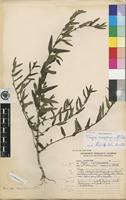
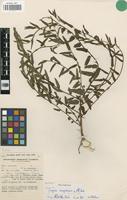
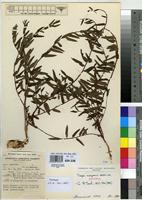
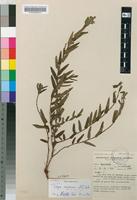
Isotype of Tragia mazoensis Radcl.-Sm. [family EUPHORBIACEAE]
Holotype of Tragia mazoensis Radcl.-Sm. [family EUPHORBIACEAE]
Isotype of Tragia mazoensis Radcl.-Sm. [family EUPHORBIACEAE]
Previous
Next

Name

Identification
Isotype of Tragia mazoensis Radcl.-Sm. [family EUPHORBIACEAE ] (stored under name); Verified by Not on sheet,
Related name
  • Tragia mazoensis
  • Tragia cannabina

Flora

Entry for Tragia mazoensis Radcl.-Sm. [family EUPHORBIACEAE]
Herbarium
Royal Botanic Gardens, Kew (K)
Collection
Flora Zambesiaca
Resource Type
Reference Sources
Entry From
FZ, Vol 9, Part 4, (1996) Author: A. Radcliffe-Smith
Names
Tragia mazoensis Radcl.-Sm. [family EUPHORBIACEAE], in Kew Bull. 42: 396 (1987). Type: Zimbabwe, Makonde Distr., west side of Umvukwes Range, c. 24 km south of Kildonan, female fl. 25.ii.1959, Drummond 5848 (K, holotype; LISC; PRE; SRGH).
Information
An erect, leafy, urticating perennial herb up to 40 cm tall, dioecious; stems several from a woody rootstock, branched, puberulous.Stipules 1.5–2 mm long, linear-lanceolate.Petioles short, 1–2 mm long, or leaves subsessile.Leaf blade 1–4 × 0.2–1 cm, linear-lanceolate, acute or obtuse at the apex, entire or with only a few apical teeth on the margins, truncate or shallowly cordate at the base, chartaceous, 3–5-nerved from the base; lateral nerves in 4–7 pairs, not prominent above, prominent beneath, brochidodromous; indumentum sparingly puberulous on both surfaces, and with urticating bristles along the midrib and main nerves beneath.Inflorescences terminal (male) or leaf-opposed (female), the male inflorescences up to 9 cm long, the females not exceeding 4 cm; male bracts resembling the stipules, 2–3-flowered; male bracteoles 1 mm long, filiform; female bracts 2 mm long, ovate, 1-flowered; female bracteoles resembling the male bracts.Male flowers: pedicels 1–1.5 mm long; buds globose; calyx lobes 2 × 1 mm, elliptic-ovate, subacute, subglabrous without, glabrous within; stamens 1 mm long; pistillode 3-radiate, the segments apically dilated.Female flowers; pedicels less than 1 mm long, extending slightly in fruit; calyx lobes 6, 2 mm long and wide, accrescent to 6 × 3 mm, each lobe 7–11 lobulate, the lobules linear and ± equalling the width of the calyx lobe rhachis, setose, green, the calyx-lobe rhachis loriform, subglabrous without, glabrous within; ovary 1 mm in diameter, 3-lobed, densely setose; styles 3, 1–2 mm long, connate to halfway, subglabrous or sparingly pubescent, stigmas smooth, recurved.Fruit 6 × 8 mm, 3-lobed, smooth, densely stinging-setose.Mature seeds as yet unknown.
Habitat
On open treeless grassy hillsides of serpentine dyke, often on termite mounds.
Range
Endemic to this serpentine dyke
Distribution
Zimbabwe N Mazowe Distr., Vanad Pass, Great Dyke, male fl. 13.xii.1974, Wild 7973 (K; PRE; SRGH); Makonde Distr., Mutorashanga, fr. 18.i.1970, Wild 7788 (SRGH).
Notes
Closely related to T. lukafuensis, from which it differs chiefly in the ± entire leaf margins.

Related Materials

  • Terms and Conditions
  • Privacy Policy
  • Cookie Policy
  • Cookie Settings
  • Accessibility
  • Help
  • Contact Us
  • Facebook
  • Twitter
ITHAKA

JSTOR is part of ITHAKA, a not-for-profit organization helping the academic community use digital technologies to preserve the scholarly record and to advance research and teaching in sustainable ways.

©2000-2026 ITHAKA. All Rights Reserved. JSTOR®, the JSTOR logo, JPASS®, Aluka®, and ITHAKA® are registered trademarks of ITHAKA.

╳