JSTOR Global Plants Home
  • Home
  • Browse
  • About
  • Access
  • Account
    • Saved Items
    • Profile
  • Log in

Global Plants

Skip to Main Content
  • JSTOR Global Plants Home
  • Global Plants

    • Browse
    • About
    • Access
    • Account
      • Saved Items
      • Profile
Log in
  • Browse
  • About
  • Access
  • Account
    • Saved Items
    • Profile
Advanced Search

Compilation
Tragia durbanensis

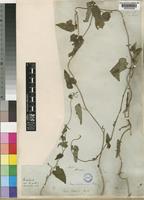
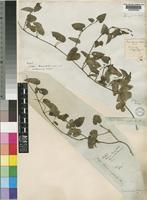
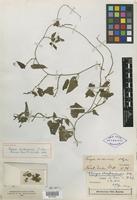
3 Images see all

Tragia durbanensis Kuntze [family EUPHORBIACEAE]
Holotype of Tragia durbanensis Kuntze [family EUPHORBIACEAE]
Previous
Next

Name

Identification
Tragia durbanensis Kuntze [family EUPHORBIACEAE ] (stored under name); Verified by Prain, D., Tragia capensis Thunb. [family EUPHORBIACEAE ]
Related name
  • Tragia capensis
  • Tragia durbanensis

Flora

Entry for TRAGIA durbanensis O. Kuntze [family EUPHORBIACEAE]
Herbarium
Royal Botanic Gardens, Kew (K)
Collection
Flora Capensis
Resource Type
Reference Sources
Entry From
Flora Capensis, Vol 5, Part 2, page 216, (1925) Author: (By N. E. BROWN, J. HUTCHINSON and D. PRAIN.)
Names
TRAGIA durbanensis O. Kuntze [family EUPHORBIACEAE], Rev. Gen. Pl. iii. ii. 293
TRAGIA capensis E. Meyer [family EUPHORBIACEAE], in Drège, Zwei Pfl. Documente 226, mainly but excl. the Galgebosch plant; Sond. in Linnæa, xxiii. 110; Baill. Étud. Gén. Euphorb. 461,and Adansonia, iii. 162; not of Thunb.
TRAGIA capensis E. Meyer var. β [family EUPHORBIACEAE], l.c. 226.
TRAGIA meyeriana Müll. Arg. [family EUPHORBIACEAE], in DC. Prodr. xv. ii. 938, as to the Drège specimen only.
TRAGIA meyeriana Müll. Arg. var. β glabrata [family EUPHORBIACEAE], l.c.
Information
a herb with woody base; stems slender, twining, sparingly branched, 4–8 ft. long, usually glabrous, sometimes sparingly armed with stinging bristles; leaves long-petioled, membranous, triangular-ovate, acute, base rather deeply widely to narrowly cordate, margin closely strongly toothed, 1 1/2–3 in. long, 1 1/4–2 1/2 in. wide, glabrous or nearly so above, beneath usually very sparingly beset with stinging bristles on the nerves; petiole sparingly bristly or glabrous, 1/2–1 lin. long; stipules spreading, lanceolate or ovate-lanceolate, glabrous, 1 1/2–2 lin. long; racemes terminal on the branches or leaf-opposed on the stem, with many male flowers solitary to their bracts above and 1–2 basal female flowers; peduncle and rhachis finely puberulous with sometimes a few long bristles; male bracts ovate-lanceolate, entire, glabrous or nearly so, 1 lin. long; female bracts ovate-lanceolate, entire, glabrous, 2 lin. long; male calyx 3-partite; lobes ovate, acute, glabrous; stamens 3; filaments longer than the anthers, incurved; female calyx 3-partite; lobes suborbicular, palmately 5–6-lobulate on each side, pubescent externally, glabrous within; lobules much shorter than the width of the accrescent indurated rhachis, in fruit 1/3 in. long; ovary puberulous and setose; styles 3, connate below in a short column, free above; capsule 3-coccous, 1/3 in. across; cocci almost glabrous, subglobose; seeds globose. null
Distribution
COAST REGION East London Div.; East London, 50 ft., Bolus! Albany Div.; Howisons Poort, Williamson! Bathurst Div.; near the sea, Mrs. Barber, 496! Komgha Div.; near the mouth of the Kei River, Flanagan, 437!EASTERN REGION Pondoland; near the mouth of the Umsikaba River, Drège! Egosa Forest, Beyrich, 10! and without precise locality, Bachmann, 776! Natal; near Durban, Drège, 4605! Sanderson, 366! Kuntze! Wilms, 2273! Schlechter, 2773! Rehmann, 8805, partly! Wood, 2802! 6343! Umkomaas, Engler, 2571 a! Between the Rivers Umzimkulu and Umkomanzi, Drège! Shafton, Howick, Mrs. Hutton, 12! Higher Tugela, Gerrard, 1165! without precise locality, Gerrard, 522! Delagoa Bay; Lourenço Marques, Mrs. Howard, 71! Forbes, 47! Junod, 198!
Notes
Very nearly related to T. meyeriana, Müll. Arg., with which it has been united by Müller, but readily distinguished by being scandent and in having male flowers which are less than half the size. As T. capensis, Thunb., is not a Tragia, the name T. capensis, E. Meyer, associated by Müller with this plant as a synonym and employed, though without description, by Meyer, Sonder and Baillon in previous publications, might be used to designate this species. It seems, however, less ambiguous to employ the name suggested by Kuntze to whom we are indebted for the first intelligible account of this species and of its ally.

Related Materials

  • Terms and Conditions
  • Privacy Policy
  • Cookie Policy
  • Cookie Settings
  • Accessibility
  • Help
  • Contact Us
  • Facebook
  • Twitter
ITHAKA

JSTOR is part of ITHAKA, a not-for-profit organization helping the academic community use digital technologies to preserve the scholarly record and to advance research and teaching in sustainable ways.

©2000-2026 ITHAKA. All Rights Reserved. JSTOR®, the JSTOR logo, JPASS®, Aluka®, and ITHAKA® are registered trademarks of ITHAKA.

╳