JSTOR Global Plants Home
  • Home
  • Browse
  • About
  • Access
  • Account
    • Saved Items
    • Profile
  • Log in

Global Plants

Skip to Main Content
  • JSTOR Global Plants Home
  • Global Plants

    • Browse
    • About
    • Access
    • Account
      • Saved Items
      • Profile
Log in
  • Browse
  • About
  • Access
  • Account
    • Saved Items
    • Profile
Advanced Search

Compilation
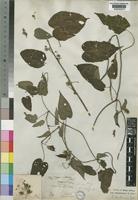
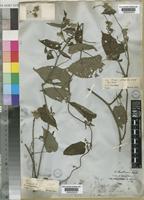
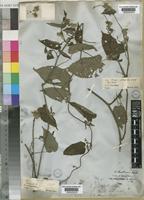
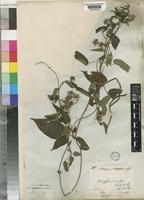
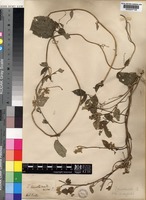
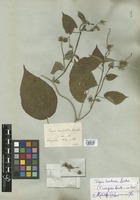
Tragia cordifolia

6 Images see all

Tragia benthamii Baker [family EUPHORBIACEAE]
Type of Tragia involucrata L. var. cordata [family EUPHORBIACEAE]
Filed as Tragia cordifolia Benth. [family EUPHORBIACEAE]
Previous
Next

Name

Identification
Tragia benthamii Baker [family EUPHORBIACEAE ] (stored under name); Tragia cordifolia Benth [family EUPHORBIACEAE ]
Related name
  • Tragia benthamii
  • Tragia cordifolia

Flora

Entry for TRAGIA Okanyua Pax [family EUPHORBIACEAE]
Herbarium
Royal Botanic Gardens, Kew (K)
Collection
Flora Capensis
Resource Type
Reference Sources
Entry From
Flora Capensis, Vol 5, Part 2, page 216, (1925) Author: (By N. E. BROWN, J. HUTCHINSON and D. PRAIN.)
Names
TRAGIA Okanyua Pax [family EUPHORBIACEAE], in Bull. Herb. Boiss. vi. 735;—Prain in Dyer, Fl. Trop. Afr. vi. i. 986.
TRAGIA angustifolia Pax [family EUPHORBIACEAE], in Engl. Pfl. Ost-Afr. C. 239, partly, and in Baum, Kunene-Samb. Exped. 283; not of Benth.
TRAGIA cordifolia N. E. Br. [family EUPHORBIACEAE], in Kew Bulletin, 1909, 141; not of Vahl, nor of Benth.
TRAGIA madandensis S. Moore [family EUPHORBIACEAE], in Journ. Linn. Soc. xl. 203.
Information
a herb with woody base; stems twining, 1–6 ft. high, much branched, pubescent and armed with stinging bristles; leaves distinctly petioled, membranous, ovate, auriculate-subcordate and usually almost 3-lobate, central lobe generally elongated, acute, basal lobes rounded, sometimes triangular-ovate, with a shallow lateral sinus, base cordate, margin crenate-serrate, 1 1/2–2 1/2 in. long, 1 1/4–1 1/2 in. wide at the base, hispid or puberulous and sparingly bristly especially on the nerves of both surfaces; petiole 1 in. long, pubescent and sparingly bristly; stipules broadly lanceolate, spreading, pubescent and bristly, 1 1/2 lin. long; racemes lateral, leaf-opposed, peduncled, 1–2 in. long; peduncle hispid and sparingly bristly, with many male flowers above and usually 2 basal female flowers; male bracts ovate-anceolate, entire, about 1 lin. long, finely hispid; female bracts 2–3-lobed, ovate, 1 1/2–2 lin. long, hispid; pedicels in both sexes solitary to and shorter than their bracts; male calyx 3-partite; lobes ovate, obtuse; stamens 3; filaments longer than the anthers; female calyx 6-partite, 2-seriate; lobes pinnately 2–3-lacinulate on each side, rhachis accrescent, indurated in fruit, at length 1/4 in. long, of one series obovate, of the other series rather narrow-lanceolate; ovary hispid above; styles 3, united more than half-way in a distinct basal column, free above; capsule 3-coccous, 1/4 in. across; cocci subglobose, nearly glabrous; seeds globose. null
Range
Also widely spread in southern Tropical Africa.
Distribution
KALAHARI REGION Transvaal; slopes of Masetane, Junod, 1051!

Related Materials

  • Terms and Conditions
  • Privacy Policy
  • Cookie Policy
  • Cookie Settings
  • Accessibility
  • Help
  • Contact Us
  • Facebook
  • Twitter
ITHAKA

JSTOR is part of ITHAKA, a not-for-profit organization helping the academic community use digital technologies to preserve the scholarly record and to advance research and teaching in sustainable ways.

©2000-2026 ITHAKA. All Rights Reserved. JSTOR®, the JSTOR logo, JPASS®, Aluka®, and ITHAKA® are registered trademarks of ITHAKA.

╳