JSTOR Global Plants Home
  • Home
  • Browse
  • About
  • Access
  • Account
    • Saved Items
    • Profile
  • Log in

Global Plants

Skip to Main Content
  • JSTOR Global Plants Home
  • Global Plants

    • Browse
    • About
    • Access
    • Account
      • Saved Items
      • Profile
Log in
  • Browse
  • About
  • Access
  • Account
    • Saved Items
    • Profile
Advanced Search

Compilation
Trachydium abyssinicum

7 Images see all

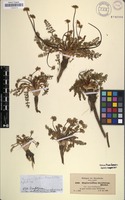
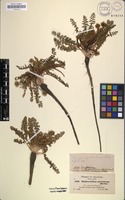
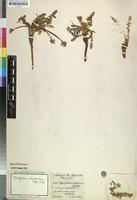
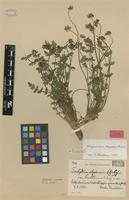
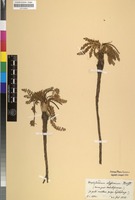
Holotype of Haplosciadium abyssinicum Hochst. [family APIACEAE]
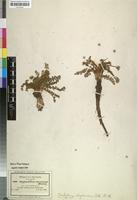
Isotype of Trachydium abyssinicum (Hochst.) Hiern [family UMBELLIFERAE]
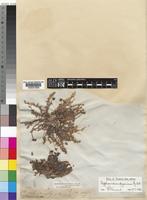
Type of Trachydium abyssinicum (Hochst.) Hiern var. lindblomii H.Wolff [family APIACEAE]
Isotype of Trachydium sp. [family APIACEAE]
Isotype of Trachydium abyssinicum (Hochst.) Hiern [family UMBELLIFERAE]
Syntype of Trachydium abyssinicum unrecorded var. kilimandschari Engl. [family UMBELLIFERAE]
Previous
Next

Name

Identification
Haplosciadium abyssinicum Hochst. [family UMBELLIFERAE ] (stored under name); Verified by Townsend, C., Trachydium abyssinicum unrecorded [family UMBELLIFERAE ]
Related name
  • Trachydium abyssinicum
  • Haplosciadium abyssinicum

Flora

Entry for TRACHYDIUM abyssinicum Benth. et Hook. f. [family UMBELLIFERAE]
Herbarium
Royal Botanic Gardens, Kew (K)
Collection
Flora of Tropical Africa
Resource Type
Reference Sources
Entry From
Flora of Tropical Africa, Vol 1, page 1, (1877) Author: (By Mr. W. P. Hiern.)
Names
TRACHYDIUM abyssinicum Benth. et Hook. f. [family UMBELLIFERAE], l.c.
Haplosciadium abyssinicum Hochst. [family UMBELLIFERAE], l.c.
Information
Root fusiform. Stem very short. Leaves narrowly oblong, 2–3 in. long by about 1/2 in. wide. Bracts of the umbel lanceolate-linear, entire, scarious, 1 1/4 in. long; those of the involucel similar and smaller, but equalling or slightly exceeding the pedicels. Primary rays 1–6 in. long. Flowers crowded on pedicels about 2 in. long, white.
Distribution
Abyssinia Nile Land Enschedcap, Simen, fl. July, fr. October, 13,600 ft. alt. Schimper!
Notes
The specimens are only in flower and young fruit, but in habit quite resemble the Asiatic specimens of Trachydium. Grows in mountain pastures.

Related Materials

  • Terms and Conditions
  • Privacy Policy
  • Cookie Policy
  • Cookie Settings
  • Accessibility
  • Help
  • Contact Us
  • Facebook
  • Twitter
ITHAKA

JSTOR is part of ITHAKA, a not-for-profit organization helping the academic community use digital technologies to preserve the scholarly record and to advance research and teaching in sustainable ways.

©2000-2026 ITHAKA. All Rights Reserved. JSTOR®, the JSTOR logo, JPASS®, Aluka®, and ITHAKA® are registered trademarks of ITHAKA.

╳