JSTOR Global Plants Home
  • Home
  • Browse
  • About
  • Access
  • Account
    • Saved Items
    • Profile
  • Log in

Global Plants

Skip to Main Content
  • JSTOR Global Plants Home
  • Global Plants

    • Browse
    • About
    • Access
    • Account
      • Saved Items
      • Profile
Log in
  • Browse
  • About
  • Access
  • Account
    • Saved Items
    • Profile
Advanced Search

Compilation
Tillaea aquatica

13 Images see all

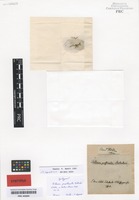
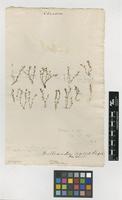
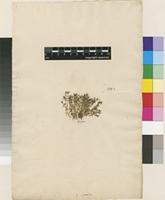
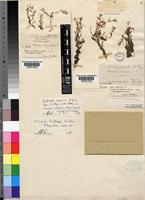
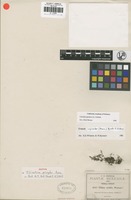
Syntype of Tillaea prostrata Schkuhr [family CRASSULACEAE]
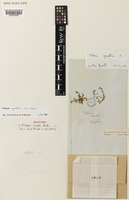
Syntype of Tillaea simplex Nutt. [family CRASSULACEAE]
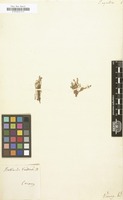
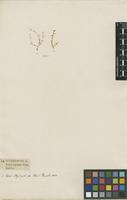
Filed as Tillaea aquatica [family CRASSULACEAE]
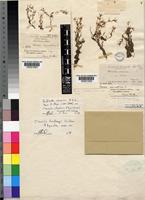
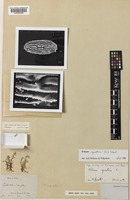
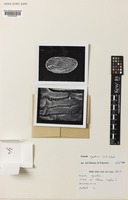
Crassula granvikii Mildbr. [family CRASSULACEAE]
Filed as Tillaea aquatica L. [family CRASSULACEAE]
Crassula aquatica (L.) Schönland [family CRASSULACEAE]
Type? of Tillaea angustifolia Nutt. [family CRASSULACEAE]
Type of Tillaea simplex Nutt. [family CRASSULACEAE]
Filed as Tillaea aquatica L. [family CRASSULACEAE]
Lectotype of Tillaea aquatica L. [family CRASSULACEAE]
Crassula granvikii Mildbr. [family CRASSULACEAE]
Type of Tillaea prostrata Schkuhr [family CRASSULACEAE]
Filed as Crassula aquatica Schoenland [family CRASSULACEAE]
Previous
Next

Name

Identification
Crassula granvikii Mildbr. [family CRASSULACEAE ] (stored under name); Crassula hedbergii Wickens & M.Bywater [family CRASSULACEAE ] Bulliarda abyssinica A.Rich. [family CRASSULACEAE ] Tillaea aquatica L. [family CRASSULACEAE ]
Related name
  • Bulliarda aquatica
  • Bulliarda abyssinica
  • Crassula aquatica
  • Crassula hedbergii
  • Tillaea angustifolia
  • Crassula granvikii
  • Tillaea aquatica
Common name
  • Water pygmyweed, Flora of North America Vol. 8
  • river-leek, Flora of North America Vol. 8

Flora

Entry for Crassula aquatica (Linnaeus) Schönland [family CRASSULACEAE]
Herbarium
Flora of North America (FNA)
Collection
Flora of North America
Resource Type
Reference Sources
Entry From
Flora of North America, Vol 8,
Names
Crassula aquatica (Linnaeus) Schönland [family CRASSULACEAE], in H. G. A. Engler and K. Prantl, Nat. Pflanzenfam., 51[III,2a]: 37. 1890 ,
Tillaea aquatica Linnaeus [family CRASSULACEAE], Sp. Pl., 1: 128. 1753
Crassula saginoides (Maximowicz) M. Bywater & Wickens [family CRASSULACEAE]
Tillaeastrum aquaticum (Linnaeus) Britton [family CRASSULACEAE]
Treatment Author(s)
Reid V. Moran
Information
Plants aquatic, sometimes stranded, annual. Stems decum-bent, later ± erect if stranded, reddish in age, usually branched at base, to 14 cm, (rooting at basal nodes). Leaf blades oblanceolate to linear, 2–6 mm, apex acute. Inflorescences lax; flowers 1 per node. Pedicels 0.5–20 mm. Flowers 4-merous; sepals ovate to oblong, 0.5–1.5 mm, apex obtuse to rounded; petals ovate to oblong, 1–2 mm. Follicles erect, 6–17-seeded, oblong; old follicles spreading, flat. Seeds oblong-ellipsoid, (0.3–)0.4–0.5(–0.6) × 0.1–0.3 mm, not papillate, dull, minutely rugulose. 2n = 42 (Iceland).
Phenology
Flowering late spring–summer
Altitude range
0–3000 m
Distribution
St. Pierre and MiquelonMexicon Eurasia.USA Ala.USA AlaskaUSA Ariz.USA Calif.USA Colo.USA Conn.USA Del.USA Ga.USA IdahoUSA La.USA MaineUSA Md.USA Mass.USA Minn.USA Mont.USA Nev.USA N.H.USA N.J.USA N.Mex.USA N.Y.USA Okla.USA Oreg.USA Pa.USA Tex.USA UtahUSA Vt.USA Wash.USA Wyo.Canada B.C.Canada N.B.Canada Nfld. and Labr. (Nfld.)Canada N.W.T.Canada N.S.Canada Ont.Canada P.E.I.Canada Que.Canada Yukon
Discussion
The typical form of Crassula aquatica, with very short fruiting pedicels, grows chiefly in coastal salt marsh. It is rare and widely scattered in Alaska and Canada (W. J. Cody 1954), scarcely more common southward. M. Bywater and G. E. Wickens (1984) separated C. saginoides by pedicels elongate in fruit, sometimes to ca. 2 cm. It grows mostly inland and sometimes to 3000 meters, but from the specimens that they annotated, the ranges are not distinct. N. L. Britton and J. N. Rose (1905) and W. L. Jepson (1923–1925) have separated it, at least varietally, under other names, but most authors have included it without comment or at most have called it doubtfully distinct. I call it merely a phase of C. aquatica not needing a formal name (R. V. Moran 1992b). A typical strand plant is depicted in the lower left corner of the illustration panel on this page.

Related Materials

  • Terms and Conditions
  • Privacy Policy
  • Cookie Policy
  • Cookie Settings
  • Accessibility
  • Help
  • Contact Us
  • Facebook
  • Twitter
ITHAKA

JSTOR is part of ITHAKA, a not-for-profit organization helping the academic community use digital technologies to preserve the scholarly record and to advance research and teaching in sustainable ways.

©2000-2026 ITHAKA. All Rights Reserved. JSTOR®, the JSTOR logo, JPASS®, Aluka®, and ITHAKA® are registered trademarks of ITHAKA.

╳