JSTOR Global Plants Home
  • Home
  • Browse
  • About
  • Access
  • Account
    • Saved Items
    • Profile
  • Log in

Global Plants

Skip to Main Content
  • JSTOR Global Plants Home
  • Global Plants

    • Browse
    • About
    • Access
    • Account
      • Saved Items
      • Profile
Log in
  • Browse
  • About
  • Access
  • Account
    • Saved Items
    • Profile
Advanced Search

Compilation
Thunbergia squamuligera

2 Images see all

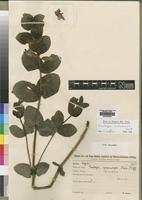
Type of Thunbergia squamuligera Lindau [family ACANTHACEAE]
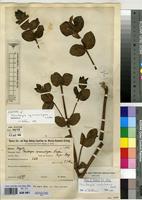
Isotype of Thunbergia squamuligera Lindau [family ACANTHACEAE]
Previous
Next

Name

Identification
Thunbergia squamuligera Lindau [family ACANTHACEAE ] Verified by Vollesen,K., Thunbergia natalensis Hook. [family ACANTHACEAE ] (stored under name);
Related name
  • Thunbergia squamuligera
  • Thunbergia natalensis

Flora

Entry for Thunbergia natalensis Hook. [family ACANTHACEAE]
Herbarium
Royal Botanic Gardens, Kew (K)
Collection
Flora of Tropical East Africa
Resource Type
Reference Sources
Entry From
Flora of Tropical East Africa, page 1, (2008) Author: Kaj Vollesen
Names
Thunbergia natalensis Hook. [family ACANTHACEAE], in Bot. Mag. 84: t. 5082 (1858); T. Anderson in J.L.S. 7: 18 (1863); C.B. Clarke in Dyer, Fl. Cap. 5: 4 (1901); Cribb & Leedal, Mountain Fl. S. Tanz.: 129, pl. 32 (1982); Compton, Fl. Swaziland: 547 (1976); Walker, Wild Fl. Kwazulu-Natal: 150 (1996); Germishuizen, Wild Fl. N. S. Afr.: 392 (1997); Ensermu in F.E.E. 5: 355 (2006). Type: Cultivated in Hort. Veitch from South African material, Herb. Hooker s.n. (K!, holo.)
Thunbergia mellinocaulis Burkill [family ACANTHACEAE], in F.T.A. 5: 23 (1899); Binns, Checklist Herb. Fl. Malawi: 16 (1968); Lebrun & Stork, Enum. Pl. Afr. Trop. 4: 506 (1997). Type: Malawi, Mt Zomba, Whyte s.n. (K!, holo.; K! iso.)
Thunbergia squamuligera Lindau [family ACANTHACEAE], in E.J. 30: 406 (1901); Lebrun & Stork, Enum. Pl. Afr. Trop. 4: 507 (1997). Type: Tanzania, Rungwe District: Mt Mbogo, Goetze 1453 (B†, holo.; BM!, BR!, iso.)
Information
Perennial herb with 1–3 erect stems from large creeping woody rootstock with fleshy roots; stems to 75 cm long, quadrangular, sparsely to densely pubescent with curly non-glandular hairs, with distinct bands of longer hairs at nodes (rarely glabrous). Leaves dark green, glossy, palmately veined; petiole 2–5 mm long on vegetative leaves, indumentum as on stems; lamina ovate or broadly so (rarely elliptic), largest (3.5–)4.5–9(–19)≈(2.7–)3–6(–10.5) cm, usually less than twice as long as wide, apex acute to obtuse, apiculate, base subcordate to cordate with rounded (rarely hastate) lobes, margin entire to slightly crenate, subglabrous to puberulous, densest on veins (rarely glabrous). Flowers solitary; pedicels 2–7.5 cm long, glabrous to puberulous (rarely pubescent); bracteoles pale green, with conspicuous raised dark green reticulation, more rarely with obscure reticulation, ovate-oblong, 1.5–3(–3.5)≈0.6–1.1 cm, acute to obtuse, with sparse to dense long (to 2 mm) glossy glandular hairs on veins and margins (rarely pubescent without glands or glabrous). Calyx glabrous to minutely puberulous, 1–2(–4 in fruit) mm high of which the broadly triangular lobes about half. Corolla limb and upper part of tube white to blue or mauve, lower part of tube white, throat yellow; tube 2.5–3.5 cm long; lobes 1–1.7≈1.5–2 cm. Filaments 8–10 mm long, glabrous or glandular at base; anthers 2–2.5 mm long. Style with scattered glands. Capsule 7–9 mm in diameter, beak 13–16 mm long. Seed reddish brown, ± 5 mm in diameter, reticulate to spinulose near apex.
Range
DISTR. T 2, 4, 5, 7
Altitude range
(1100–)1700–2450(–2650) m
Distribution
TANZANIA Mbulu District Mt Hanang, Nangwa, 6 Feb. 1946, Greenway 7616!TANZANIA Rungwe District Usafwa, 19 July 1913, Stolz 2395!TANZANIA Mbeya District Poroto Mts, Igali, 25 March 1988, Bidgood et al. 707!
Distribution (external)
Ethiopia
Malawi
Zimbabwe
Swaziland
South Africa
Notes
The two collections from T 2 and 5 are both somewhat abnormal but seem to fit better into this than any other species. Burtt 1162 from Kondoa District differs in the total absence of stalked glands and in the pubescent indumentum. It also comes from a low altitude and from woodland. Greenway 7616 (cited above) is subglabrous and has very large bracteoles combined with a small corolla. The only collection from T 4 (Bidgood et al. 4272) is from a very low altitude and a very dry habitat. It also has exceptionally large leaves, is totally glabrous and has a white corolla. Further collections may show this to be a distinct taxon.

Related Materials

  • Terms and Conditions
  • Privacy Policy
  • Cookie Policy
  • Cookie Settings
  • Accessibility
  • Help
  • Contact Us
  • Facebook
  • Twitter
ITHAKA

JSTOR is part of ITHAKA, a not-for-profit organization helping the academic community use digital technologies to preserve the scholarly record and to advance research and teaching in sustainable ways.

©2000-2026 ITHAKA. All Rights Reserved. JSTOR®, the JSTOR logo, JPASS®, Aluka®, and ITHAKA® are registered trademarks of ITHAKA.

╳