JSTOR Global Plants Home
  • Home
  • Browse
  • About
  • Access
  • Account
    • Saved Items
    • Profile
  • Log in

Global Plants

Skip to Main Content
  • JSTOR Global Plants Home
  • Global Plants

    • Browse
    • About
    • Access
    • Account
      • Saved Items
      • Profile
Log in
  • Browse
  • About
  • Access
  • Account
    • Saved Items
    • Profile
Advanced Search

Compilation
Thunbergia laurifolia

7 Images see all

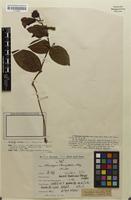
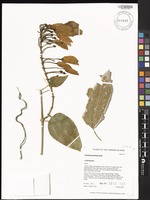
Filed as Thunbergia laurifolia Lindl. [family ACANTHACEAE]
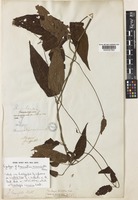
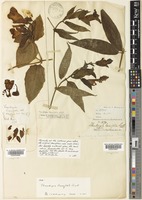
Syntype of Hexacentris acuminata Nees [family ACANTHACEAE]
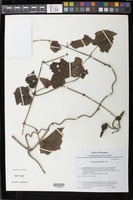
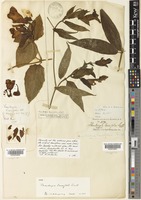
Filed as Thunbergia laurifolia Lindl. [family ACANTHACEAE]
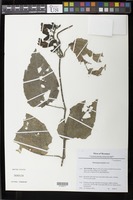
Not a Type of Thunbergia laurifolia Lindl. [family ACANTHACEAE]
Thunbergia laurifolia Lindl. [family ACANTHACEAE]
Previous
Next

Name

Identification
Thunbergia laurifolia Lindl. [family ACANTHACEAE ] (stored under name); Verified by Esser, H.-J., 2012
Related name
  • Thunbergia laurifolia

Flora

Entry for Thunbergia laurifolia Lindl. [family ACANTHACEAE]
Herbarium
Royal Botanic Gardens, Kew (K)
Collection
Flora of Tropical East Africa
Resource Type
Reference Sources
Entry From
Flora of Tropical East Africa, page 1, (2008) Author: Kaj Vollesen
Names
Thunbergia laurifolia Lindl. [family ACANTHACEAE], in Gard. Chron. 1856: 260 (1856); Hook. in Bot. Mag. 83: t. 4985 (1857); Bremek. in Verh. Kon. Nederl. Akad. Wetensch., Afd. Natuurk., 2nd. Ser., 50(4): 47 (1955); Lebrun & Stork, Enum. Pl. Afr. Trop. 4: 507 (1997). Type: Cult. in Britain, no specimen preserved. Could be lectotypified with t. 4985 in Bot. Mag.
Thunbergia grandiflora (Lindl.) Benoist var. laurifolia [family ACANTHACEAE], in Fl. Gén. Indo-Chine 4: 618 (1935)
Thunbergia harrisii Hook. [family ACANTHACEAE], in Bot. Mag. 83: t. 4998 (1857). Type: Cult. in Hort. Veitch (not seen)
Thunbergia grandiflora [family ACANTHACEAE], [sensu Iversen in Symb. Bot. Ups. 29, 3: 162 (1991); Ruffo et al., Cat. Lushoto Herb. Tanzania: 10 (1996), as grabdiflora, non (Rottl.) Roxb. (1819)]
Information
Vigorous woody twiner to 25 m or more, forming large tangles and often completely covering large trees; young branches glabrous or puberulous at nodes. Leaves glossy; petiole 1.5–5 cm long, glabrous; lamina lanceolate to triangular ovate, largest 13–20.5≈4–10.5 cm, apex acuminate, base truncate to cordate, without or with rounded to hastate lobes, margin subentire or with a few large teeth, glabrous, with whitish pustules along major veins above. Flowers in pendulous racemoid cymes to 30 cm long; peduncle to 11 cm long, glabrous, with a pair of leafy sessile bracts to 8≈4.5 cm at base of cyme; pedicels 2–4.5 cm long, glabrous; bracteoles oblong to obovate, 2.5–4≈1–2 cm, subacute to rounded, apiculate, truncate at base, glabrous. Calyx an entire or slightly undulate puberulous rim. Corolla pale mauve to mauve or purple; cylindric tube ± 1 cm long; throat broadly campanulate, 3–4 cm long, 2–3 cm in diameter apically; lobes 3–4≈3–4 cm. Filaments 9–15 and 11–17 mm long, glabrous; anthers narrowly oblong, 7–9 mm long, indistinctly apiculate, bearded at base and almost to apex along one side with long hairs with small lateral spinules; all thecae spurred, spurs 4–5 mm long, flattened. Capsule subglobose, 13–15 mm in diameter, glabrous, beak 25–30 mm long, parallel-sided. Seed 8–12 mm in diameter.
Range
DISTR. U 4; T 3 native of India and SE Asia, widely cultivated in East Africa and occasionally naturalized
Altitude range
850–1200 m
Distribution
TANZANIA Lushoto District East Usambara Mts, Amani, near Forest House, no date, Ruffo & Mmari 2079! & 25 Oct. 1986, Borhidi et al. 86133!UGANDA Mengo District Kisugu–Muyenga, 12 Aug. 1987, Rwaburindore 2512! & Busiro, Bbanda, near Kawanda, 14 March 1995, Rwaburindore 3876!

Related Materials

  • Terms and Conditions
  • Privacy Policy
  • Cookie Policy
  • Cookie Settings
  • Accessibility
  • Help
  • Contact Us
  • Facebook
  • Twitter
ITHAKA

JSTOR is part of ITHAKA, a not-for-profit organization helping the academic community use digital technologies to preserve the scholarly record and to advance research and teaching in sustainable ways.

©2000-2026 ITHAKA. All Rights Reserved. JSTOR®, the JSTOR logo, JPASS®, Aluka®, and ITHAKA® are registered trademarks of ITHAKA.

╳