JSTOR Global Plants Home
  • Home
  • Browse
  • About
  • Access
  • Account
    • Saved Items
    • Profile
  • Log in

Global Plants

Skip to Main Content
  • JSTOR Global Plants Home
  • Global Plants

    • Browse
    • About
    • Access
    • Account
      • Saved Items
      • Profile
Log in
  • Browse
  • About
  • Access
  • Account
    • Saved Items
    • Profile
Advanced Search

Compilation
Thilachium africanum

10 Images see all

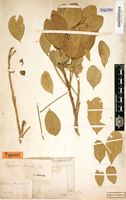
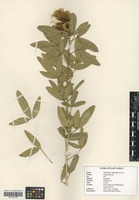
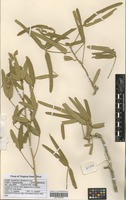
Type of Thilachium africanum Lour. [family CAPPARACEAE]
Filed as Thilachium africanum Lour. [family CAPPARACEAE]
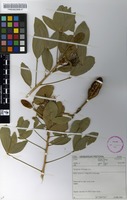
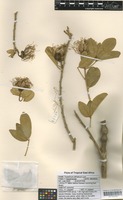
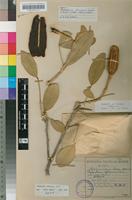
Holotype of Ritchiea langii Oberm. [family CAPPARACEAE]
Filed as Thilachium africanum Lour. [family CAPPARACEAE]
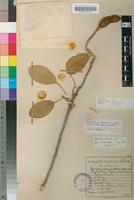
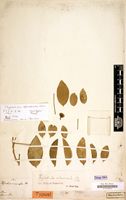
Holotype of Thilachium africanum Lour. [family CAPPARACEAE]
Filed as Thilachium africanum Lour. [family CAPPARACEAE]
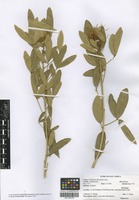
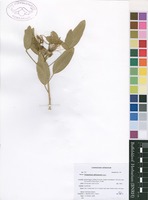
Holotype of Ritchiea langii Oberm. [family CAPPARACEAE]
Previous
Next

Name

Identification
Thilachium africanum Lour. [family CAPPARACEAE ] (stored under name); Verified by Not on sheet.,
Related name
  • Thilachium africanum
  • Ritchiea langii

Flora

Entry for Thilachium africanum [family CAPPARACEAE]
Herbarium
South African National Biodiversity Institute, Compton Herbarium, Cape Town (SAM)
Collection
Flora of Southern Africa
Resource Type
Reference Sources
Entry From
Flora of South Africa, (2003) Author: Dr J.P. Roux
Names
Thilachium africanum [family CAPPARACEAE]
Common names
T. ovalifolium Juss. in Ann. Mus. Paris 12 : 71 (1808), nom. illegit. Type: as above. T. querimbense Klotzsch in Peters, Reise Mossamb. Bot. 1 : 163 (1861); Gilg in Pflanzenw. Ost.-Afr. C : 187 (1895). Type : Mozambique, Niassa, Querimba I., Peters (B, holo.). T. verrucosum Klotzsch, I.e. 1 : 164 (1861). Type : Mozambique, Sena, Tambare, Peters (B, holo.). Ritchiea langii Oberm. in Ann. Transv. Mus. 17 : 200 (1937). Type : Transvaal, Kruger Na':onal Park, Punda Milia, Lang sub TRV (PRE, holo.lj.
Information
Shrub or scrambler, up to 3 m high; young branches pale brown or grey, scabrid. Leaves simple or 3-foliolate; leaflets elliptic, broadly elliptic or obovate, 3-9 cm long, 1-4-5 cm wide, apex obtuse, round or emarginate, mucronate, base cuneate to round, margins entire, somewhat revolute, lateral veins 3 or 4, subimmersed, coriaceous, glabrous; petioles up to 6 cm long, scabrid; petiolules 2-4 mm long, scabrid. Inflorescence of few-flowered, terminal or axillary corym­bose racemes; pedicels 1-5-2 cm long, scabrid-puberulous. Calyx obovoid, 1 • 5 cm long, 2 cm diam., with apiculus at apex, glabrous, circumscissile, persistent base cam-panulate, calyptra often remaining attached on one side; disc lining basal 2 mm of calyx, entire. Androphore stout, 4-5 mm long. Stamens many, 3-3-5 cm long; anthers c. 3 mm long, basifixed. Gynophore 1-2*5 cm long. Ovary ellipsoid, 3-5-4 mm long, costate; stigma capitate. Fruits ellipsoid, up to 6 cm long, stipitate, costate with up to 12 ribs. Seeds numerous, up to 1 cm in diam., subg
Habitat
Thilachium africanum is a shrub or scrambler, which has been collected only a few times in Southern Africa. Like its congeners, it is easily recognizable by its circumscissile-calyptrate calyx. Its Bantu name is said to be Kova.
Use
Thilachium africanum Lour., Fl. Coch-inch. 342 (1790); Oliv. in F.T.A. 1 : 82 (1868); Gilg in Engl., Pflanzenw. Ost.-Afr. C : 187 (1895); Sim, For. Fl. Port. E. Afr. 9 (1909); Gilg & Ben. in Bot. Jahrb. 53 : 263 (1915); Milne-Redh. in Mem. N.Y. Bot. Gard 8 : 218 (1953); Wild in F.Z. 1 : 213, fig. 34B (1960); De Wolf in Kirkia 2 : 198 (1961); F.T.E.A. Capparidaceae : 82 (1964). Type : Mozambique, Loureiro (P, holo.; L1SU).
Range
Found in savanna or woodland in the northern parts of Zululand and the Kruger National Park in the Transvaal, and in Swaziland. Also in Mozam­bique, Rhodesia, Malawi, Kenya, Tanzania and Malagasy.

Related Materials

  • Terms and Conditions
  • Privacy Policy
  • Cookie Policy
  • Cookie Settings
  • Accessibility
  • Help
  • Contact Us
  • Facebook
  • Twitter
ITHAKA

JSTOR is part of ITHAKA, a not-for-profit organization helping the academic community use digital technologies to preserve the scholarly record and to advance research and teaching in sustainable ways.

©2000-2026 ITHAKA. All Rights Reserved. JSTOR®, the JSTOR logo, JPASS®, Aluka®, and ITHAKA® are registered trademarks of ITHAKA.

╳