JSTOR Global Plants Home
  • Home
  • Browse
  • About
  • Access
  • Account
    • Saved Items
    • Profile
  • Log in

Global Plants

Skip to Main Content
  • JSTOR Global Plants Home
  • Global Plants

    • Browse
    • About
    • Access
    • Account
      • Saved Items
      • Profile
Log in
  • Browse
  • About
  • Access
  • Account
    • Saved Items
    • Profile
Advanced Search

Compilation
Thesium atrum

3 Images see all

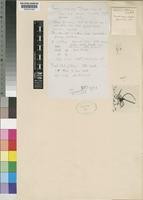
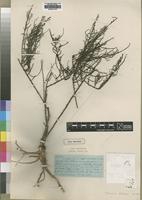
Type of Thesium atrum A.W.Hill [family SANTALACEAE]
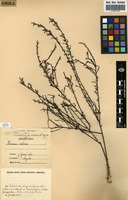
Filed as Thesium atrum A.W.Hill [family SANTALACEAE]
Previous
Next

Name

Identification
Thesium atrum A.W.Hill [family SANTALACEAE ] (stored under name);
Related name
  • Thesium atrum

Flora

Entry for THESIUM atrum A. W. Hill [family SANTALACEAE]
Herbarium
Royal Botanic Gardens, Kew (K)
Collection
Flora of Tropical Africa
Resource Type
Reference Sources
Entry From
Flora of Tropical Africa, Vol 6, Part 1, page 411, (1913) Author: (By J. G. Baker, with additions by C. H. Wright.)
Names
THESIUM atrum A. W. Hill [family SANTALACEAE], in Kew Bulletin, 1910, 182.
Information
A perennial undershrub; rootstock woody; stems numerous, prostrate, stout, woody, 1 ft. or more long, with ascending branches, becoming black when dried, all younger parts green when fresh; branches 4–6 in. long, with numerous long and short lateral branches. Leaves scale-like, orbicular-ovate, subacute, 1/2 lin. long, fleshy, margins minutely ciliolate. Flowers terminating short leafy axillary branches; bracts and bracteoles orbicular-ovate, apiculate, minutely ciliolate, about 1/2 lin. long, forming an involucre. Perianth white, 7/8 lin. long; lobes 1/2 lin. long, ovate, subacute, glabrous, slightly hooded, margins membranous, slightly papillose. Anthers and filaments 1/5 lin. long. Style 1/2 lin. long. Fruit black when dry, globose-ovoid, 1 1/4 lin. long, 1 lin. broad, ribs and veins not prominent.
Distribution
Angola Lower Guinea Suassingua, Gossweiler, 2713!
Notes
A distinct species, resembling T. doloense, Pilger, in turning black on drying, but distinguished by the small orbicular-ovate leaves and bracts with ciliolate margins.

Related Materials

  • Terms and Conditions
  • Privacy Policy
  • Cookie Policy
  • Cookie Settings
  • Accessibility
  • Help
  • Contact Us
  • Facebook
  • Twitter
ITHAKA

JSTOR is part of ITHAKA, a not-for-profit organization helping the academic community use digital technologies to preserve the scholarly record and to advance research and teaching in sustainable ways.

©2000-2026 ITHAKA. All Rights Reserved. JSTOR®, the JSTOR logo, JPASS®, Aluka®, and ITHAKA® are registered trademarks of ITHAKA.

╳