JSTOR Global Plants Home
  • Home
  • Browse
  • About
  • Access
  • Account
    • Saved Items
    • Profile
  • Log in

Global Plants

Skip to Main Content
  • JSTOR Global Plants Home
  • Global Plants

    • Browse
    • About
    • Access
    • Account
      • Saved Items
      • Profile
Log in
  • Browse
  • About
  • Access
  • Account
    • Saved Items
    • Profile
Advanced Search

Compilation
Tetraria lucida

8 Images see all

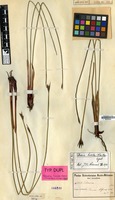
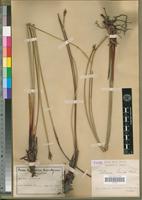
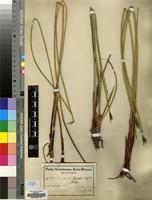
Isotype of Tetraria lucida C.B.Clarke [family CYPERACEAE]
Epischoenus lucidus (C.B.Clarke) Levyns [family CYPERACEAE]
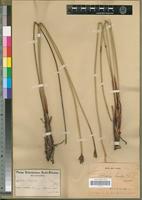
Isotype of Tetraria lucida C.B.Clarke [family CYPERACEAE]
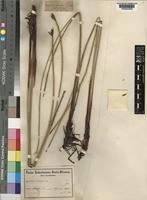
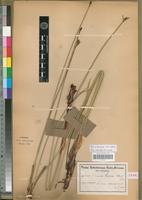
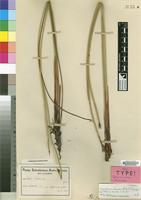
Type of Tetraria lucida C.B.Clarke [family CYPERACEAE]
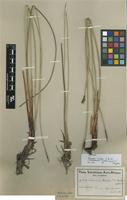
Isotype of Tetraria lucida C.B.Clarke [family CYPERACEAE]
Previous
Next

Name

Identification
Isotype of Tetraria lucida C. B. Clarke [family CYPERACEAE ] (stored under name); Verified by Not on sheet,
Related name
  • Epischoenus lucidus
  • Tetraria unrecorded
  • Tetraria lucida

Flora

Entry for Tetraria lucida C. B. Clarke [family CYPERACEAE]
Herbarium
Royal Botanic Gardens, Kew (K)
Collection
Flora Capensis
Resource Type
Reference Sources
Entry From
Flora Capensis, Vol 7, page 310, (1900) Author: (By O. STAPF.)
Names
Tetraria lucida C. B. Clarke [family CYPERACEAE]
Information
rhizome 1/5 in. in diam., horizontal, clothed by short broad red scales; stems approximate, more than 2 ft. long, rather stout, terete, carrying 3–5 spikelets close to the top; leaves none, i.e. the uppermost basal sheath produced on one side, lanceolate, 2 by 1/4 in., shining, chestnut-red; lowest bract 3/4– 1/12 in., brown-scarious, slightly overtopping the inflorescence; spikelets 1/2 in. long; lowest flower male, 3-androus; nut large, obovoid, black-brown, crowned by the long pyramidal style-base. null
Distribution
COAST REGION Ceres Div.; Prince Alfred, 3000 ft., Schlechter, 9987!

Related Materials

  • Terms and Conditions
  • Privacy Policy
  • Cookie Policy
  • Cookie Settings
  • Accessibility
  • Help
  • Contact Us
  • Facebook
  • Twitter
ITHAKA

JSTOR is part of ITHAKA, a not-for-profit organization helping the academic community use digital technologies to preserve the scholarly record and to advance research and teaching in sustainable ways.

©2000-2026 ITHAKA. All Rights Reserved. JSTOR®, the JSTOR logo, JPASS®, Aluka®, and ITHAKA® are registered trademarks of ITHAKA.

╳